Jim McIntosh · CC0 · via Wikimedia Commons
The story of the United States is usually told from east to west, beginning with Jamestown and Plymouth. But the oldest European buildings in the country were raised by Spain, which reached across what is now Florida, Texas, New Mexico, Arizona and California for more than two centuries. Five places in the register trace that frontier.
St. Augustine: the fort
Spain founded St. Augustine, Florida, in 1565, decades before any permanent English settlement. A century later, after wooden forts had burned and pirates had raided the town, construction began on a fortress of stone. Castillo de San Marcos was built from 1672 of coquina, a local stone of compressed shells, and its core was complete by 1695. It is the oldest masonry fort in the continental United States.
Santa Fe: the palace
On the upper Rio Grande, the Spanish colony of New Mexico built its seat of government in Santa Fe. The Palace of the Governors, a long adobe building on the town plaza, was begun around 1610 and served as the capitol for centuries — under Spain, Mexico and the United States. Today it is a history museum, and Native American artists sell their work beneath its portal.
San Antonio: the missions
In the eighteenth century Spain pushed missions into Texas, and San Antonio became their center. Five were founded along the San Antonio River. The best known, San Antonio de Valero, became famous under another name: the Alamo. The other four, including Mission San José, still stand as the San Antonio Missions, and several remain active parishes. In 2015 the five missions together were named a UNESCO World Heritage Site.
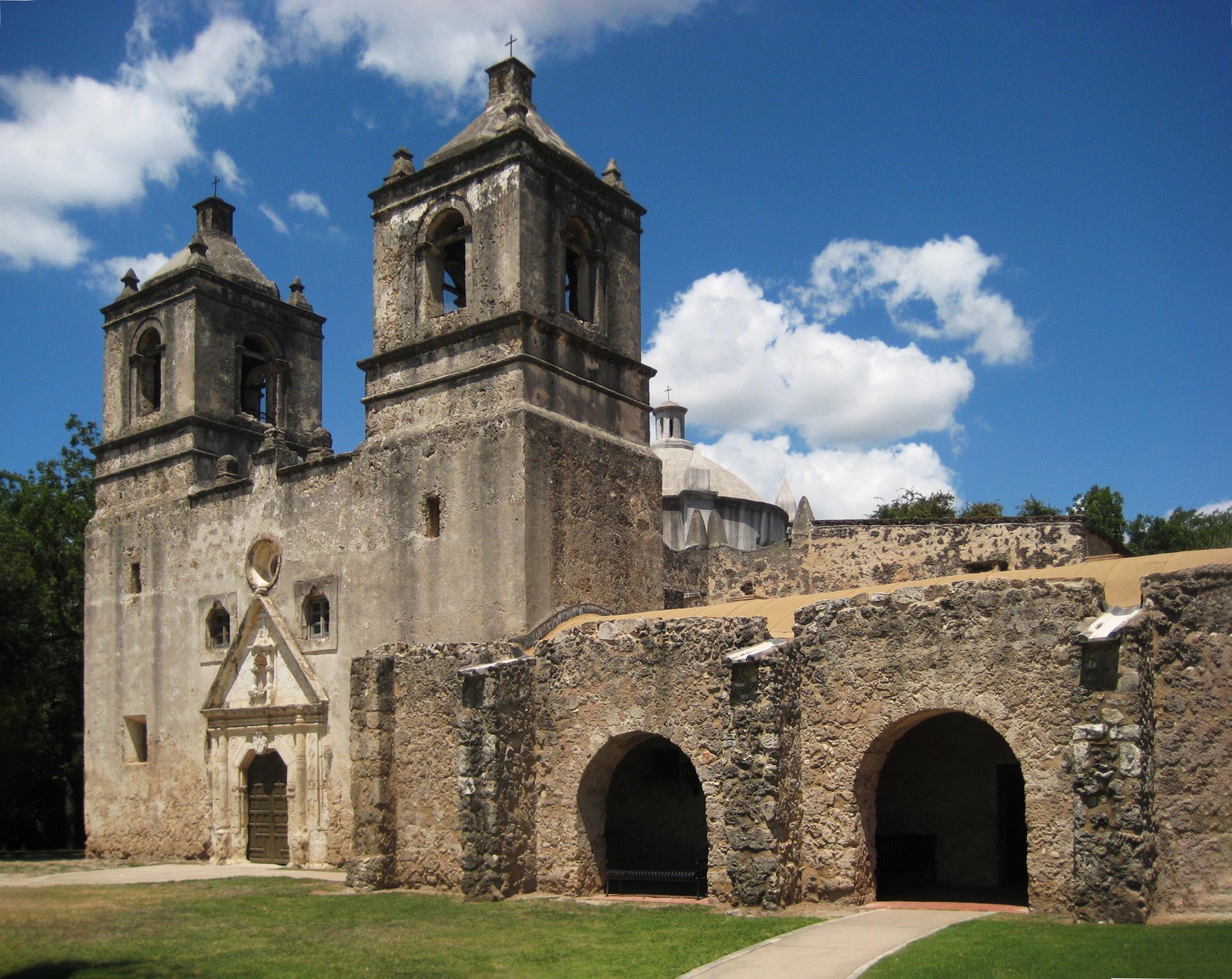
The San Antonio Missions, named a UNESCO World Heritage Site in 2015.
Liveon001 ©Travis Witt · CC BY-SA · via Wikimedia Commons
Tucson: the White Dove
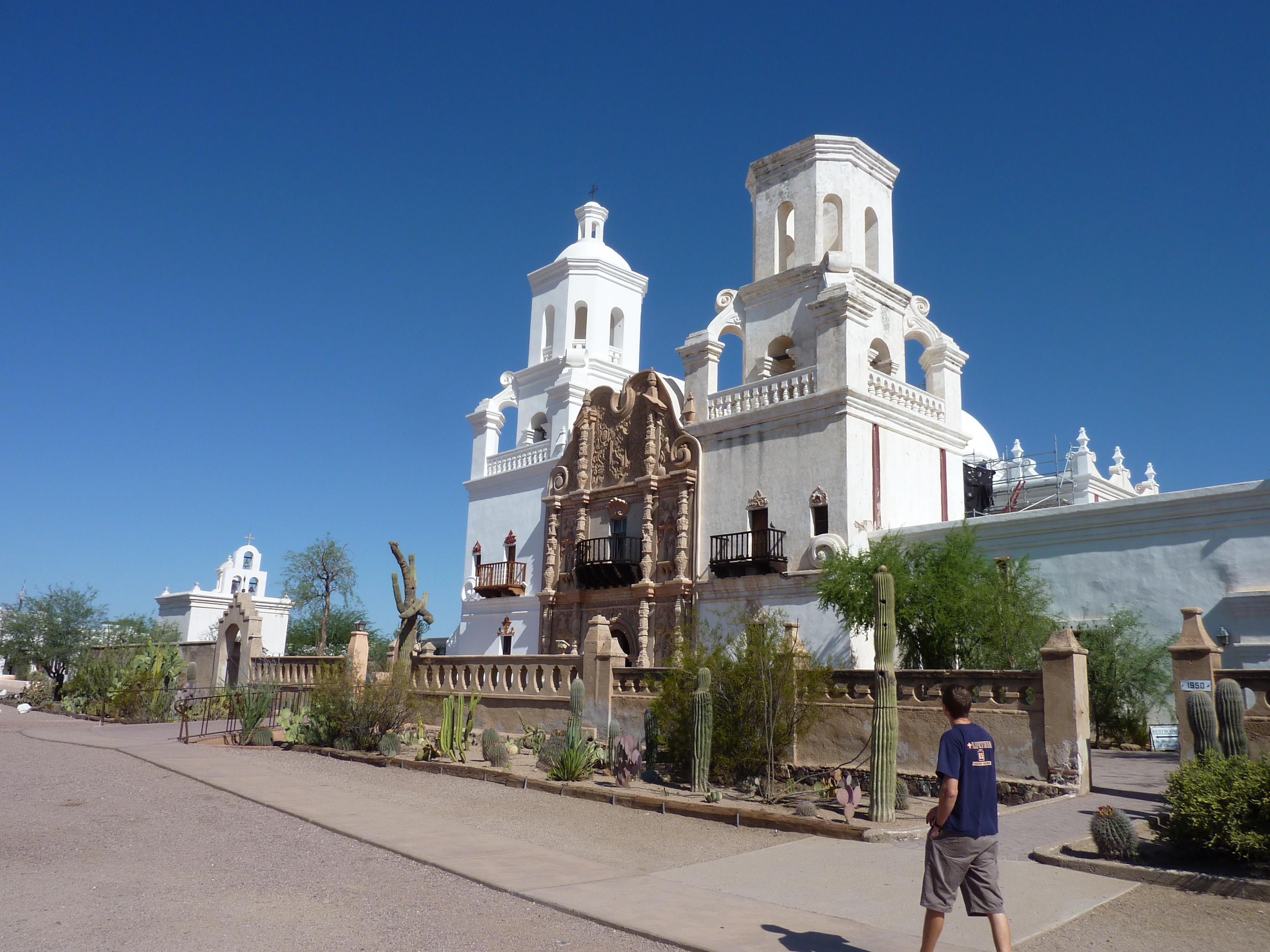
South of Tucson, on the Tohono O'odham Nation's San Xavier reservation, stands one of the most celebrated Spanish colonial churches in the country. The Jesuit missionary Eusebio Kino founded Mission San Xavier del Bac in 1692 in an O'odham settlement already centuries old. The church that stands today was built between 1783 and 1797, making it the oldest European structure in Arizona. Its gleaming white walls against the desert have earned it the name "the White Dove of the Desert."
California: the mission and the swallows
Spain's last great push north came in Alta California, where Franciscan missionaries led by Junípero Serra founded a chain of missions along the coast. Mission San Juan Capistrano was founded on November 1, 1776 — the same year the thirteen colonies declared independence on the other side of the continent. Its Serra Chapel is the only building still standing where Serra is documented to have said Mass. In 1812 an earthquake brought down the mission's Great Stone Church, whose ruins remain one of its most striking sights.
From a stone fort on the Atlantic to adobe churches in the desert, these places are a reminder that the country's colonial past was never only English, and never only east of the Mississippi.