- Spanish Colonial (1565–1763)
- 29.3620° N, 98.4808° W
San Antonio Missions
San Antonio, Texas · Established 1720
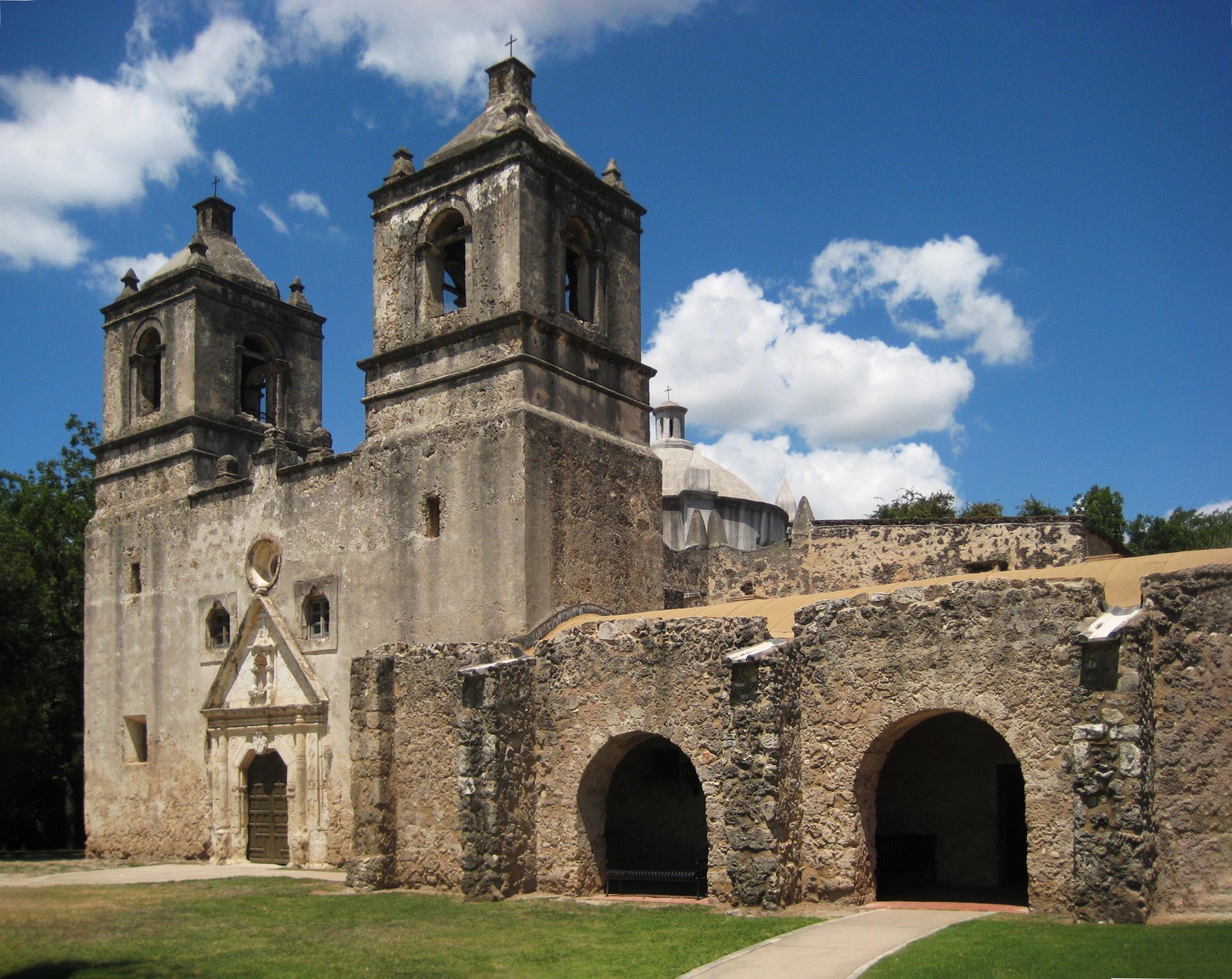
Liveon001 ©Travis Witt · CC BY-SA · via Wikimedia Commons
Why It Matters
The San Antonio Missions are the largest concentration of Spanish colonial missions in North America — four 18th-century mission communities strung along the San Antonio River. Built by Franciscan friars to convert Native peoples and anchor Spain's northern frontier, their churches, walls, farmlands, and irrigation canals preserve a vivid picture of colonial life. Together with the nearby Alamo, they form Texas's only UNESCO World Heritage Site and remain, in several cases, active parishes nearly three centuries on.
The History
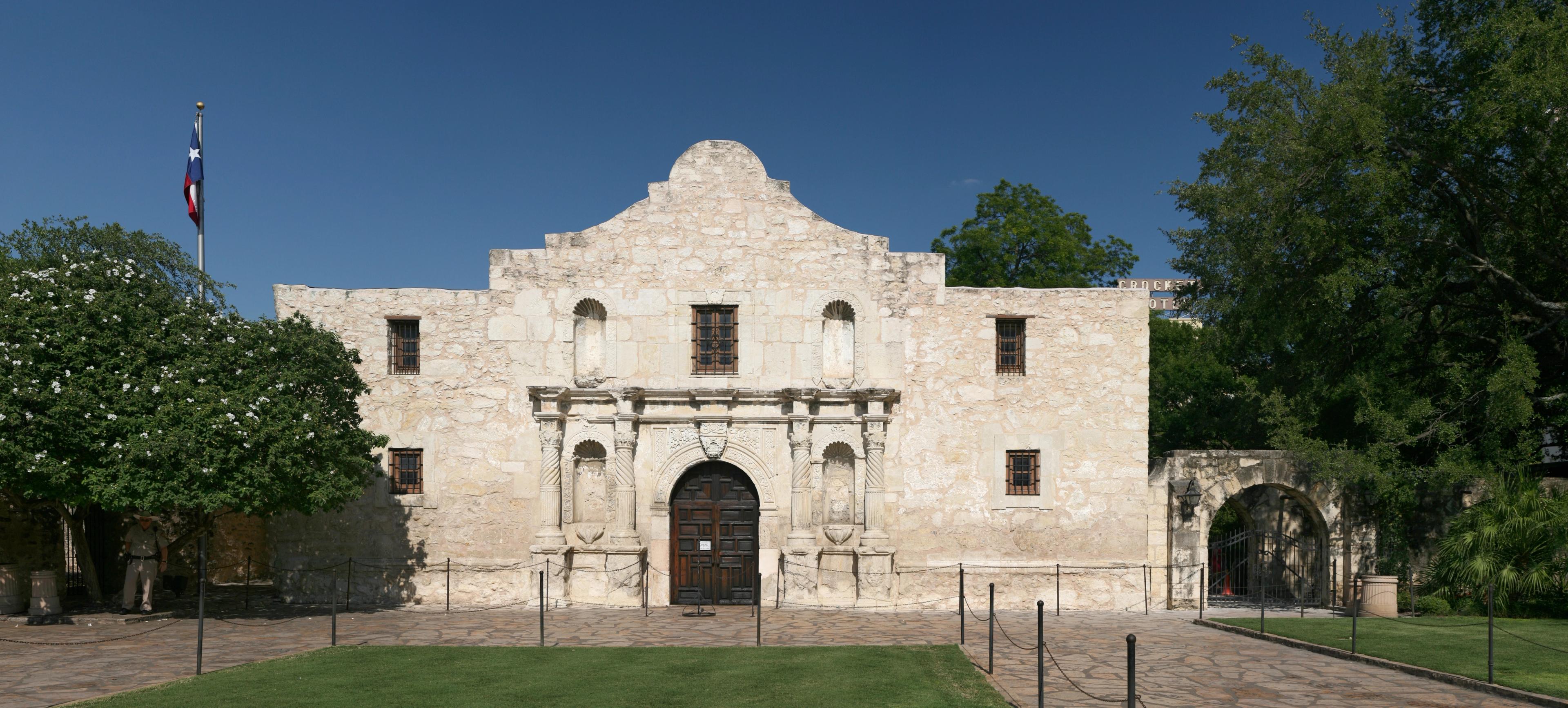
In the early 18th century Spain pushed to secure its frontier in Texas against French expansion from Louisiana, and Franciscan missionaries founded a chain of missions along the San Antonio River. Between about 1718 and 1731 five missions were established, including San Antonio de Valero — later famous as the Alamo — and the four that make up today's national park: Concepción, San José, San Juan, and Espada.
The missions were far more than churches; each was a self-sufficient community where Franciscan friars sought to convert and assimilate the region's Native peoples, chiefly the Coahuiltecans, into Spanish colonial life. Within their walls lay churches, workshops, granaries, and housing, surrounded by farmland watered by acequias — stone irrigation canals, some still in use. Mission San José, founded in 1720 and known as the 'Queen of the Missions,' was the largest and best-fortified.
As Native populations declined and Spanish policy changed, the missions were secularized in the early 1800s and their lands distributed. The churches endured, however, and several remain active Catholic parishes today. In 1978 the four river missions were made a national historical park, and in 2015 they and the Alamo were together inscribed as a UNESCO World Heritage Site — the only one in Texas.
Through the Years
- 1718
Mission San Antonio de Valero (the Alamo) is founded on the river.
- 1720
Mission San José, the 'Queen of the Missions,' is established.
- 1731
Three more missions are relocated to the San Antonio area.
- early 1800s
The missions are secularized and their lands distributed.
- 1978
San Antonio Missions National Historical Park is created.
- 2015
The missions and the Alamo become a UNESCO World Heritage Site.
The Archive
 Plate 01
San Antonio Missions World Heritage Designation Plaque on a stone wall.
NPS Photo · Public domain · via Wikimedia Commons
 Plate 02
Stone walls in San Antonio Missions.
Roman Eugeniusz · CC BY-SA · via Wikimedia Commons
 Plate 03
Stone and brick archway in San Antonio Missions.
Epopan · CC BY-SA · via Wikimedia Commons
Facts & Figures
The Park
- Missions
- Concepción, San José, San Juan, Espada
- Founded
- 1710s-1730s, by Spanish Franciscans
San José
- Nickname
- 'Queen of the Missions'; famed for its Rose Window
Purpose
- Function
- Self-sufficient communities with acequia irrigation
The People
- Converts
- Chiefly Coahuiltecan peoples
Status
- UNESCO
- World Heritage Site (2015) — Texas's only one
Today
- Operator
- National Park Service; churches remain active parishes
The Register
- Established
- 1720
- Architectural style
- Spanish colonial mission
- Builder
- Spanish Franciscan missionaries (18th c.)
- Area of significance
- Spanish colonial & Religion
Frequently Asked
What are the San Antonio Missions?
They are four 18th-century Spanish colonial missions — Concepción, San José, San Juan, and Espada — along the San Antonio River, preserved as a national historical park. The fifth San Antonio mission is the Alamo.
Is the Alamo one of the San Antonio Missions?
Yes. The Alamo was originally Mission San Antonio de Valero, the first of the city's five missions. It is managed separately but is part of the same UNESCO World Heritage Site.
Are the missions still used as churches?
Yes. Several of the mission churches remain active Catholic parishes, holding regular services even as the sites are preserved by the National Park Service.
Can you visit the San Antonio Missions?
Yes. San Antonio Missions National Historical Park is free to visit, with all four missions linked by a hike-and-bike trail along the river and a visitor center at Mission San José.