- Spanish Colonial (1565–1763)
- 32.1084° N, 111.0072° W
Mission San Xavier del Bac
Tucson, Arizona · Established 1797
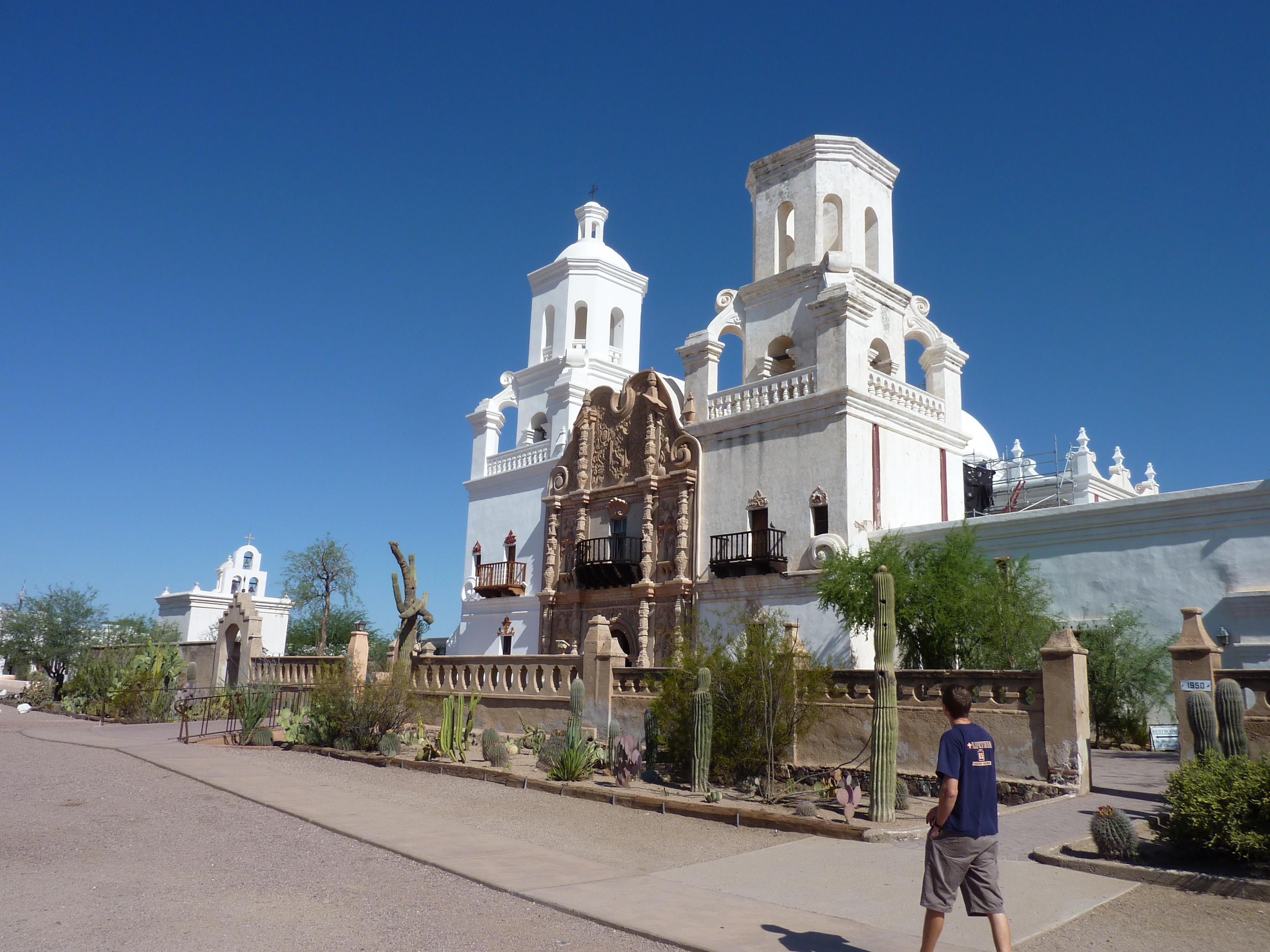
Jim McIntosh · CC0 · via Wikimedia Commons
Why It Matters
Rising white against the Sonoran Desert south of Tucson, Mission San Xavier del Bac is widely considered the finest example of Spanish Colonial architecture in the United States. Built by Tohono O'odham labor under Franciscan direction and completed in 1797, its ornate Baroque facade and richly painted interior have earned it the nickname 'White Dove of the Desert.' Unlike many missions turned into museums, San Xavier remains a living, active parish serving the O'odham community whose ancestors built it — a rare continuity between a Spanish colonial structure and the Native people who have always called the land home.
The History
Jesuit missionary Eusebio Kino first established a mission at the O'odham village of Bac in 1692, but the church seen today dates from decades later. After Jesuits were expelled from Spanish territories in 1767, Franciscans took over the missions, and construction of the current church began around 1783 under Fray Juan Bautista Velderrain, using Tohono O'odham labor and locally fired brick and lime mortar rather than adobe.
The church was completed and dedicated in 1797, its twin bell towers, carved facade, and domed roofline representing the height of Spanish Colonial Baroque design in North America. The interior is filled with polychrome statuary, murals, and gilded retablos created by Mexican artisans, blending Catholic iconography with the O'odham community it served. One tower was left visibly unfinished, a detail local tradition attributes variously to a legend about completion bringing misfortune, or simply to a shortfall of funds.
San Xavier survived Mexican secularization, Apache raids, and periods of neglect largely because it remained in continuous use by the Tohono O'odham parish. Restoration campaigns beginning in the late 20th century, using traditional lime plaster techniques, have preserved its murals and facade. Still an active Catholic church today, it was designated a National Historic Landmark in 1963 and remains one of the most visited sites in southern Arizona.
Through the Years
- 1692
Fr. Eusebio Kino establishes the first mission at Bac
- 1767
Jesuits are expelled; Franciscans take over the mission
- 1783
Construction begins on the current church
- 1797
The church is completed and dedicated
- 1963
San Xavier del Bac is designated a National Historic Landmark
The Archive
 Plate 01
Facade, Mission San Xavier del Bac.
w_lemay · CC BY-SA · via Wikimedia Commons
 Plate 02
Historical Marker, Mission San Xavier del Bac.
w_lemay · CC BY-SA · via Wikimedia Commons
 Plate 03
Ceiling inside Mission San Xavier del Bac.
w_lemay · CC BY-SA · via Wikimedia Commons
 Plate 04
Visitors inside the Mission San Xavier del Bac Church.
w_lemay · CC BY-SA · via Wikimedia Commons
Facts & Figures
History
- First mission founded
- 1692 by Fr. Eusebio Kino
- Current church completed
- 1797
Architecture
- Style
- Spanish Colonial Baroque
- Notable detail
- One bell tower left unfinished
Culture
- Nickname
- 'White Dove of the Desert'
- Builders
- Tohono O'odham laborers
Designation
- National Historic Landmark
- Designated 1963
The Register
- Architectural style
- Spanish Colonial Baroque (Mexican Baroque)
- Builder
- Tohono O'odham laborers under Franciscan direction
- Area of significance
- Religion; Spanish colonial history; architecture
Frequently Asked
Why is it called the 'White Dove of the Desert'?
The nickname reflects the mission church's brilliant white plastered facade rising dramatically against the surrounding Sonoran Desert landscape south of Tucson.
Who built Mission San Xavier del Bac?
Tohono O'odham laborers built the church between about 1783 and 1797 under the direction of Franciscan missionaries, using fired brick and lime mortar.
Is San Xavier del Bac still an active church?
Yes. Unlike many former missions that operate only as museums, San Xavier remains an active Catholic parish serving the Tohono O'odham community whose ancestors built it.
Why is one bell tower unfinished?
No one knows for certain. Local legend offers several explanations, from a belief that completing it would bring misfortune to the more mundane possibility that construction funds simply ran out.