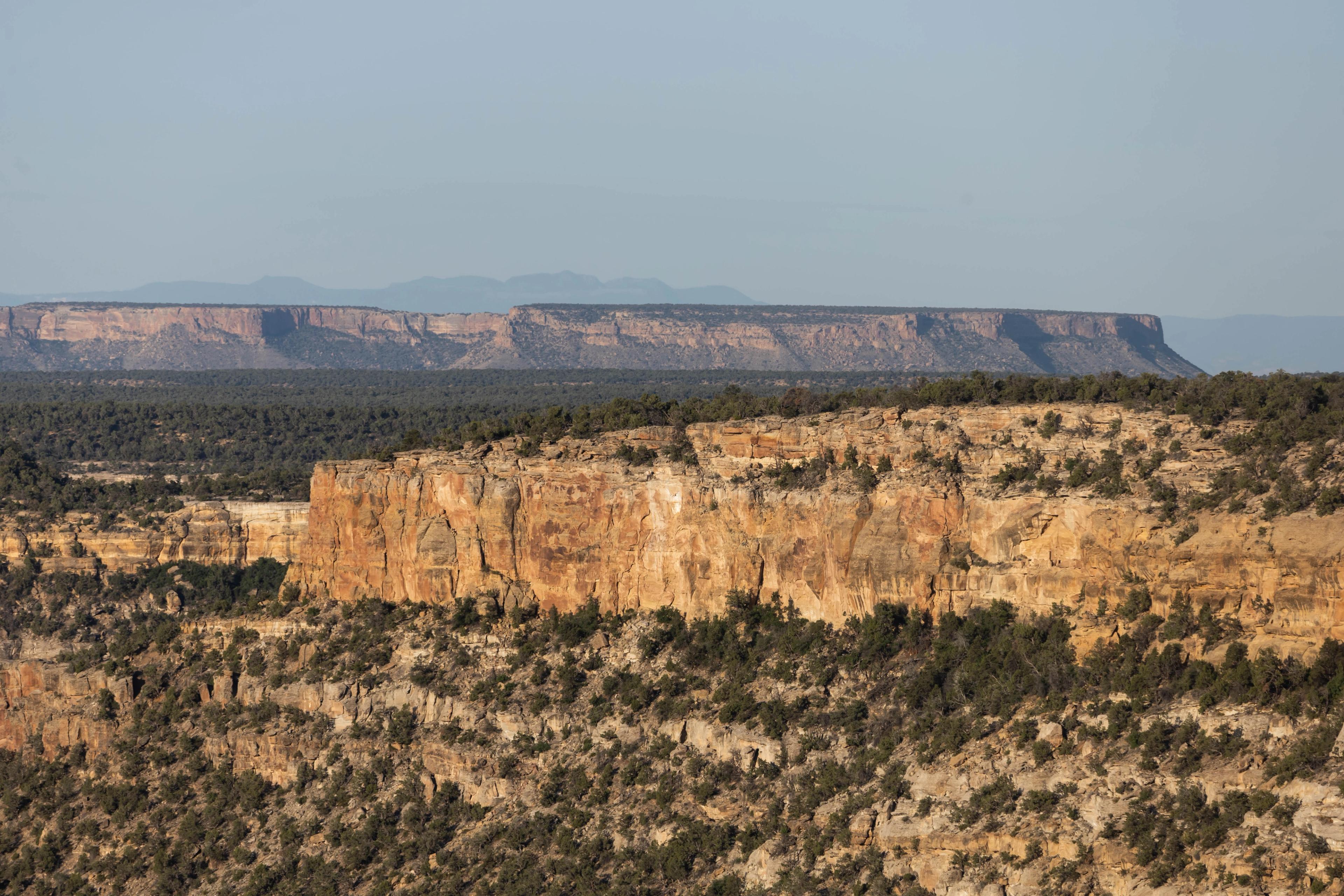
mark byzewski · CC BY · via Wikimedia Commons
The oldest cities in the United States were not built by Europeans. Centuries before Columbus, the peoples of North America raised earthen monuments along the Mississippi and multistory stone buildings in the canyons of the Southwest. Four places in the register — three of them UNESCO World Heritage Sites — show what they built.
Cahokia: the city on the Mississippi
Across the Mississippi from present-day St. Louis lie the remains of the largest city north of Mexico before European contact. Cahokia flourished from about 1050 to 1350. At its height, around 1100, it covered some six square miles, held about 120 earthworks, and was home to perhaps 15,000 to 20,000 people — the center of the Mississippian culture that spread across much of the Midwest and Southeast.
Its largest earthwork, Monks Mound, is a terraced platform of earth rising about a hundred feet above the plain. Climbing the stairs to its summit gives a view across the old city to the St. Louis skyline.
Chaco Canyon: the great houses
In northwestern New Mexico, Chaco Canyon was a major center of the Ancestral Puebloan world between about 900 and 1150. Its people built "great houses" of carefully laid stone, several stories high, linked to distant communities by roads. The largest, Pueblo Bonito, grew over centuries from a curved row of rooms into a vast D-shaped complex. Today Chaco Culture National Historical Park is remote — reached by rough dirt roads — which is part of what makes standing in its ruins so affecting.
Mesa Verde: the cliff dwellings
Around 1200, Ancestral Puebloans in southwestern Colorado began moving from the mesa tops into alcoves in the canyon walls, where they built the cliff dwellings that make Mesa Verde famous. The largest, Cliff Palace, was built of sandstone, mortar and wooden beams and includes 21 kivas — round, sunken ceremonial rooms. Within a few generations the cliff dwellings were abandoned as their builders moved south. Mesa Verde became a national park in 1906.
Taos Pueblo: still home
The ancient places of the Southwest are not all ruins. At Taos Pueblo in northern New Mexico, the multistory adobe buildings on either side of the Rio Pueblo are still home to Taos people. The oldest parts were built around the year 1000, with more added in the late 1200s and early 1300s. The pueblo is a UNESCO World Heritage Site and one of the oldest continuously inhabited communities in the United States.
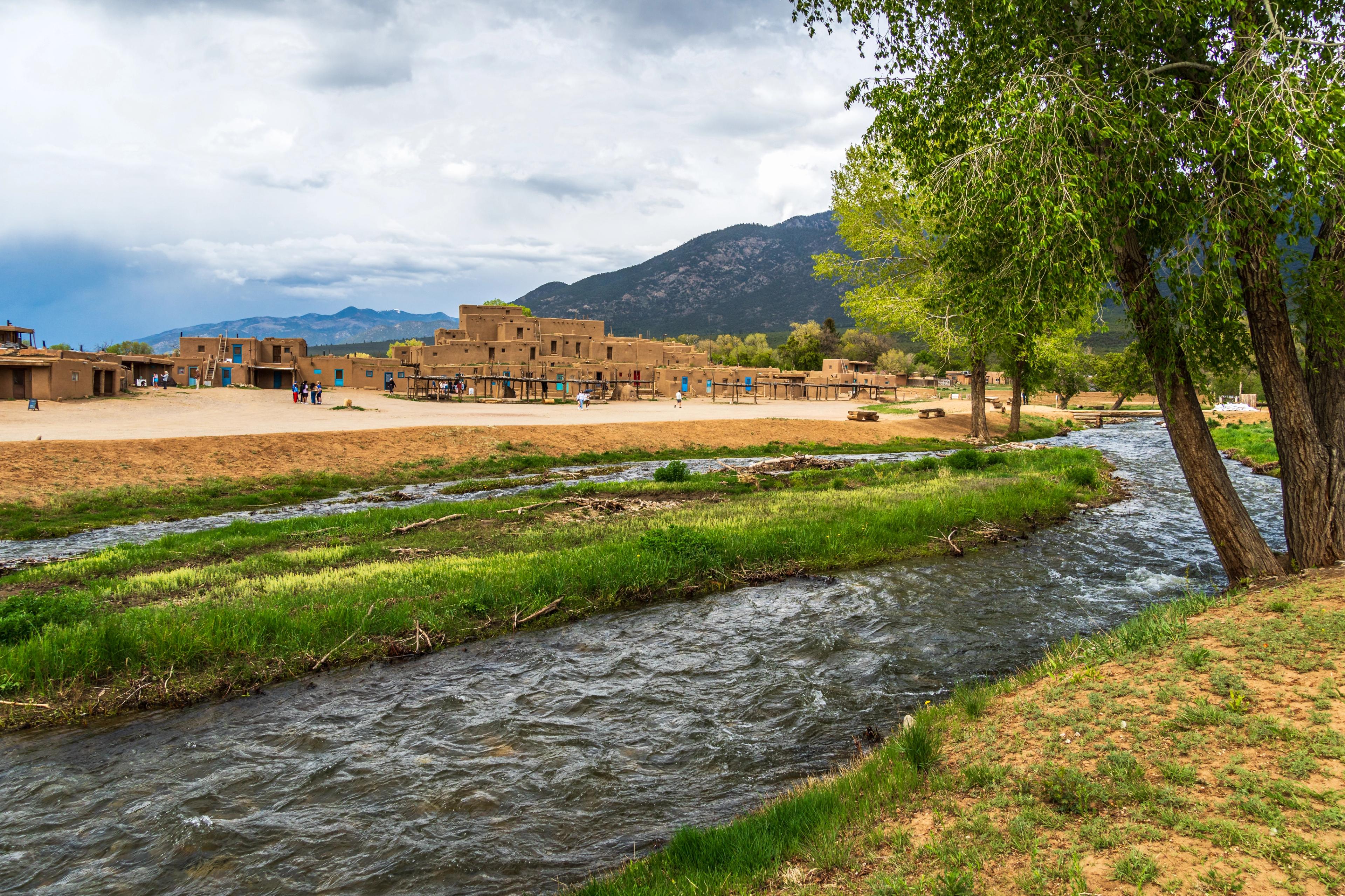
Taos Pueblo, lived in for around a thousand years.
dconvertini · CC BY-SA · via Wikimedia Commons
Visitors are welcome at Taos Pueblo at set times, but it is a living community with its own government and its own rules: some areas are closed, photography is restricted, and the pueblo closes for ceremonies. Check before you go.
Together these places overturn the idea of an "untouched wilderness" awaiting European settlers. North America had cities, monuments and long-distance networks of its own — and at Taos, the people who built them are still there.