WillThomas · CC BY · via Wikimedia Commons
In 1873 Mark Twain and Charles Dudley Warner published a satirical novel called The Gilded Age. The title stuck to the decades that followed: an era of railroads, factories and unprecedented fortunes — gold on the surface, as the name implied, over something baser beneath. Four places in the register show the gilding and what lay under it.
The Breakers: a summer cottage
In Newport, Rhode Island, the richest families of the age built summer houses they called "cottages." The grandest is The Breakers, built between 1893 and 1895 for Cornelius Vanderbilt II, grandson of the railroad and shipping magnate Cornelius Vanderbilt. The architect Richard Morris Hunt designed a seventy-room Renaissance Revival palace to replace an earlier house on the site that had burned. It was the largest and most opulent house in Newport when it was finished.
Biltmore: the largest house in America
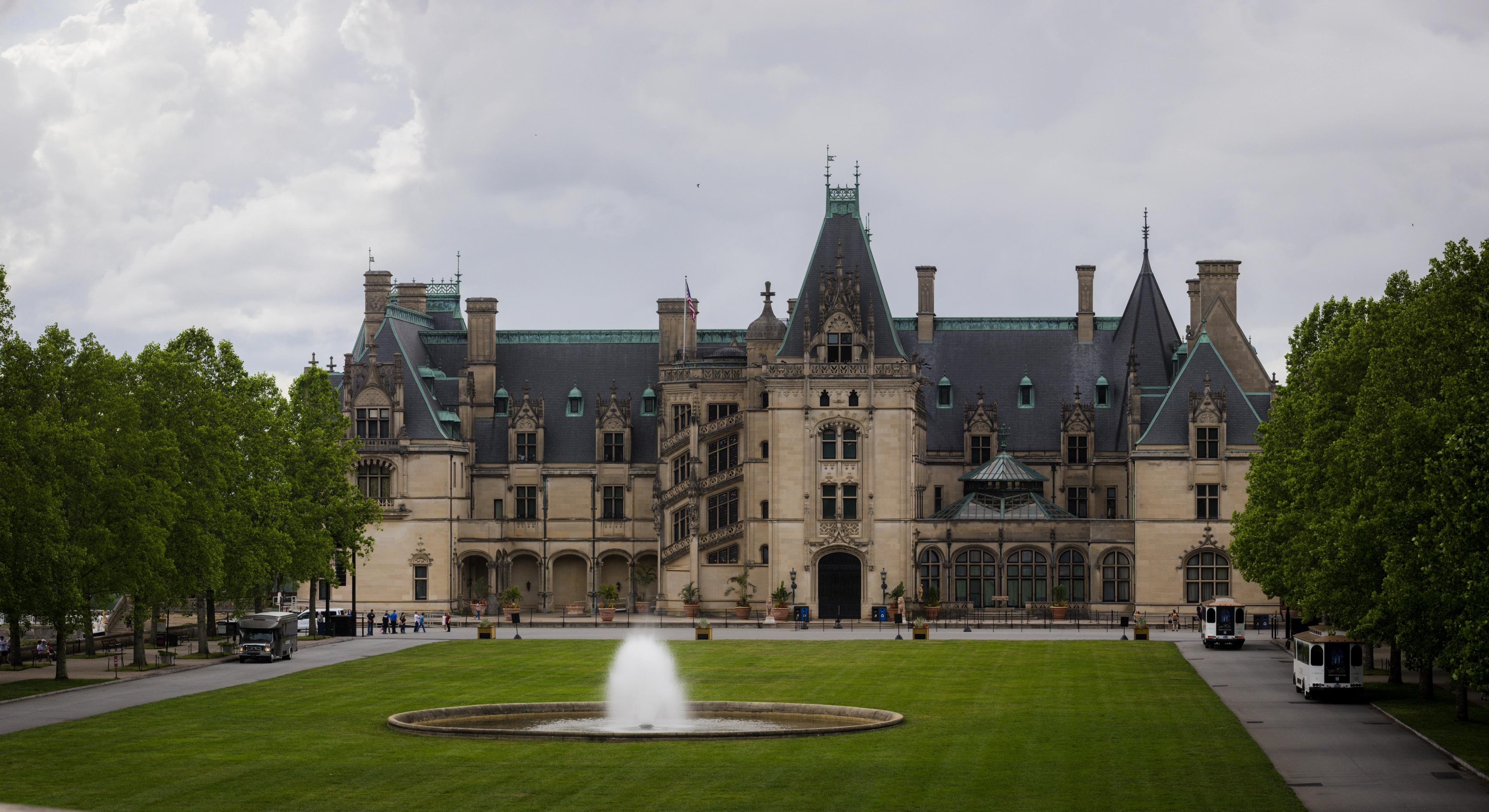
Cornelius's younger brother, George Washington Vanderbilt II, went further. In the mountains outside Asheville, North Carolina, he had Hunt design a French Renaissance château, with grounds laid out by Frederick Law Olmsted. Built between 1889 and 1895, Biltmore opened to family and friends on Christmas Eve 1895. With about 179,000 square feet of floor space, it remains the largest privately owned house in the United States — still owned by Vanderbilt's descendants.
Lowell: the mill city
The fortunes of the age rested on industry, and industry rested on workers. Lowell, Massachusetts, was one of the first planned industrial cities in the country, built around water-powered textile mills on the Merrimack River. Its early workforce included large numbers of young women from New England farms — the "Lowell mill girls" — who lived in company boardinghouses and worked long hours at the looms; later generations of immigrants took their place. Lowell National Historical Park, established in 1978, preserves the mills, canals and boardinghouses.
Pullman: the company town
In the 1880s the sleeping-car manufacturer George Pullman built a model town for his workers on the South Side of Chicago, with brick homes, shops and parks — all owned by the company. When the economy collapsed in 1893, Pullman cut wages but not rents. His employees went on strike on May 11, 1894, and a nationwide railroad boycott followed. Federal troops were sent in, and the strike was broken amid violence.
The district that grew from Pullman's experiment is now Pullman National Historical Park, named a national monument by President Barack Obama in 2015. It is one of the few places in the National Park System dedicated to the story of American labor.
The mansions and the mills are two halves of one story. The Breakers and Biltmore show what the new fortunes could buy; Lowell and Pullman show how they were made, and why workers began to organize against the terms on which they were made.