- Gilded Age (1865–1900)
- 41.4699° N, 71.2985° W
The Breakers
Newport, Rhode Island · Established 1895
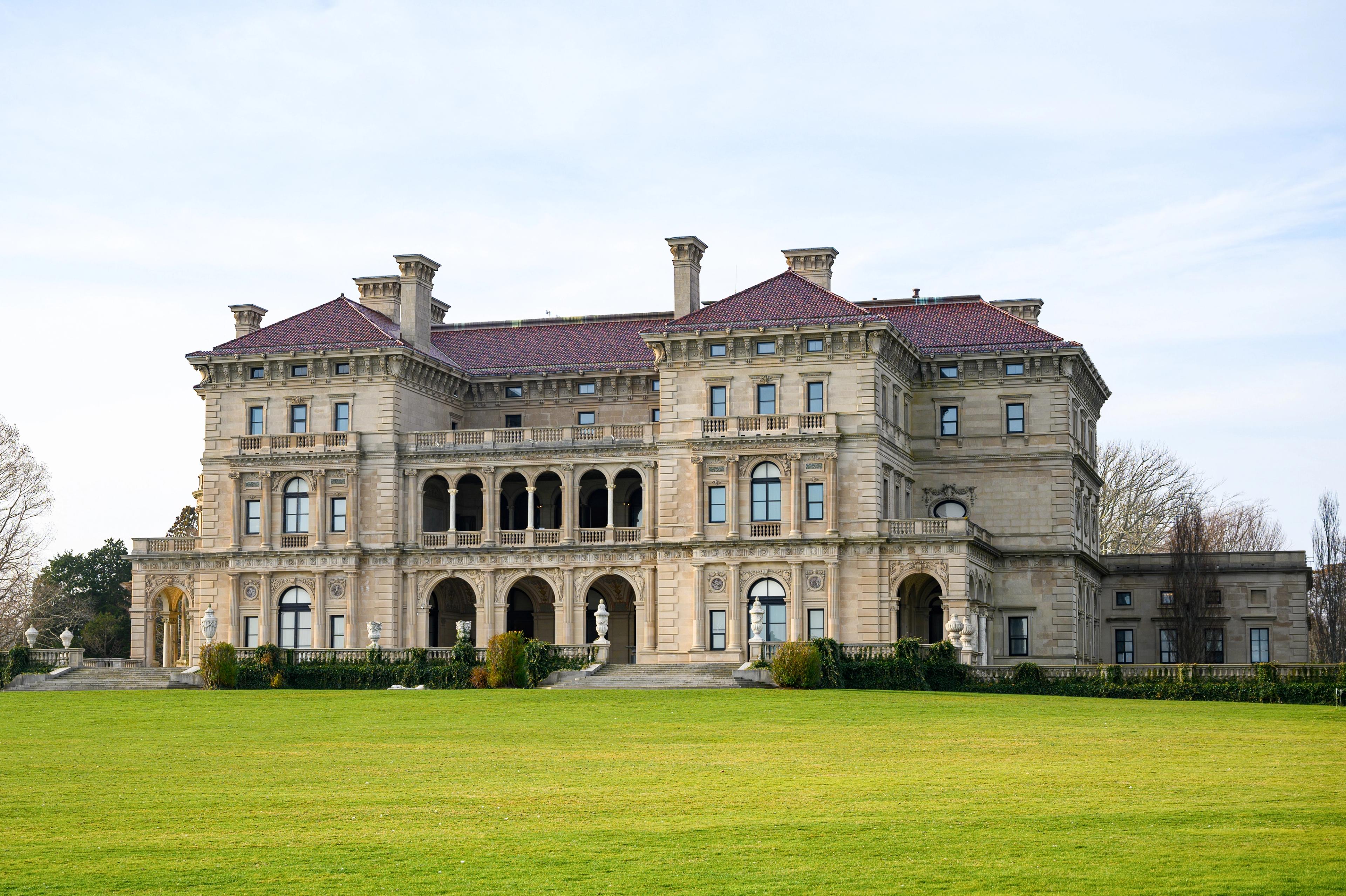
Dennis Heller · CC BY · via Wikimedia Commons
Why It Matters
The Breakers is the grandest of Newport's Gilded Age 'summer cottages' — a 70-room Italian Renaissance palazzo built for Cornelius Vanderbilt II, whose family's railroad fortune made them the richest in America. Designed by architect Richard Morris Hunt and perched on the cliffs above the Atlantic, its marble halls, gilded rooms, and sweeping ocean views embody the extravagance of the late 19th century. Today it is Rhode Island's most visited attraction and a definitive monument to America's Gilded Age.
The History
By the 1890s Newport, Rhode Island, had become the summer playground of America's wealthiest families, who built lavish seaside mansions they modestly called 'cottages.' Cornelius Vanderbilt II — grandson of the shipping and railroad tycoon Commodore Cornelius Vanderbilt and chairman of the New York Central Railroad — had bought a property called The Breakers, but its wooden house burned down in 1892.
To replace it, Vanderbilt hired Richard Morris Hunt, the leading architect of the age, who had also designed the family's Biltmore estate in North Carolina. Between 1893 and 1895 Hunt raised a five-story, 70-room mansion modeled on the Renaissance palazzos of Genoa and Turin, built to be fireproof with a steel frame and clad in Indiana limestone. Its interiors were fitted with imported marble, alabaster, rare woods, and gilded rooms crafted by teams of European artisans.
The Vanderbilts summered at The Breakers in grand style, but the family's fortunes and tastes shifted in the 20th century. In 1948 the Preservation Society of Newport County leased the mansion and opened it to the public, later buying it outright, while a member of the Vanderbilt family continued to live in an upper-floor apartment for decades. Now a National Historic Landmark, The Breakers is the most visited historic house in Rhode Island.
Through the Years
- 1885
Cornelius Vanderbilt II buys the Breakers property in Newport.
- 1892
The original wooden house on the site burns down.
- 1893-1895
Richard Morris Hunt builds the present 70-room mansion.
- 1895
The Breakers is completed and opened for the summer season.
- 1948
The Preservation Society of Newport County opens it to the public.
- 1994
Designated a National Historic Landmark.
The Archive
 Plate 01
The Breakers. Newport, RI. Cornelius bedroom.
Renata3 · CC BY-SA · via Wikimedia Commons
 Plate 02
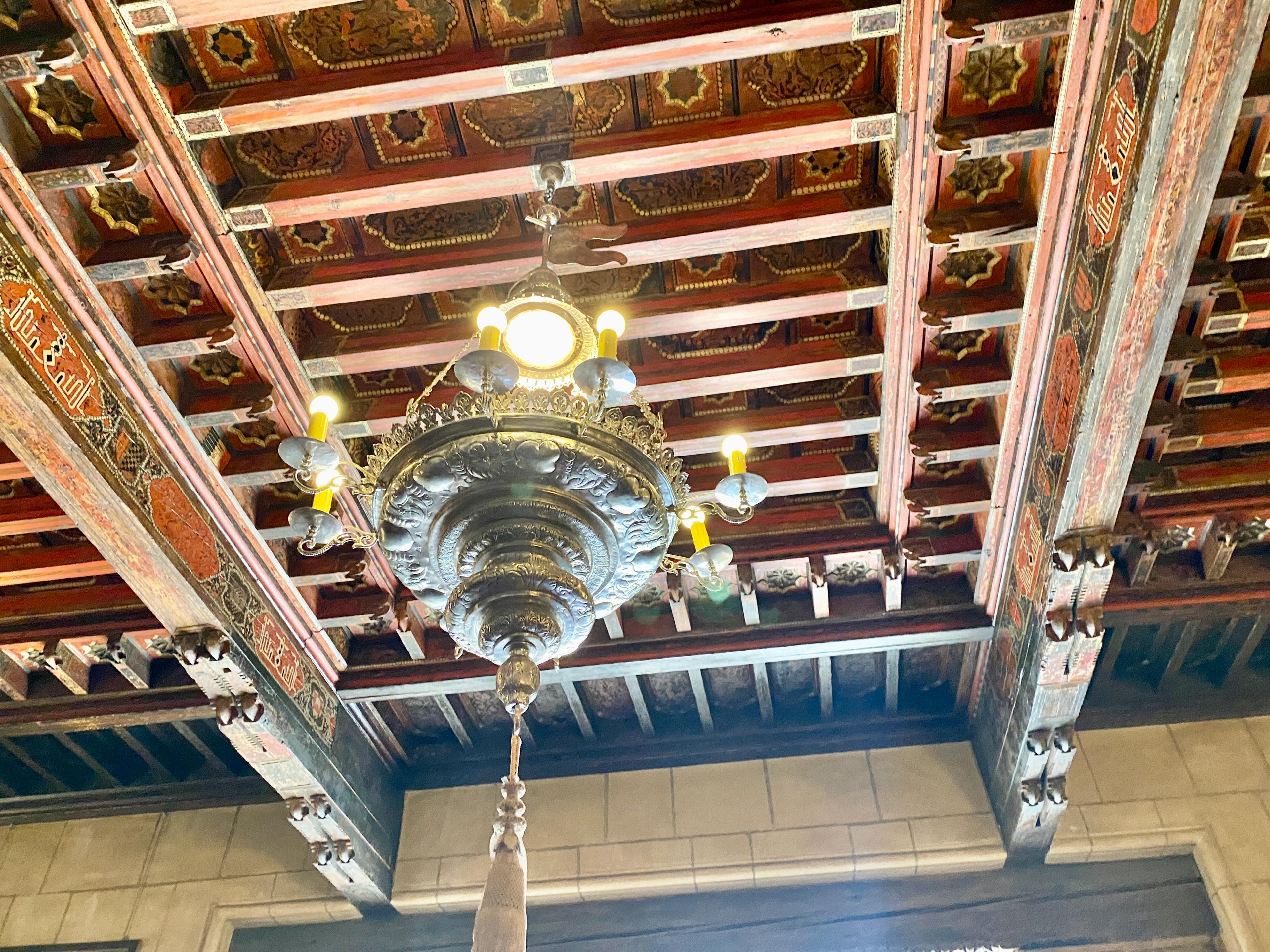
Dining room ceiling in The Breakers.
Renata3 · CC BY-SA · via Wikimedia Commons
 Plate 03
The Breakers. Newport, RI. Dining room with chandelier.
Renata3 · CC BY-SA · via Wikimedia Commons
 Plate 04
The Breakers. Newport, RI. Dining room.
Renata3 · CC BY-SA · via Wikimedia Commons
 Plate 05
The Breakers. Newport, RI. Great Hall chandelier.
Renata3 · CC BY-SA · via Wikimedia Commons
 Plate 06
The gate of the Breakers— Vanderbilt mansion.
xiquinhosilva · CC BY · via Wikimedia Commons
 Plate 07
The Breakers. Newport, RI. Gallery.
Renata3 · CC BY-SA · via Wikimedia Commons
 Plate 08
The Breakers Dining Room.
Doglover.Coton · CC0 · via Wikimedia Commons
 Plate 09
The Breakers. Newport, RI. Dining room ceiling.
Renata3 · CC BY-SA · via Wikimedia Commons
 Plate 10
Music room inside the Breakers mansion.
Renata3 · CC BY-SA · via Wikimedia Commons
Facts & Figures
The Mansion
- Built
- 1893-1895
- Architect
- Richard Morris Hunt
- Style
- Italian Renaissance Revival
- Size
- 70 rooms, ~125,000 sq ft, 5 stories
Built for
- Owner
- Cornelius Vanderbilt II
The Estate
- Setting
- 13 acres on the Cliff Walk, over the Atlantic
Today
- Operator
- Preservation Society of Newport County
The Register
- Established
- 1895
- Builder
- Richard Morris Hunt, for Cornelius Vanderbilt II
- Area of significance
- Architecture & Gilded Age
- County
- Newport
- Acreage
- 13.1 acres
- National Register ref.
- 71000019
- Listed on the Register
- September 10, 1971
- National Historic Landmark
- October 12, 1994
Frequently Asked
Who built The Breakers?
It was built for Cornelius Vanderbilt II, a railroad magnate, and designed by architect Richard Morris Hunt between 1893 and 1895 as the family's summer home in Newport, Rhode Island.
How many rooms does The Breakers have?
The Breakers has 70 rooms across five stories and about 125,000 square feet, making it the grandest of Newport's Gilded Age mansions.
Can you visit The Breakers?
Yes. The Breakers is open to the public as a museum run by the Preservation Society of Newport County, with tours of the mansion and its grounds overlooking the Atlantic.
Why is it called The Breakers?
The name comes from the ocean waves, or breakers, crashing against the rocks on the cliffs below the estate, which sits along Newport's famous Cliff Walk.