- Gilded Age (1865–1900)
- 42.6435° N, 71.3151° W
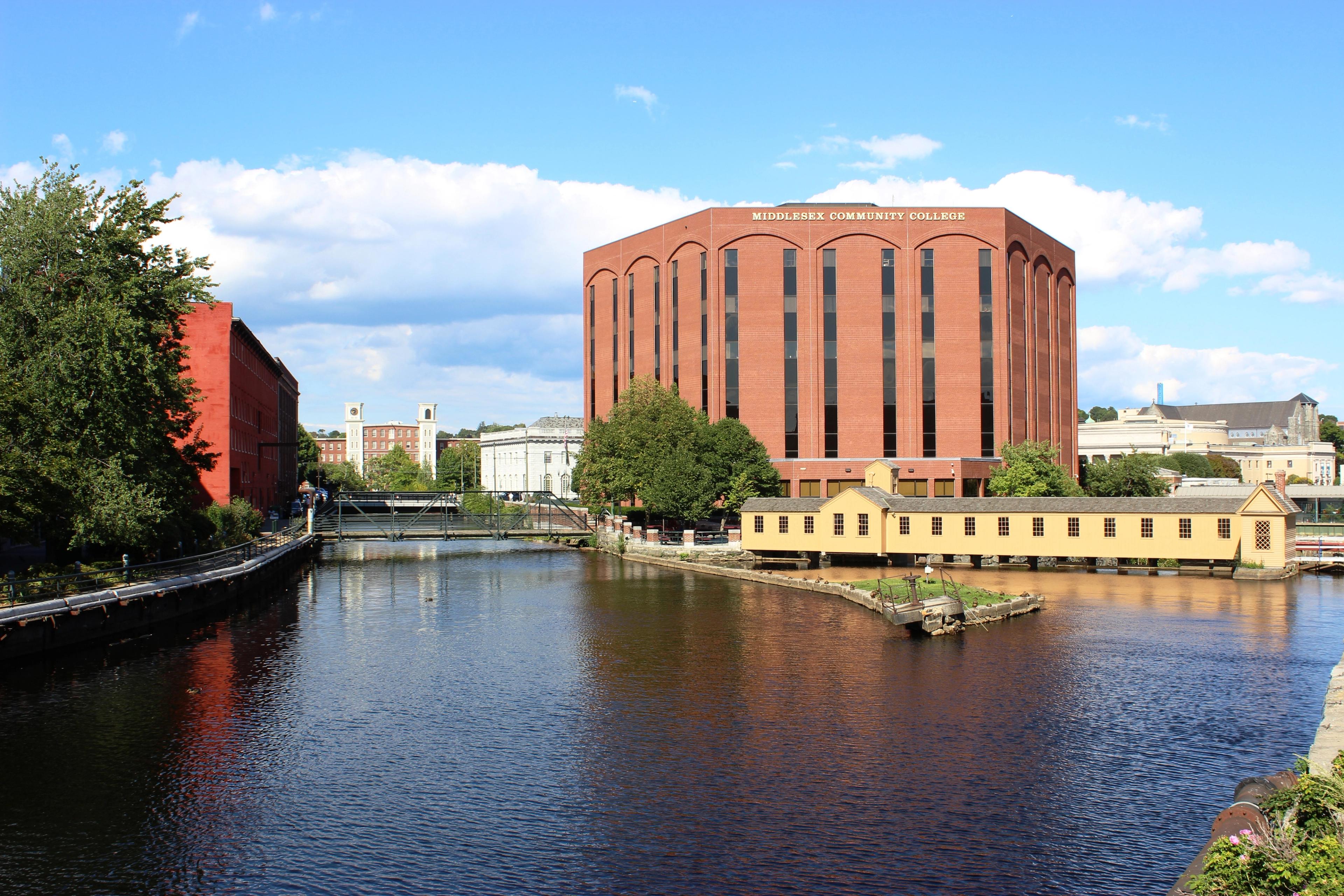
Lowell National Historical Park
Lowell, Massachusetts · Established 1823
NPS · Public domain · via Wikimedia Commons
Why It Matters
Lowell was where America built its first factory city from scratch, and where the Industrial Revolution first put thousands of young women to work under one roof. Named for textile pioneer Francis Cabot Lowell, the city harnessed the Merrimack River through miles of canals to power integrated cotton mills, and its famous 'mill girls' — New England farm daughters who lived in company boardinghouses and even published their own literary magazine — became a symbol, for a time, of industrial progress before later immigrant labor and grinding conditions revealed its harsher realities.
The History
Francis Cabot Lowell had studied British textile mills and, unable to legally bring mill plans out of England, worked from memory to help design an integrated power loom system. After his death, his partners, the Boston Associates, founded a planned mill town on the Merrimack River in 1823, naming it Lowell in his honor. Miles of canals were dug to funnel river power to a growing complex of brick mill buildings.
The mills recruited young unmarried women from New England farms, housing them in supervised company boardinghouses and offering a controlled, respectable path into wage labor unusual for its time. These 'mill girls' worked long hours amid deafening looms but also organized libraries, church groups, and the Lowell Offering, a literary magazine written entirely by female operatives — and some staged early strikes, or 'turn-outs,' against wage cuts as early as 1834.
By the mid-19th century, waves of Irish, French-Canadian, Greek, and Portuguese immigrants replaced the original mill girls as the workforce, and Lowell became one of the largest textile manufacturing centers in the world, at its peak home to ten major mill complexes. Competition from Southern mills and overseas manufacturing led to Lowell's industrial decline through the 20th century. Congress established Lowell National Historical Park in 1978, preserving the canal system, mill buildings, and boardinghouses to tell the story of America's Industrial Revolution.
Through the Years
- 1823
The Boston Associates found the planned mill town of Lowell
- 1834
Mill girls stage an early labor 'turn-out' against wage cuts
- 1840s
The Lowell Offering literary magazine is published by female mill workers
- 1850s
Immigrant labor increasingly replaces the original 'mill girl' workforce
- 1978
Congress establishes Lowell National Historical Park
The Archive
 Plate 01
Mill Girls and Immigrants Exhibit , Lowell National Historical Park.
NPS · Public domain · via Wikimedia Commons
 Plate 02Historic
View of the river in Lowell National Historical Park.
National Park Service Digital Image Archives · Public domain · via Wikimedia Commons
 Plate 03
Restored Boardinghouse at the Mill Girls and Immigrants Exhibit, Lowell National Historical Park.
NPS · Public domain · via Wikimedia Commons
Facts & Figures
History
- Founded
- 1823, named for Francis Cabot Lowell
Labor
- Workforce
- 'Mill girls' — young New England women
- Early strikes
- 'Turn-outs' beginning 1834
Culture
- Publication
- The Lowell Offering literary magazine
Infrastructure
- Power source
- Merrimack River canal system
Significance
- Peak
- One of the world's largest textile centers
Designation
- National Historical Park
- Established 1978
The Register
- Established
- 1823
- Builder
- Boston Associates (Francis Cabot Lowell's investors)
- Area of significance
- Industrial history; labor history; women's history
Frequently Asked
Why was Lowell built?
Investors known as the Boston Associates founded Lowell in 1823 as a planned industrial city to house integrated cotton mills powered by canals diverted from the Merrimack River.
Who were the Lowell 'mill girls'?
They were young, unmarried women recruited from New England farms to work the mills, housed in company-run boardinghouses and offered an unusually structured, if demanding, entry into industrial wage labor.
Did Lowell mill workers organize for better conditions?
Yes. Mill girls staged early strikes called 'turn-outs' beginning in 1834 to protest wage cuts, among the first organized labor actions by women in American history.
What can you see at Lowell National Historical Park today?
The park preserves mill buildings, the historic canal system (with boat tours), a working weave room, and exhibits on both the mill girls and the immigrant workers who followed them.