PLBthetoonist · CC BY-SA · via Wikimedia Commons
The Civil War can be told as a list of battles, but it can also be walked. Five places in the register trace its arc from beginning to end: a harbor fort where it started, two fields where it turned, a village where it effectively ended, and a theater where the peace lost the president who had carried the nation through the war.
Charleston Harbor, April 1861
At 4:30 in the morning on April 12, 1861, Confederate batteries around Charleston Harbor opened fire on Fort Sumter. Its small Union garrison, under Major Robert Anderson, held out for some thirty-four hours before surrendering. The bombardment itself killed no one; the war's first deaths at Sumter came after the surrender, in an accidental explosion during the garrison's salute to its flag.
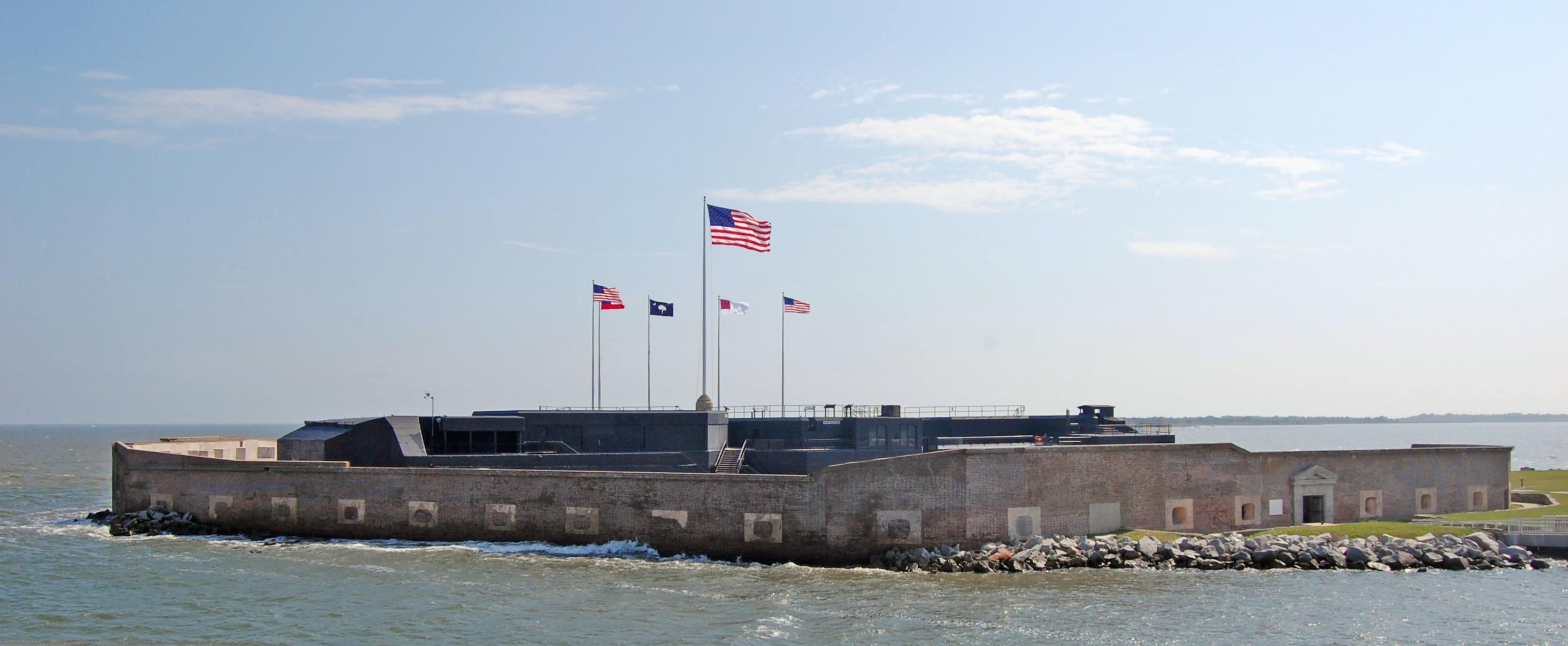
Fort Sumter today, on its island at the mouth of Charleston Harbor.
Bubba73 (talk) , (Jud McCranie) · CC BY-SA · via Wikimedia Commons
Sharpsburg, September 1862
On September 17, 1862, Union and Confederate armies met along Antietam Creek near Sharpsburg, Maryland. By nightfall roughly 23,000 men had been killed, wounded or gone missing — still the bloodiest single day in American history. Antietam ended Robert E. Lee's first invasion of the North, and it gave Abraham Lincoln the victory he had been waiting for: five days later he issued the preliminary Emancipation Proclamation, and the war became, openly, a war about slavery.
Gettysburg, July and November 1863
The following summer Lee marched north again, and for three days — July 1 to 3, 1863 — his army fought the Army of the Potomac around the crossroads town of Gettysburg, Pennsylvania. The battle cost the two sides some 50,000 casualties between them and ended with the failed Confederate assault remembered as Pickett's Charge. Lee never again led an invasion of the North.
Four months later Lincoln came to dedicate a cemetery for the Union dead. His address lasted about two minutes.
“…that government of the people, by the people, for the people, shall not perish from the earth.”
Appomattox Court House, April 9, 1865
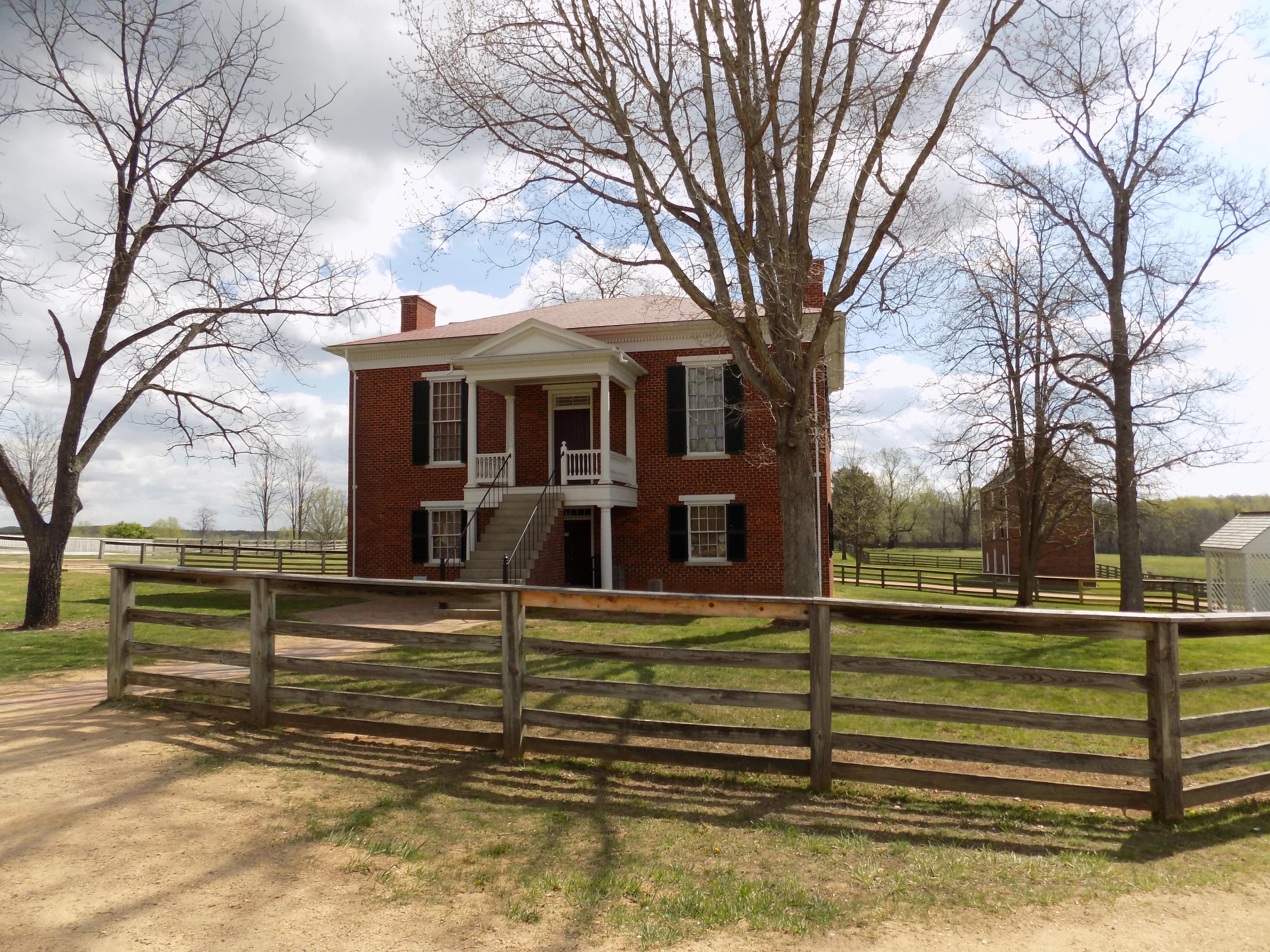
Lee's army, starved and outnumbered after the fall of Richmond, was cornered in central Virginia in the first days of April 1865. On April 9 he met Ulysses S. Grant in the parlor of Wilmer McLean's house in the village of Appomattox Court House and surrendered the Army of Northern Virginia. Grant's terms were generous: officers kept their sidearms, men who owned horses could take them home, and the paroled soldiers were not to be disturbed by United States authority so long as they kept their paroles.
Grant later wrote that he took no joy in the moment:
I felt like anything rather than rejoicing at the downfall of a foe who had fought so long and valiantly, and had suffered so much for a cause, though that cause was, I believe, one of the worst for which a people ever fought, and one for which there was the least excuse.
Ford's Theatre, five days later
On the evening of April 14, 1865 — Good Friday — Lincoln went to see the comedy Our American Cousin at Ford's Theatre in Washington. During the third act John Wilkes Booth, an actor and Confederate sympathizer, slipped into the presidential box and shot him in the back of the head. Lincoln was carried across Tenth Street to the Petersen House, where he died the next morning.
Both buildings now belong to the same National Park Service site, and the theater still stages plays. Taken together, the five places tell the war in miniature: how it began, what it cost, what it came to be fought for, how it ended — and how quickly the peace was shaken.