- Civil War (1861–1865)
- 37.3771° N, 78.7958° W
Appomattox Court House
Appomattox, Virginia · Established 1865
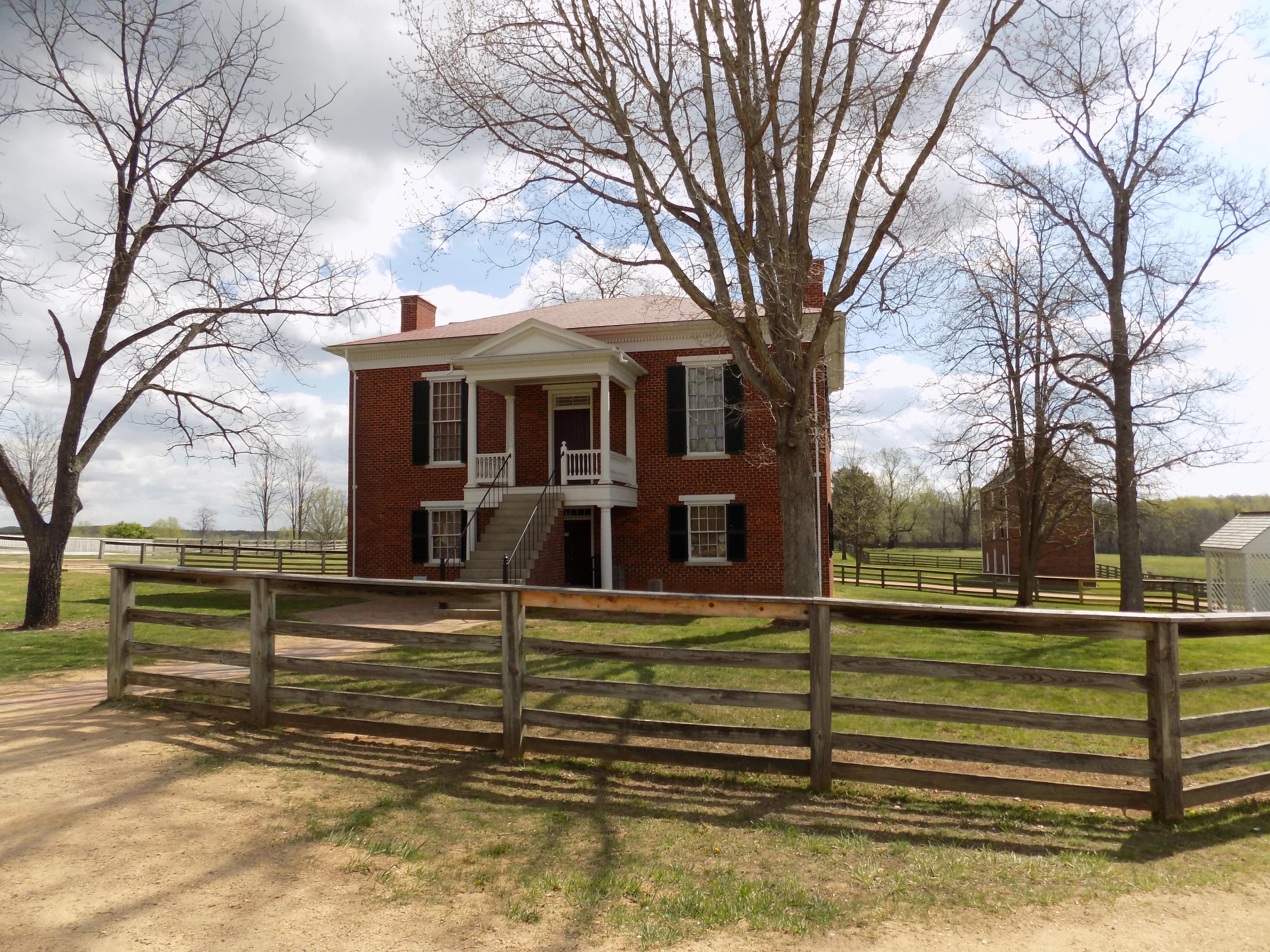
PLBthetoonist · CC BY-SA · via Wikimedia Commons
Why It Matters
Appomattox Court House is where the American Civil War effectively ended. On April 9, 1865, in the parlor of a private home in this small Virginia village, Confederate General Robert E. Lee surrendered his Army of Northern Virginia to Union General Ulysses S. Grant. The generous terms Grant offered set a tone of reconciliation for a shattered nation. Preserved as a national historical park, the restored village stands as the symbolic close of four years of the bloodiest conflict in American history.
The History
By the spring of 1865, four years of war had worn the Confederacy to exhaustion. After the fall of Richmond, Robert E. Lee's Army of Northern Virginia retreated westward, hoping to escape and fight on, but Ulysses S. Grant's Union forces cut off its path near the village of Appomattox Court House. Surrounded and out of options, Lee requested a meeting to discuss terms.
On the afternoon of April 9, 1865, the two generals met in the parlor of the home of Wilmer McLean. In a striking coincidence, McLean had moved to Appomattox after the war's first major battle was fought around his previous home near Manassas — so, it was said, the war 'began in his front yard and ended in his front parlor.' Grant offered honorable terms: Confederate soldiers would be paroled and allowed to go home, officers could keep their sidearms, and men could keep their horses for spring planting.
Lee accepted, and about 28,000 Confederate troops were paroled in the days that followed. Though other Confederate armies remained in the field for a few more weeks, Appomattox marked the symbolic end of the Civil War. The village later faded, and the McLean House was even dismantled in a failed scheme to move it; the National Park Service reconstructed the house and restored the village, which is now preserved as Appomattox Court House National Historical Park.
Through the Years
- 1865
Richmond falls; Lee's army retreats westward in early April.
- 1865
Lee surrenders to Grant at the McLean House on April 9.
- 1865
About 28,000 Confederate soldiers are paroled at Appomattox.
- 1893
The McLean House is dismantled for a museum scheme that fails.
- 1940
Congress authorizes the national historical park.
- 1949
The reconstructed McLean House is completed and opened.
The Archive
 Plate 01
Front view of Appomattox Court House
Victoria Stauffenberg · Public domain · via Wikimedia Commons
 Plate 02
Appomattox Court House Historical Park
Doug Coldwell · CC BY-SA · via Wikimedia Commons
Facts & Figures
The Surrender
- Date
- April 9, 1865
- Generals
- Lee surrenders to Grant
- Location
- The parlor of the McLean House
The Terms
- Grant offered
- Parole; soldiers kept horses, officers kept sidearms
- Paroled
- ~28,000 Confederate troops
The Irony
- Wilmer McLean
- Fled Manassas in 1861; the war ended in his parlor
Today
- Operator
- National Park Service
The Register
- Established
- 1865
- Area of significance
- Military — American Civil War
Frequently Asked
What happened at Appomattox Court House?
Confederate General Robert E. Lee surrendered his army to Union General Ulysses S. Grant there on April 9, 1865, an event that effectively ended the American Civil War.
Did the Civil War end at Appomattox?
Appomattox marked the symbolic end of the war. Lee's surrender was the most significant, though several other Confederate armies surrendered separately over the following weeks.
Where exactly did Lee surrender?
In the parlor of the home of Wilmer McLean in the village of Appomattox Court House, Virginia. The house has been reconstructed on its original site.
Can you visit Appomattox Court House?
Yes. It is a national historical park in Virginia, with the restored village and the reconstructed McLean House where the surrender took place open to visitors.