- Civil War (1861–1865)
- 39.4744° N, 77.7447° W
Antietam Battlefield
Sharpsburg, Maryland · Established 1862
Ctrzdrmom · CC BY-SA · via Wikimedia Commons
Why It Matters
Antietam was the bloodiest single day in American history. On September 17, 1862, near Sharpsburg, Maryland, the armies of Robert E. Lee and George B. McClellan fought a battle that left roughly 22,700 men killed, wounded, or missing in a single day. Though tactically inconclusive, it halted Lee's first invasion of the North — and the strategic victory gave President Lincoln the moment he needed to issue the preliminary Emancipation Proclamation, transforming the Civil War into a struggle to end slavery.
The History
In September 1862, buoyed by victories in Virginia, General Robert E. Lee led his Army of Northern Virginia across the Potomac into Maryland, hoping a triumph on Northern soil would win foreign recognition for the Confederacy and sway Northern opinion. Union General George B. McClellan moved to intercept him, aided by a remarkable stroke of luck: a copy of Lee's battle plans, found wrapped around cigars, fell into Union hands.
The armies collided along Antietam Creek near Sharpsburg on September 17, 1862. The fighting raged from dawn across a cornfield, a sunken farm road, and a stone bridge over the creek, in some of the most concentrated carnage of the war. By nightfall about 22,700 men were casualties — killed, wounded, or missing — making it the bloodiest single day the nation has ever known. The battle itself was tactically a draw.
But strategically it was a Union victory: Lee withdrew back across the Potomac, his invasion broken. That outcome gave Abraham Lincoln the moment he had been waiting for, and on September 22, 1862, he issued the preliminary Emancipation Proclamation, declaring that enslaved people in the rebelling states would be freed. Antietam thus helped redefine the war's purpose and discouraged Britain and France from recognizing the Confederacy. The field is preserved today as Antietam National Battlefield.
Through the Years
- 1862
Lee invades Maryland in early September, his first move North.
- 1862
Union soldiers find a lost copy of Lee's battle plans.
- 1862
The Battle of Antietam is fought on September 17.
- 1862
~22,700 casualties make it the bloodiest day in U.S. history.
- 1862
Lincoln issues the preliminary Emancipation Proclamation on September 22.
- 1890
Congress establishes Antietam National Battlefield.
The Archive
 Plate 01
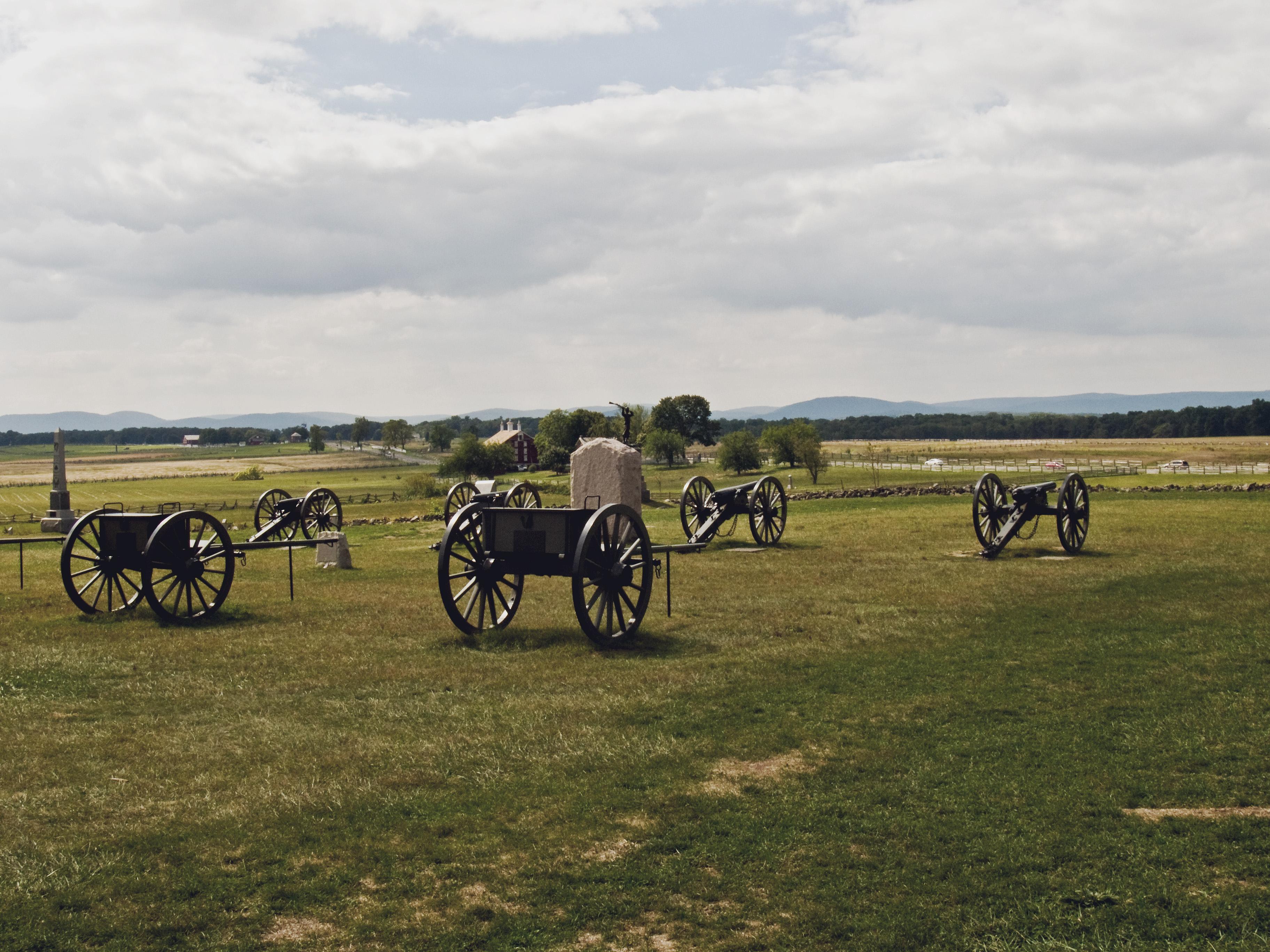
American Civil War Memorial at the Antietam National Battlefield, in northwestern Maryland.
myself ( User:Piotrus ) · CC BY-SA · via Wikimedia Commons
 Plate 02
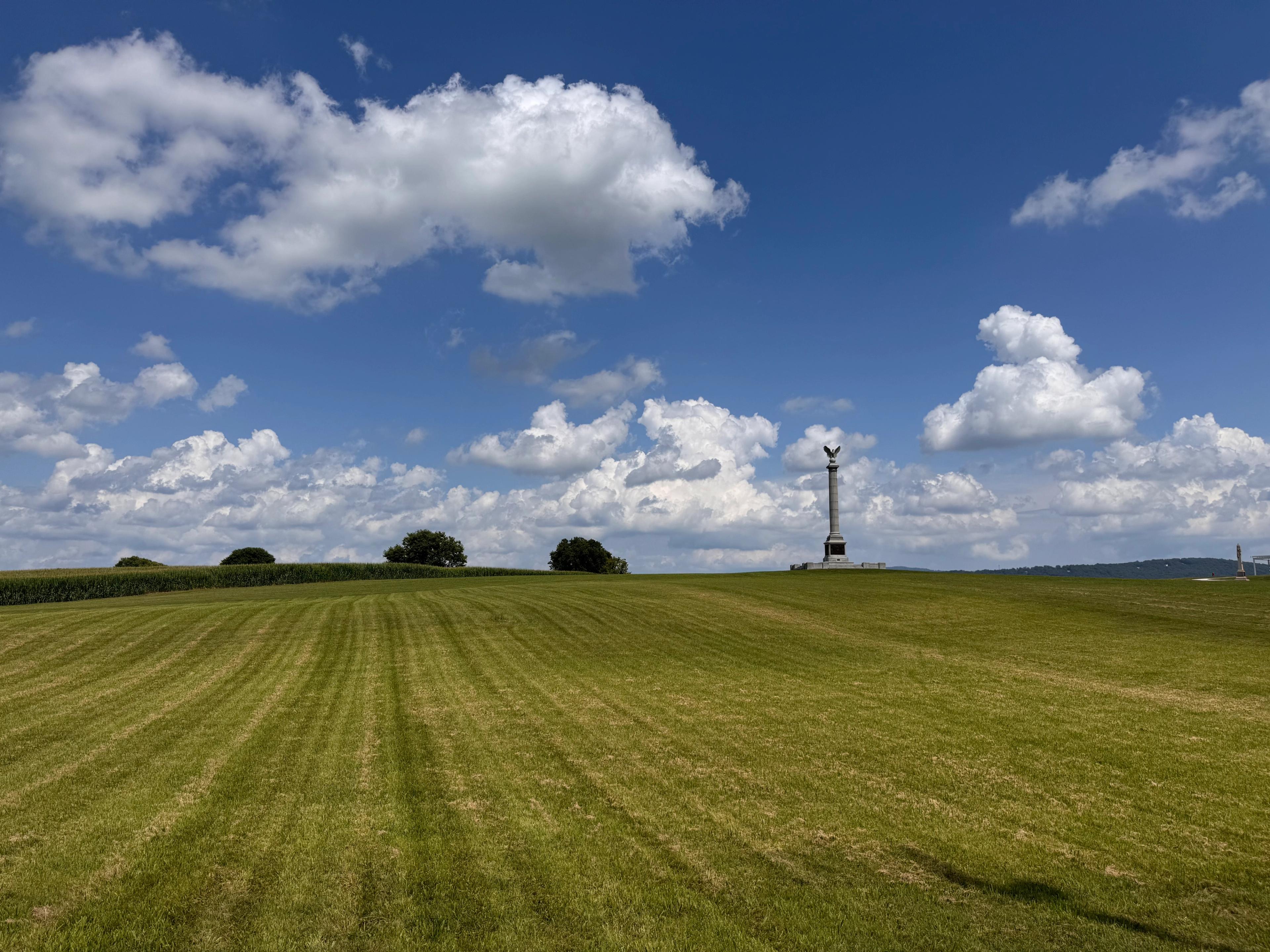
The New York Monument — at the Antietam National Battlefield.
Acroterion · CC BY-SA · via Wikimedia Commons
 Plate 03
The Dunker Church at Antietam National Battlefield, Sharpsburg, Maryland, USA.
Acroterion · CC BY-SA · via Wikimedia Commons
 Plate 04
The visitor center at Antietam National Battlefield in Maryland.
Farragutful · CC BY-SA · via Wikimedia Commons
 Plate 05
Antietam National Battlefield from Visitor Center.
Ken Lund from Las Vegas, Nevada, USA · CC BY-SA · via Wikimedia Commons
Facts & Figures
The Battle
- Date
- September 17, 1862
- Also called
- The Battle of Sharpsburg
- Casualties
- ~22,700 in one day — the bloodiest in U.S. history
- Commanders
- Lee (CSA) vs. McClellan (USA)
Key sites
- On the field
- The Cornfield, Bloody Lane, Burnside's Bridge
Consequence
- Led to
- The preliminary Emancipation Proclamation
Today
- Operator
- National Park Service
The Register
- Established
- 1862
- Area of significance
- Military — American Civil War
Frequently Asked
Why is Antietam significant?
It was the bloodiest single day in American history and ended Lee's first invasion of the North. The Union victory allowed President Lincoln to issue the preliminary Emancipation Proclamation.
How many people died at Antietam?
The battle produced about 22,700 casualties — killed, wounded, and missing — in one day, with roughly 3,600 killed. It remains the deadliest single day in U.S. history.
Who won the Battle of Antietam?
The battle was tactically inconclusive, but it counted as a strategic Union victory because Lee's army was forced to retreat back to Virginia, ending his invasion of the North.
Can you visit Antietam Battlefield?
Yes. Antietam National Battlefield near Sharpsburg, Maryland, preserves the field with a visitor center, a driving tour, and landmarks like Burnside's Bridge and the Sunken Road.