Rich Niewiroski Jr. · CC BY · via Wikimedia Commons
The twentieth century was built on things that had never been done before: flying, building a hundred stories into the sky, holding back a river in the desert, spanning the mouth of a bay. Five landmarks in the register mark those firsts, in the order they happened.
Kill Devil Hills, 1903: flight
On December 17, 1903, on the windswept dunes near Kitty Hawk, North Carolina, Orville and Wilbur Wright made the first sustained, controlled flights in a powered airplane. The first, with Orville at the controls, lasted twelve seconds and covered 120 feet. By the fourth and last flight of the day, Wilbur flew 852 feet in 59 seconds. Soon afterward a gust of wind flipped the damaged airplane over, and it never flew again. The Wright Brothers National Memorial marks the ground, with markers showing where each flight landed.
New York, 1931: height
The Empire State Building was begun on March 17, 1930, and opened on May 1, 1931 — thirteen and a half months later, in the depths of the Depression. It was the tallest building in the world until 1970, when the North Tower of the World Trade Center overtook it, and its observation decks remain among the most visited in the city.
The Colorado River, 1935: power
On the Arizona–Nevada border, the Colorado River was dammed in a narrow canyon by a structure unlike anything built before. Hoover Dam was constructed between 1931 and 1936 by a consortium called Six Companies, which handed it to the federal government more than two years ahead of schedule. President Franklin D. Roosevelt dedicated it on September 30, 1935. Its reservoir, Lake Mead, and its power plant helped make the growth of the modern Southwest possible.
San Francisco, 1937: span
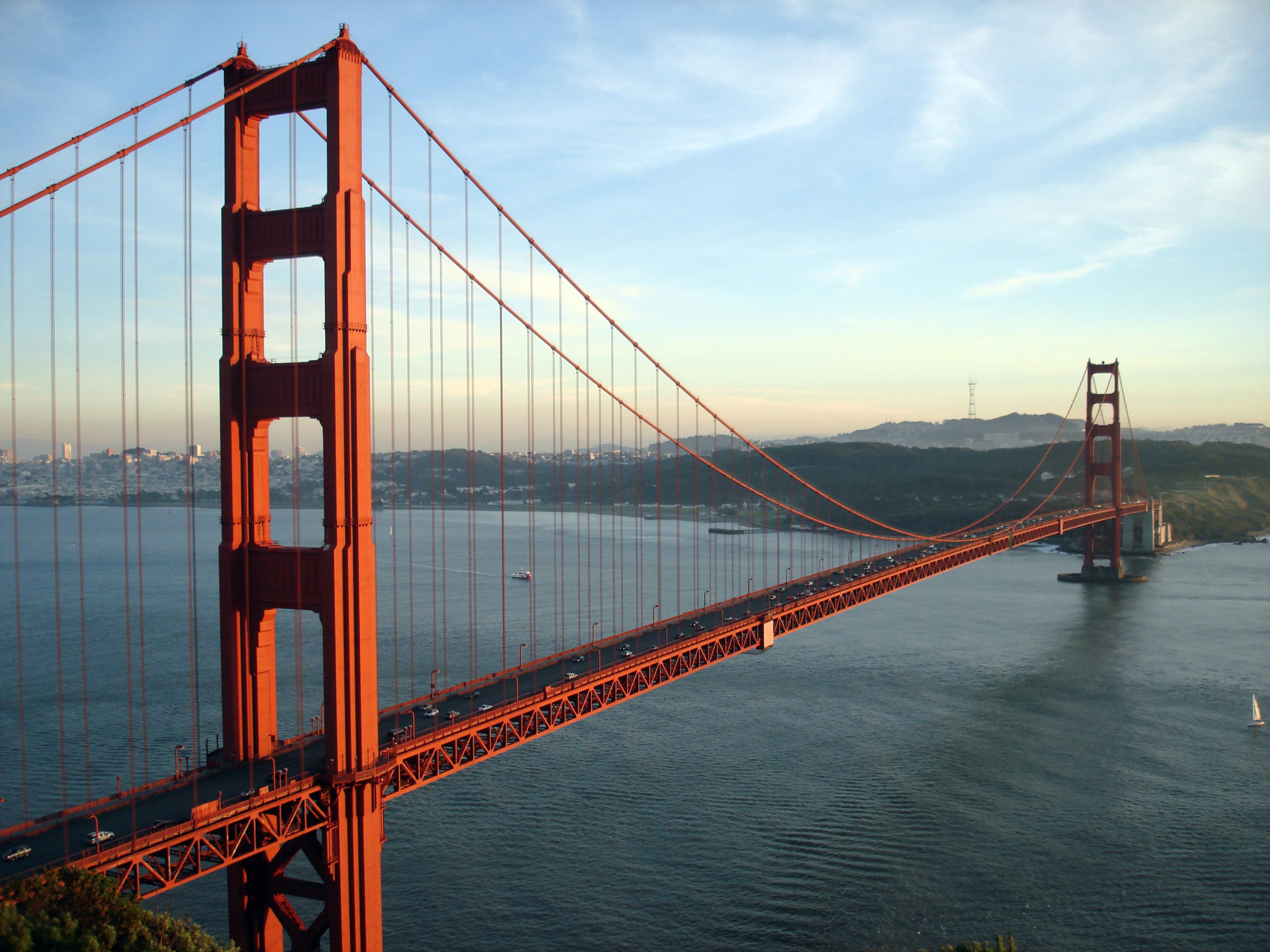
The Golden Gate Bridge opened to the public on May 27, 1937. With a main span of 4,200 feet, it was the longest and tallest suspension bridge in the world, holding the first title until New York's Verrazzano–Narrows Bridge opened in 1964. Its color, "International Orange," was chosen to stand out in fog and to suit the headlands around it.
St. Louis, 1965: the arch
The last of the five is less a feat of use than of form. The architect Eero Saarinen designed the Gateway Arch in 1947 as a monument to westward expansion. Built of stainless steel, it rises 630 feet over the Mississippi riverfront. Construction began in 1963; the final section was set in place on October 28, 1965, and the arch opened to the public in 1967. Small tram cars carry visitors up inside its legs to a viewing room at the top.
In sixty-two years the country went from a twelve-second flight to a steel arch sixty-three stories tall. Each of these landmarks can still be visited — and in most of them you can go to the top.