Carol M. Highsmith derivative work: upstate NYer · Public domain · via Wikimedia Commons
The National Mall in Washington is the country's great outdoor gallery of memory. Its memorials were built over more than a century and a half, and each reflects not only the person or people it honors but the moment that built it. Five in the register can be walked in an afternoon.
The Washington Monument
Construction of the Washington Monument began in 1848. Money ran short, a fight broke out over control of the private society building it, and then came the Civil War: work stopped in 1854 and did not resume until 1877. The obelisk was finally completed in 1884, at 555 feet the tallest structure in the world until the Eiffel Tower surpassed it in 1889. The long pause is still visible: about 150 feet up, the marble changes shade where the new stone began.
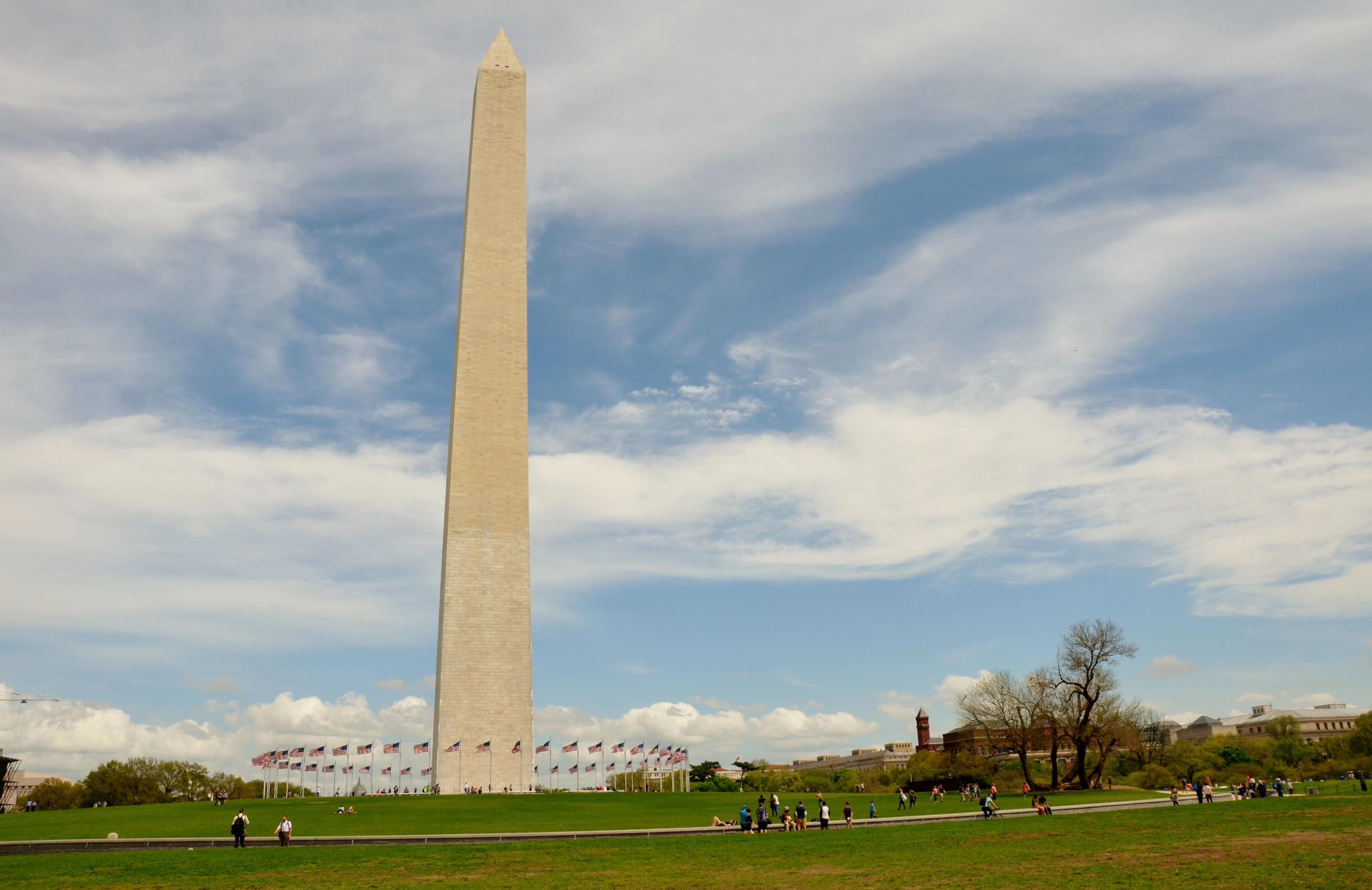
The Washington Monument, completed in 1884.
Roman Eugeniusz · CC BY-SA · via Wikimedia Commons
The Lincoln Memorial
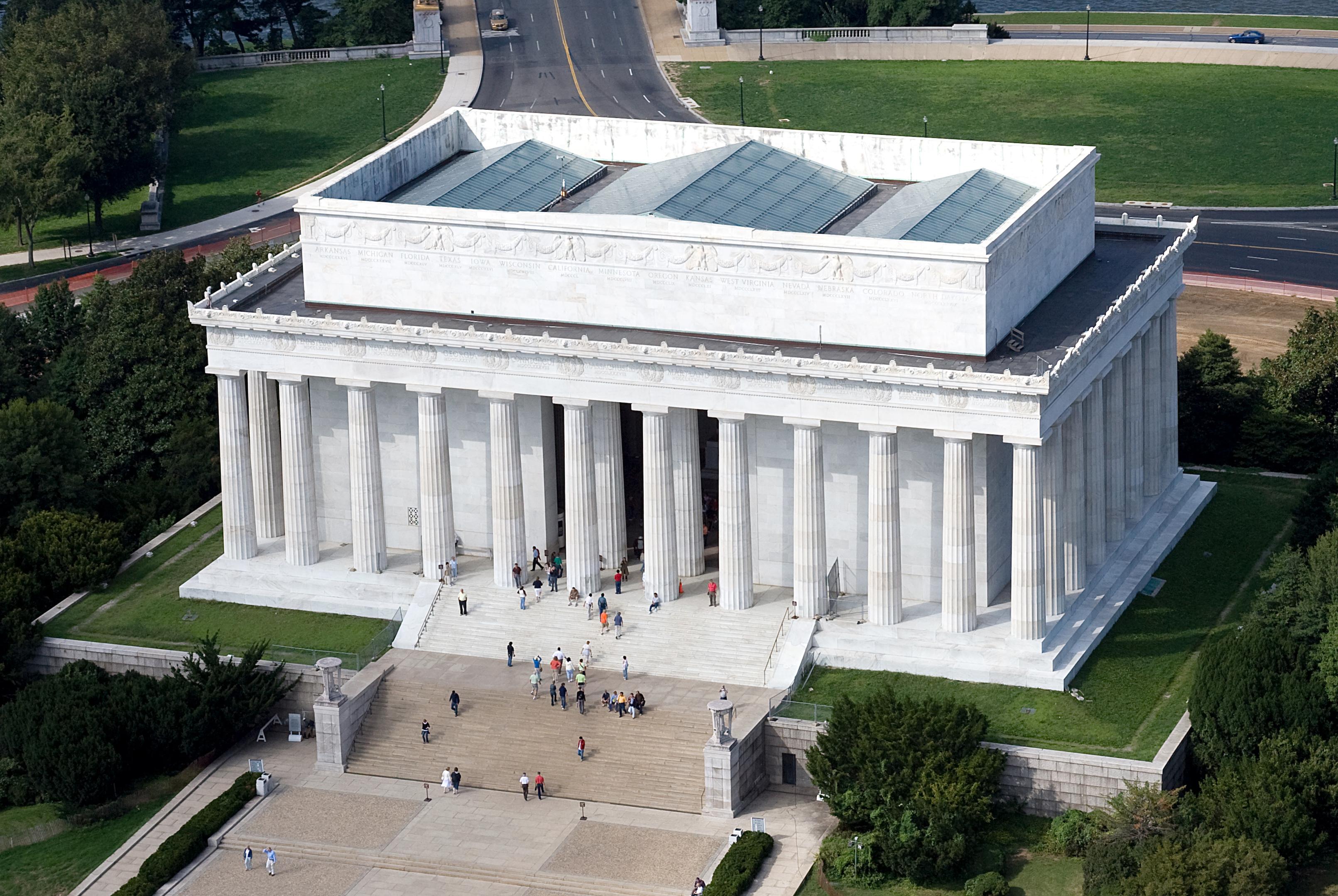
At the Mall's western end, the Lincoln Memorial was dedicated on May 30, 1922. The architect Henry Bacon designed it as a Greek temple; inside sits Daniel Chester French's great seated figure of Lincoln, carved in marble. The walls carry the texts of the Gettysburg Address and Lincoln's Second Inaugural Address, and above the statue is an epitaph written by the critic Royal Cortissoz.
“In this temple / as in the hearts of the people / for whom he saved the Union / the memory of Abraham Lincoln / is enshrined forever”
The Jefferson Memorial
South across the Tidal Basin, the Jefferson Memorial was dedicated by President Franklin D. Roosevelt on April 13, 1943, the two-hundredth anniversary of Jefferson's birth. Its architect, John Russell Pope, drew on the Roman Pantheon and on Jefferson's own domed Rotunda at the University of Virginia. It was dedicated in the middle of the Second World War.
The Vietnam Veterans Memorial
The Vietnam Veterans Memorial broke with everything around it. Designed by Maya Lin, then an architecture student, it is a low wall of polished black granite set into the ground, inscribed with the names of those who died or remain missing, listed in the order they were lost. It was completed in 1982 with 57,939 names; more have been added since, and there are now more than 58,000. Visitors see their own reflections among the names.
The Martin Luther King Jr. Memorial
The newest of the five, the Martin Luther King Jr. Memorial, opened in 2011 at the northwest corner of the Tidal Basin. It is the first memorial on or near the Mall to honor an African American. It stands on a sightline between the Lincoln Memorial and the Jefferson Memorial — between the president who issued the Emancipation Proclamation and the author of the Declaration of Independence, whose promises King called on the nation to keep.
Walked in order, the five trace how the country has chosen to remember: from an obelisk and two classical temples to a wall that names every individual, and a stone that asks what comes next.