- The 20th Century (1900–2000)
- 37.8199° N, 122.4783° W
Golden Gate Bridge
San Francisco, California · Established 1937
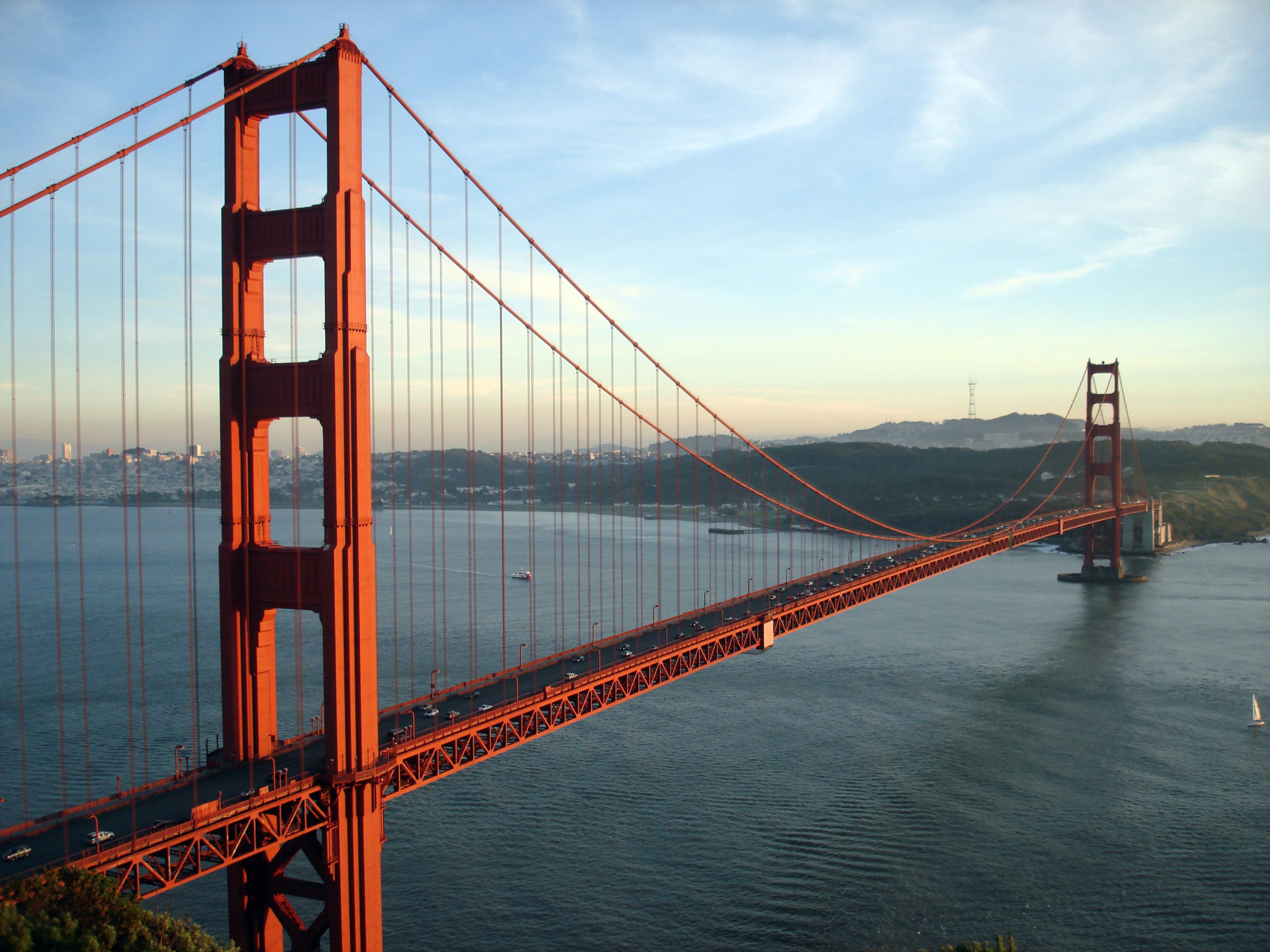
Rich Niewiroski Jr. · CC BY · via Wikimedia Commons
Why It Matters
The Golden Gate Bridge is one of the most celebrated feats of engineering in the world and the defining symbol of San Francisco. Its International Orange towers, soaring above the fog and the strait that connects San Francisco Bay to the Pacific, held the record for the longest suspension-bridge main span for nearly three decades after it opened in 1937. A triumph of Depression-era ambition, it married bold engineering with Art Deco design to create what many consider the most beautiful bridge ever built.
The History
For decades a bridge across the Golden Gate strait was dismissed as impossible, given the deep, cold water, strong tides, and frequent fog. Engineer Joseph Strauss championed the project and became its chief engineer, but the elegant final design owed much to engineer Charles Ellis, who worked out the complex mathematics, and to consulting architect Irving Morrow, who shaped its Art Deco towers and lighting.
Construction began in January 1933, at the depth of the Great Depression, and the bridge was built with remarkable safety for its era: a pioneering safety net strung beneath the deck saved the lives of 19 men, who called themselves the 'Halfway to Hell Club.' Eleven workers nonetheless died before the bridge was completed. It opened on May 27, 1937, first to some 200,000 pedestrians, with vehicles following the next day.
The bridge's main span stretches 4,200 feet between towers that rise 746 feet above the water — the longest and tallest suspension bridge in the world at its opening, a main-span record it held until 1964. Its distinctive International Orange color was selected by Irving Morrow because it complemented the natural surroundings and stood out in fog. Today the bridge carries U.S. Route 101 and California Route 1 and is maintained by the Golden Gate Bridge, Highway and Transportation District.
Through the Years
- 1933
Construction begins in January at the height of the Depression.
- 1937
The bridge opens to pedestrians on May 27 and to vehicles on May 28.
- 1964
Loses its longest-main-span record to New York's Verrazzano-Narrows Bridge.
- 1987
Some 300,000 people crowd the deck on the bridge's 50th anniversary.
The Archive
 Plate 01
The Golden Gate Bridge rising above the fog.
Dongmin03 · CC BY · via Wikimedia Commons
 Plate 02Historic · 1934
Golden Gate Bridge under construction.
Library of Congress · No known restrictions · via Library of Congress
 Plate 03
M/T Alaskan Navigator passing under the Golden Gate Bridge, inbound into San Francisco Bay
Jon DiNisio · CC BY-SA · via Wikimedia Commons
 Plate 04
Golden Gate Bridge, San Francisco, California
Carol M. Highsmith Archive, Library of Congress · No known restrictions · via Library of Congress
Facts & Figures
The Span
- Main span
- 4,200 ft (1,280 m)
- Total length
- ~1.7 miles (8,981 ft)
- Tower height
- 746 ft above the water
Design
- Chief engineer
- Joseph Strauss
- Color
- International Orange
Construction
- Built
- 1933–1937
Today
- Carries
- U.S. Route 101 & California Route 1
The Register
- Established
- 1937
- Architectural style
- Art Deco suspension bridge
- Builder
- Joseph Strauss (chief engineer); Charles Ellis & Irving Morrow
- Area of significance
- Engineering
Frequently Asked
How long is the Golden Gate Bridge?
The bridge is about 1.7 miles (roughly 8,980 feet) long overall, with a main suspension span of 4,200 feet between its two towers.
What color is the Golden Gate Bridge?
It is painted a distinctive shade called International Orange, chosen by architect Irving Morrow to blend with the natural setting and stand out in fog.
When was the Golden Gate Bridge built?
It was built between 1933 and 1937, during the Great Depression, and opened to pedestrians on May 27, 1937, with vehicle traffic beginning the next day.
Can you walk across the Golden Gate Bridge?
Yes. The bridge has pedestrian and bicycle pathways, and walking across for the views of the bay, the city, and the Pacific is a popular experience. Access hours vary for pedestrians and cyclists.