- Revolutionary War (1775–1783)
- 42.3588° N, 71.0567° W
Old State House
Boston, Massachusetts · Established 1713
Crisco 1492 · CC BY-SA · via Wikimedia Commons
Why It Matters
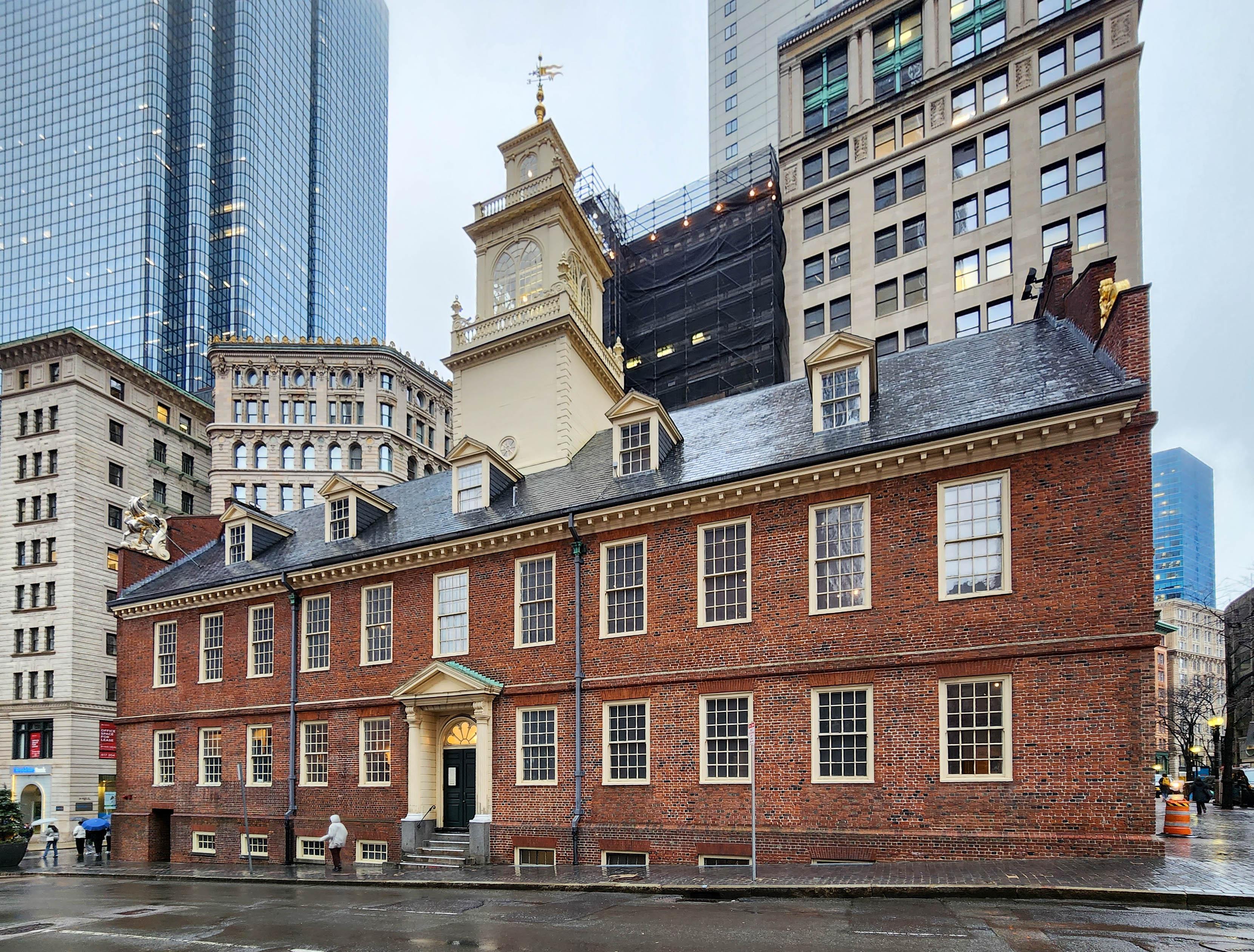
Surrounded today by Boston's glass skyscrapers, the Old State House was the seat of British colonial government in Massachusetts and a flashpoint of the Revolution itself. Beneath its balcony, British soldiers killed five colonists in the Boston Massacre in 1770. From that same balcony, the Declaration of Independence received its first public reading in Massachusetts in 1776. Few buildings anywhere trace the arc from colonial rule to revolution so directly.
The History
Built in 1713 on the site of an earlier town house, the Old State House served as the seat of the Massachusetts colonial government, housing the royal governor's council chamber and the colonial legislature. Its second-floor chamber saw fierce early debates over taxation without representation, including James Otis's arguments against the Writs of Assistance that a young John Adams later credited with sparking the Revolution.
On the snowy evening of March 5, 1770, a confrontation between British soldiers and a taunting crowd just outside the building erupted into gunfire, killing five colonists in what became known as the Boston Massacre — a cobblestone circle still marks the spot. On July 18, 1776, the Declaration of Independence was read from the Old State House's balcony to a crowd below, and the gilded lion and unicorn symbols of the crown were torn down and burned in celebration.
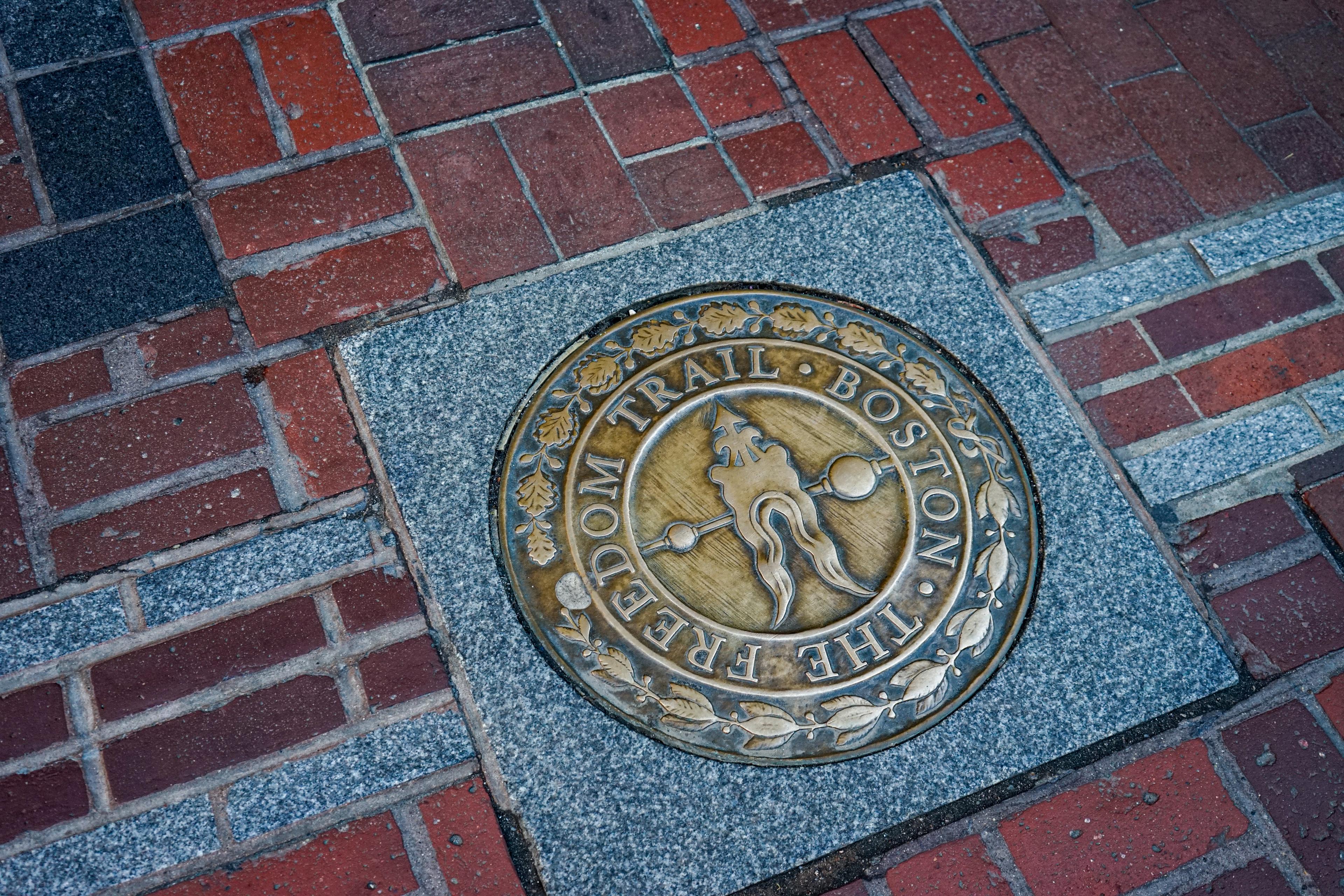
After Massachusetts moved its government to a new State House on Beacon Hill in 1798, the old building served various commercial uses and narrowly escaped demolition in the 1880s, saved by a preservation campaign led partly by the city of Chicago's interest in purchasing and relocating it. It became a museum in 1882, operated today by the nonprofit Revolutionary Spaces, and anchors the start of Boston's Freedom Trail.
Through the Years
- 1713
The Old State House is built as Massachusetts's seat of colonial government
- 1761
James Otis argues against the Writs of Assistance in the building
- 1770
The Boston Massacre occurs just outside on March 5
- 1776
The Declaration of Independence is read from the balcony on July 18
- 1798
Massachusetts's government relocates to the new State House on Beacon Hill
- 1882
The building opens as a museum
The Archive
 Plate 01
Spiraling staircase in the center of the Old State House in Boston, MA, USA.
Daniel Schwen · CC BY-SA · via Wikimedia Commons
 Plate 02
Front and side view of Old State House.
Daniel Schwen · CC BY-SA · via Wikimedia Commons
 Plate 03
Southern entrance of Old State House.
Seasider53 · CC BY · via Wikimedia Commons
Facts & Figures
History
- Built
- 1713
- Boston Massacre
- March 5, 1770 (outside the building)
- Declaration reading
- July 18, 1776, from the balcony
Architecture
- Style
- Georgian
Symbols
- Roof figures
- Lion and unicorn (royal symbols, restored)
Trail
- Location
- Anchors the Freedom Trail
Operator
- Managed by
- Revolutionary Spaces (nonprofit)
The Register
- Area of significance
- Government; American Revolution
- County
- Suffolk
- Acreage
- 0.9 acres
- National Register ref.
- 66000779
- Listed on the Register
- October 15, 1966
- National Historic Landmark
- October 9, 1960
Frequently Asked
What happened at the Boston Massacre?
On March 5, 1770, British soldiers fired into a crowd confronting them just outside the Old State House, killing five colonists in an event that inflamed anti-British sentiment.
Why was the Declaration of Independence read here?
As the traditional seat of Massachusetts government, the Old State House balcony was the customary place for official proclamations to be read to the public, including the Declaration on July 18, 1776.
Why does the building have a lion and unicorn on its roof?
They are royal symbols of the British crown. The originals were torn down and burned after the Declaration was read in 1776; the figures seen today are historical reconstructions.
Can you visit the Old State House today?
Yes. It operates as a museum with exhibits on the Revolution and the Boston Massacre, and anchors a stop on the Freedom Trail.