- Geological & Natural (Deep time)
- 44.4605° N, 110.8281° W
Old Faithful
Yellowstone National Park, Wyoming · Established 1870
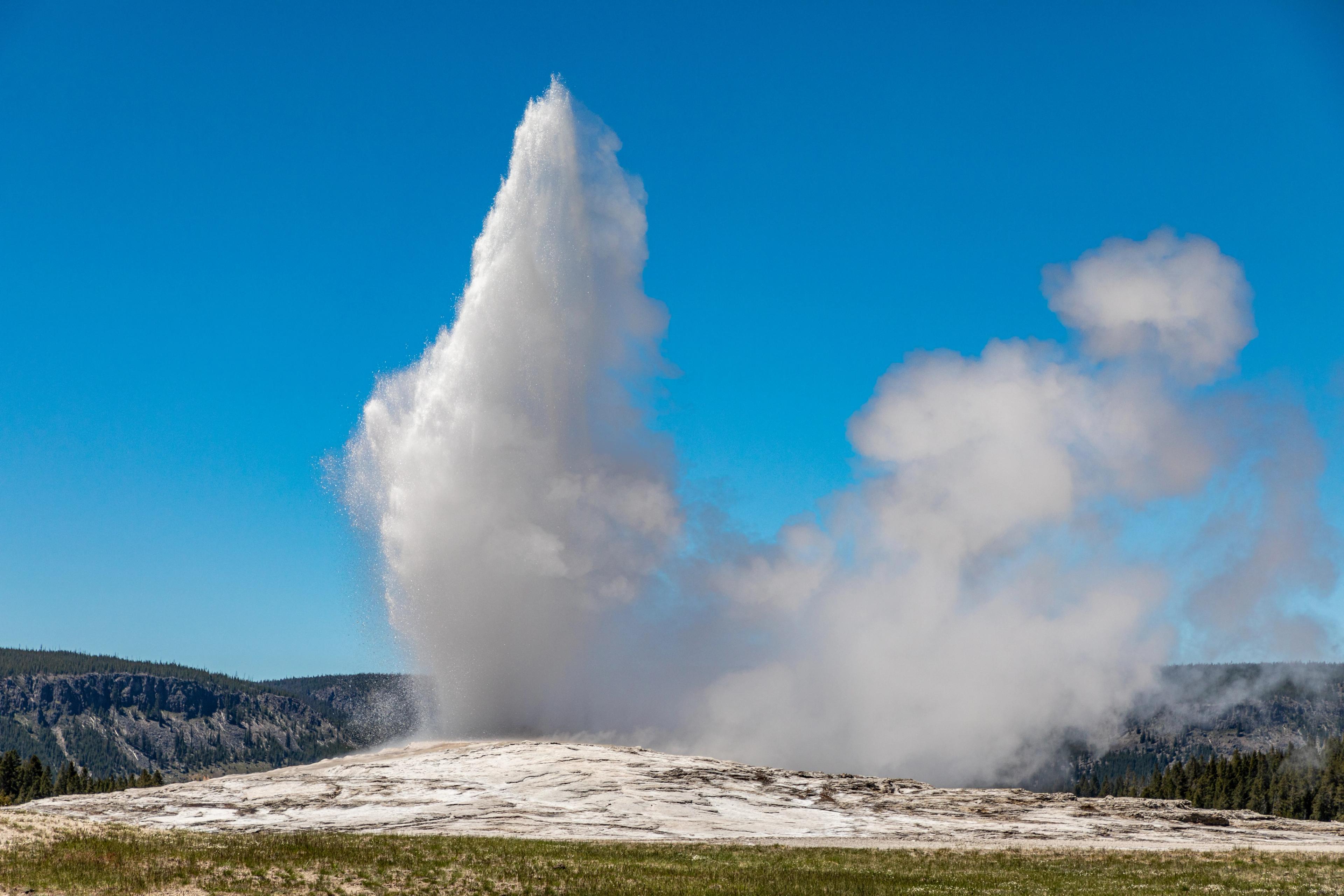
Dietmar Rabich · CC BY-SA · via Wikimedia Commons
Why It Matters
The geyser whose reliable eruptions helped convince a skeptical Congress that Yellowstone's wonders were real, kickstarting the entire American national park idea.
The History
Members of the 1870 Washburn-Langford-Doane Expedition, exploring the region that would become Yellowstone, named the geyser 'Old Faithful' for the unusual regularity of its eruptions compared to the area's many other, less predictable thermal features. Their published accounts of geysers, hot springs, and canyons in the region helped persuade a skeptical Congress and public that the reports weren't exaggeration.
In 1872, partly on the strength of accounts of features like Old Faithful, Congress established Yellowstone as the first National Park in the United States, and arguably the world, setting aside the region's geothermal wonders for public enjoyment rather than private development. Old Faithful itself erupts roughly every 44 to 125 minutes, sending water and steam 106 to 185 feet into the air for one and a half to five minutes at a time.
As tourism to the young park grew, the Northern Pacific Railroad and its partners built the Old Faithful Inn beside the geyser between 1903 and 1904. Designed by architect Robert Reamer, the massive log-and-stone building remains one of the largest log structures in the world. Today, park geologists can predict Old Faithful's next eruption within about a ten-minute window by tracking the duration of the previous one, letting visitors plan their viewing with rare confidence for a natural phenomenon.
Through the Years
- 1870
Named by the Washburn-Langford-Doane Expedition
- 1872
Yellowstone is established as the first U.S. National Park
- 1904
The Old Faithful Inn is completed beside the geyser
The Archive
 Plate 01
Spring Old Faithful eruption from Observation Point.
Yellowstone National Park · Public domain · via Wikimedia Commons
 Plate 02
Summer Crowd Awaits an Old Faithful Eruption.
NPS Photo · Public domain · via Wikimedia Commons
 Plate 03Historic · 1948
People watching Old Faithful erupt from geyser cone.
R. Robinson · Public domain · via Wikimedia Commons
Facts & Figures
History
- Naming
- Named in 1870 by the Washburn-Langford-Doane Expedition
- Park connection
- Reports of the geyser helped establish Yellowstone as the first U.S. National Park in 1872
Geology
- Eruption interval
- Roughly every 44-125 minutes (averaging about 90 minutes)
- Eruption height
- 106-185 feet
- Eruption duration
- 1.5-5 minutes
Architecture
- Old Faithful Inn
- Built 1903-1904 by architect Robert Reamer, one of the largest log structures in the world
Science
- Prediction
- Rangers predict eruptions within about a 10-minute window using prior eruption data
The Register
- Established
- 1870
- Area of significance
- Geology, Conservation History
Frequently Asked
How often does Old Faithful erupt?
Roughly every 44 to 125 minutes, averaging about every 90 minutes, though the exact interval depends on the duration of the previous eruption.
Why is it called 'Old Faithful' if the interval varies?
Compared to Yellowstone's other geysers, its eruptions are unusually predictable and frequent, which earned it the name from the 1870 Washburn-Langford-Doane Expedition, even though the interval isn't perfectly fixed.
Is Old Faithful the biggest geyser in Yellowstone?
No. Several other geysers in the park erupt higher or less predictably; Old Faithful is famous for its consistency and visibility, not its size.
What is the Old Faithful Inn?
A historic hotel built in 1903-1904 next to the geyser, designed by architect Robert Reamer and considered one of the largest log structures in the world.