- The 20th Century (1900–2000)
- 36.0544° N, 112.1401° W
Grand Canyon Village
Grand Canyon, Arizona · Established 1901
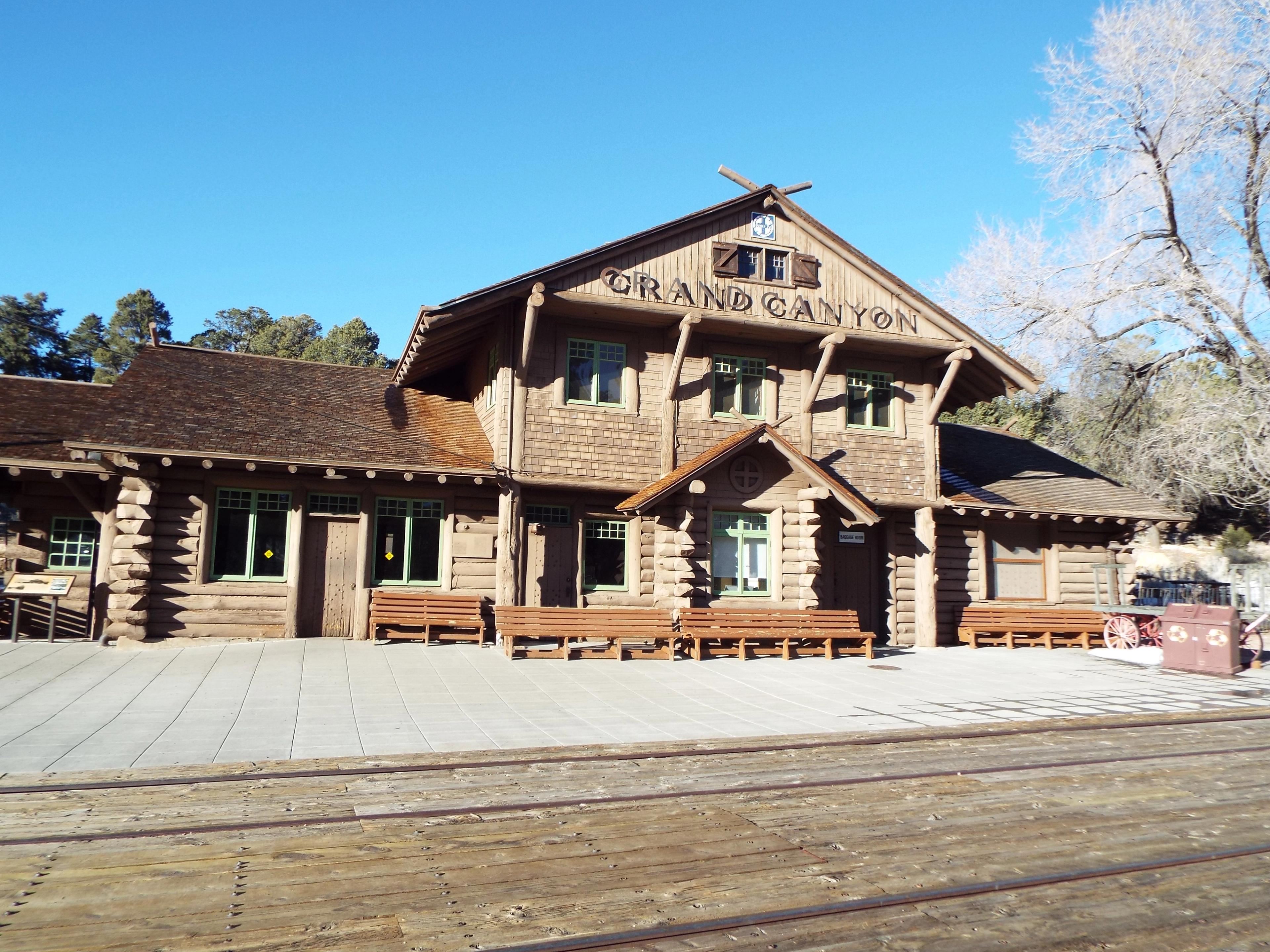
Marine 69-71 · CC BY-SA · via Wikimedia Commons
Why It Matters
A railroad tourist camp that grew, under the design hand of architect Mary Colter, into one of the most architecturally distinctive gateways to any American national park.
The History
Grand Canyon Village took shape after the Atchison, Topeka and Santa Fe Railway completed a spur line to the South Rim in 1901, replacing a slow, dusty stagecoach ride from Flagstaff with a direct rail connection that made the canyon accessible to ordinary tourists for the first time. The railway's hospitality partner, the Fred Harvey Company, quickly began building lodging and services to capitalize on the new traffic.
In 1905, the company opened the El Tovar Hotel, designed by architect Charles Whittlesey in a rustic chalet style, alongside Hopi House, one of several buildings designed by architect and designer Mary Colter. Colter went on to design some of the village's most distinctive structures, including Lookout Studio and Hermits Rest in 1914 and the Desert View Watchtower in 1932, each built to look as though it had grown naturally from the canyon rim rather than been imposed on it.
The canyon itself gained federal protection in stages: Theodore Roosevelt declared it a National Monument in 1908, and Congress upgraded it to a full National Park in 1919. Grand Canyon Village, recognized for its distinctive early tourism-era architecture, was designated a National Historic Landmark District in 1987, and many of its historic buildings, including El Tovar, remain in active use today.
Through the Years
- 1901
The Santa Fe Railway completes its spur line to the South Rim
- 1905
El Tovar Hotel and Hopi House open
- 1908
Theodore Roosevelt designates the Grand Canyon a National Monument
- 1919
Congress establishes Grand Canyon National Park
- 1932
The Desert View Watchtower, designed by Mary Colter, opens
- 1987
Grand Canyon Village is designated a National Historic Landmark District
The Archive
 Plate 01
Sunrise near El Tovar Hotel in the Historic District of Grand Canyon Village.
Grand Canyon NPS · Public domain · via Wikimedia Commons
 Plate 02
View of the Grand Canyon from the South Rim, Grand Canyon Village, Arizona.
Carol M. Highsmith Archive, Library of Congress · No known restrictions · via Library of Congress
Facts & Figures
History
- Railway arrival
- Santa Fe Railway spur line reached the South Rim in 1901
- Hospitality
- Operated early on by the Fred Harvey Company, employer of the 'Harvey Girls'
Architecture
- El Tovar Hotel
- Opened 1905, designed by Charles Whittlesey for the Fred Harvey Company
- Mary Colter buildings
- Hopi House (1905), Lookout Studio (1914), Hermits Rest (1914), Desert View Watchtower (1932)
Designation
- Park status
- National Monument (1908, Theodore Roosevelt); National Park (1919)
- Historic district
- National Historic Landmark District, 1987
Site
- Setting
- On the South Rim of the Grand Canyon
The Register
- Established
- 1901
- Architectural style
- National Park Service Rustic
- Builder
- Charles Whittlesey and Mary Colter (architects, for the Fred Harvey Company)
- Area of significance
- Architecture, Tourism History
Frequently Asked
Why does Grand Canyon Village have so much distinctive architecture?
The Santa Fe Railway and the Fred Harvey Company, which developed the village as a tourist destination starting in 1901, hired notable architects including Charles Whittlesey and Mary Colter, whose rustic designs still define the village today.
Who was Mary Colter?
An architect and designer for the Fred Harvey Company who created several of Grand Canyon Village's most recognizable buildings, including Hopi House, Lookout Studio, Hermits Rest, and the Desert View Watchtower.
When did the Grand Canyon become a national park?
It was first protected as a National Monument in 1908 by Theodore Roosevelt, then upgraded to full National Park status by Congress in 1919.
What is El Tovar Hotel?
A historic 1905 hotel on the canyon's rim, designed by architect Charles Whittlesey in a rustic chalet style and still operating as a hotel today.