- Geological & Natural (Deep time)
- 37.1862° N, 86.1002° W
Mammoth Cave
Mammoth Cave, Kentucky · Established 1941
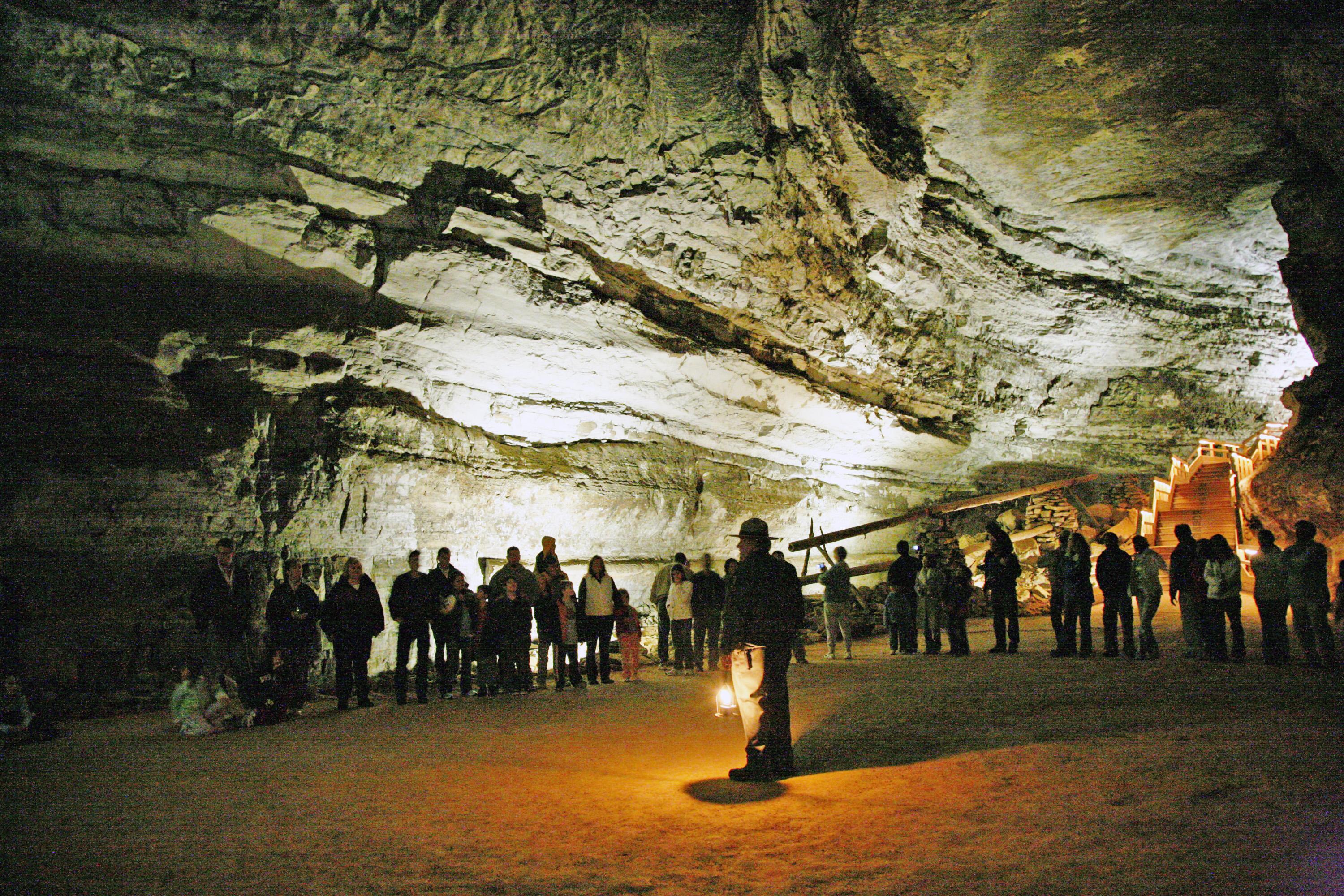
Daniel Schwen · CC BY-SA · via Wikimedia Commons
Why It Matters
Beneath the rolling hills of central Kentucky lies the longest cave system ever discovered on Earth — more than 420 mapped miles of passages, and still growing as explorers connect new sections. Mammoth Cave has drawn human visitors for at least 5,000 years, from prehistoric miners to enslaved guides who became the first professional cave explorers to 19th-century tourists, making it one of the oldest continuously visited natural attractions in North America.
The History
Indigenous peoples explored and mined Mammoth Cave for minerals including gypsum for at least 5,000 years before European settlement, leaving behind tools, torches, and even preserved remains discovered by later explorers. European American settlers began exploring the cave commercially in the early 1800s, and during the War of 1812 it was mined for saltpeter, a key ingredient in gunpowder, using enslaved labor.
By the 1830s Mammoth Cave had become a tourist attraction, guided in large part by enslaved men, most famously Stephen Bishop, who mapped extensive sections of the cave and discovered features still bearing his descriptions today. After emancipation, Bishop and other formerly enslaved guides continued working at the cave, their expertise foundational to its exploration and popularization.
Exploration continued through the 20th century, and a landmark 1972 connection between the Mammoth Cave system and the neighboring Flint Ridge cave system confirmed they were part of a single, vastly larger network. Congress established Mammoth Cave National Park in 1941, and it was designated a UNESCO World Heritage Site in 1981 and an International Biosphere Reserve in 1990. Surveying continues today, with the mapped length regularly extending as connections to new passages are found.
Through the Years
- 1812
Saltpeter mining begins during the War of 1812, using enslaved labor
- 1838
Enslaved guide Stephen Bishop begins mapping the cave extensively
- 1941
Mammoth Cave National Park is established
- 1972
Explorers confirm the connection to the Flint Ridge cave system
- 1981
Mammoth Cave is designated a UNESCO World Heritage Site
- 1990
The park is designated an International Biosphere Reserve
The Archive
 Plate 01
Wall inside Mammoth Cave.
James St. John · CC BY · via Wikimedia Commons
 Plate 02
Visitors inside Mammoth Cave.
James St. John · CC BY · via Wikimedia Commons
Facts & Figures
Geology
- Mapped length
- 420+ miles (longest known cave system)
History
- Human use
- At least 5,000 years
- Saltpeter mining
- War of 1812 era, enslaved labor
People
- Notable guide
- Stephen Bishop (enslaved explorer/cartographer)
Designation
- National Park
- Established 1941
- UNESCO World Heritage Site
- Inscribed 1981
- Biosphere Reserve
- Designated 1990
The Register
- Established
- 1941
- Area of significance
- Natural history; geology
Frequently Asked
Why is Mammoth Cave so famous?
It is the longest known cave system in the world, with more than 420 mapped miles of passages, and has been explored and visited by humans for at least 5,000 years.
Who was Stephen Bishop?
Stephen Bishop was an enslaved man who became one of the cave's most skilled early explorers and cartographers in the 1830s and 1840s, mapping extensive passages that still bear his discoveries.
How long is Mammoth Cave, really?
More than 420 miles have been mapped so far, making it by far the longest known cave system on Earth, and explorers continue to discover and connect new passages.
Can you tour Mammoth Cave?
Yes. The National Park Service offers a range of ranger-led cave tours of varying length and difficulty, from short walks to strenuous multi-hour explorations.