- Civil Rights (1954–1968)
- 34.7363° N, 92.2983° W
Little Rock Central High School
Little Rock, Arkansas · Established 1927
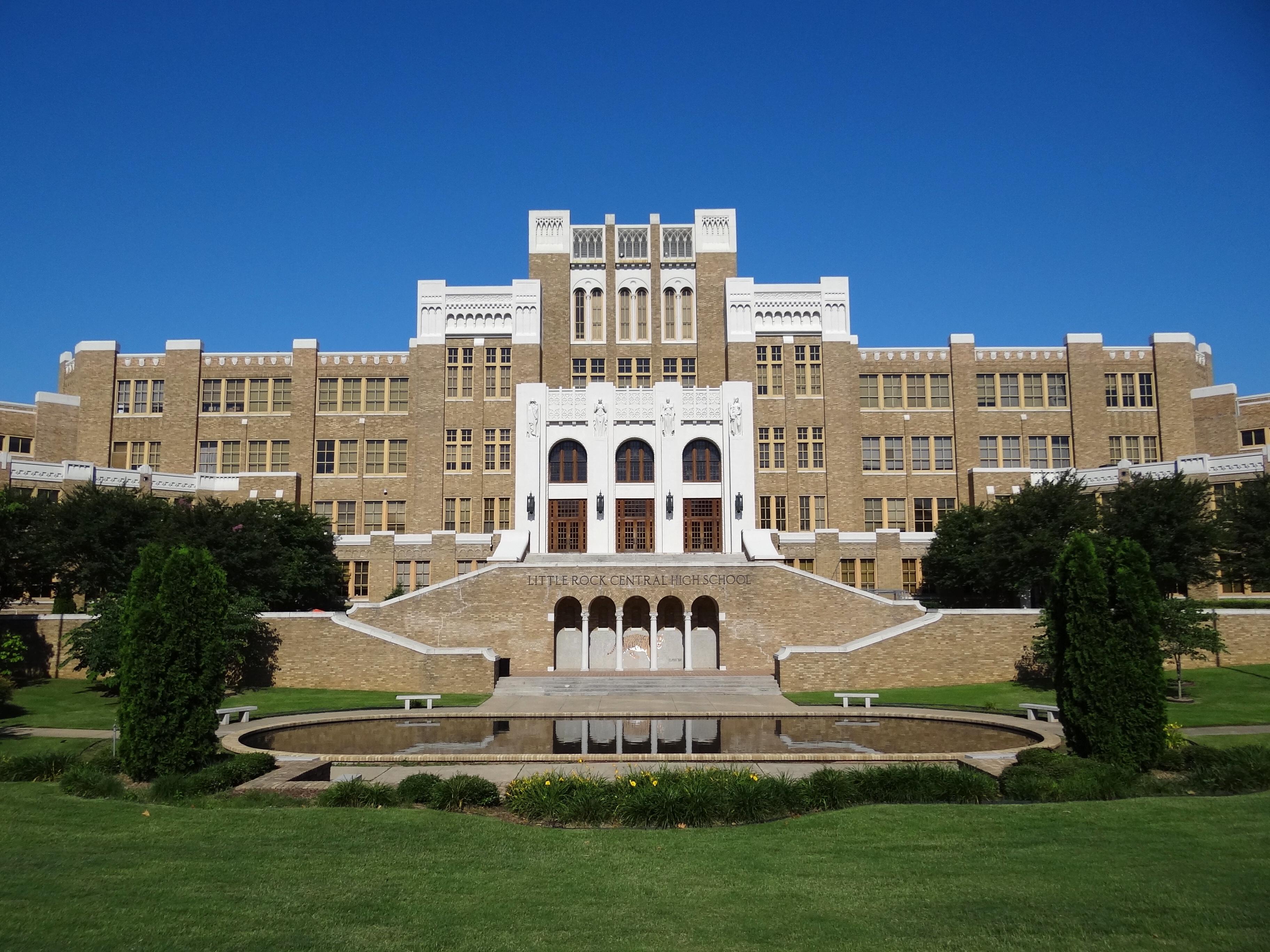
Adam Jones, Ph.D. · CC BY-SA · via Wikimedia Commons
Why It Matters
In the fall of 1957, a grand Arkansas high school became the front line of the struggle to enforce the Supreme Court's promise of school desegregation. When nine Black teenagers tried to enter all-white Central High, the governor called out the National Guard to stop them — and the president answered by sending the U.S. Army to escort them in. The 'Little Rock Nine' turned a schoolhouse into a test of whether the federal government would back the Constitution against a defiant state. It did, and the nation was changed.
The History
When it opened in 1927, Central High was hailed as one of the most beautiful high schools in America, a sprawling Collegiate Gothic and Art Deco landmark. Three years after the Supreme Court's 1954 Brown v. Board of Education decision outlawed segregated schooling, Little Rock's school board agreed to admit nine carefully chosen Black students to Central High for the 1957 school year.
On September 4, 1957, Governor Orval Faubus ordered the Arkansas National Guard to bar the students from entering, defying federal court orders. Photographs of fifteen-year-old Elizabeth Eckford walking alone through a screaming mob flashed around the world. The standoff became a constitutional crisis between a state governor and the federal courts, watched anxiously at home and abroad.
President Dwight Eisenhower federalized the Arkansas National Guard and sent the 101st Airborne Division to Little Rock, and on September 25, 1957, soldiers escorted the Nine into the school. They endured a year of harassment; Ernest Green became the first to graduate, in 1958. Rather than continue integration, Faubus closed all the city's high schools for the 1958–59 'Lost Year.' Still an active public school, Central High was made a National Historic Site in 1998.
Through the Years
- 1927
Central High School opens, praised as America's finest high school
- 1954
Brown v. Board of Education outlaws segregated public schools
- 1957
Governor Faubus blocks the Nine with the National Guard on September 4
- 1957
Eisenhower sends the 101st Airborne to escort the students on September 25
- 1958
Ernest Green becomes the first of the Nine to graduate
- 1958
Little Rock closes its high schools for the 'Lost Year'
- 1998
Little Rock Central High School National Historic Site is established
The Archive
 Plate 01Historic
Inside Little Rock Central High School.
National Park Service Digital Image Archives · Public domain · via Wikimedia Commons
 Plate 02
View of reflecting pool and benches memorial at Little Rock Central High School.
xiquinhosilva · CC BY · via Wikimedia Commons
Facts & Figures
History
- Crisis
- 1957 desegregation
- Federal response
- 101st Airborne sent by Eisenhower
People
- Students
- The Little Rock Nine
- First graduate
- Ernest Green (1958)
Building
- Opened
- 1927
Architecture
- Style
- Collegiate Gothic / Art Deco
Designation
- National Historic Site
- November 6, 1998
The Register
- Area of significance
- Civil rights; school desegregation; African American history
- County
- Pulaski
- Acreage
- 5 acres
- National Register ref.
- 77000268
- Listed on the Register
- August 19, 1977
- National Historic Landmark
- May 20, 1982
Frequently Asked
Who were the Little Rock Nine?
They were nine Black students — including Elizabeth Eckford and Ernest Green — who desegregated all-white Little Rock Central High School in 1957.
What role did the federal government play?
After Governor Faubus used the National Guard to block the students, President Eisenhower federalized the Guard and sent the 101st Airborne Division to escort and protect them.
Is Central High still a school?
Yes. It remains an active public high school and is also a National Historic Site, the only functioning high school within a U.S. national park site.
Can you visit Little Rock Central High School?
Yes. The National Park Service visitor center across the street tells the story; the school exterior is viewable anytime, and interior tours are offered by reservation when school is out.