- Civil Rights (1954–1968)
- 32.4048° N, 87.0189° W
Edmund Pettus Bridge
Selma, Alabama · Established 1940
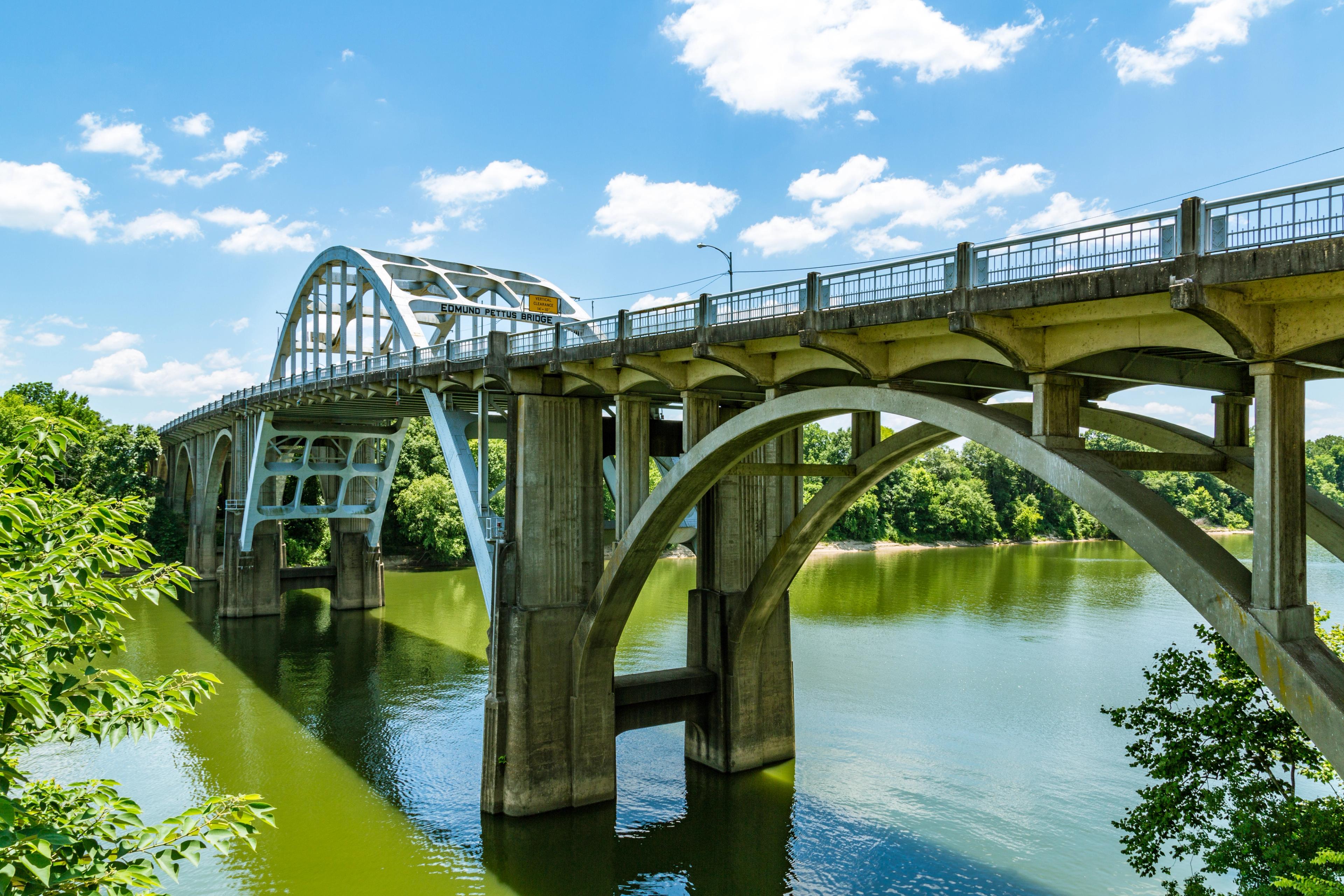
Tony Webster from Minneapolis, Minnesota, United States · CC BY-SA · via Wikimedia Commons
Why It Matters
A plain steel bridge over the Alabama River became one of the most sacred grounds of the civil rights movement. On March 7, 1965, marchers demanding the right to vote were clubbed and gassed here in full view of the nation's cameras. The horror of 'Bloody Sunday' galvanized America, and within months the Voting Rights Act of 1965 struck down the barriers that had disenfranchised Black citizens for generations. The bridge — named, with bitter irony, for a Confederate general and Klansman — is now a monument to the marchers who crossed it.
The History
The Edmund Pettus Bridge opened in 1940, carrying U.S. Route 80 across the Alabama River at Selma. It was named for Edmund Winston Pettus, a Confederate brigadier general, U.S. senator, and Grand Dragon of the Alabama Ku Klux Klan. By 1965 Selma had become the center of a voting-rights campaign, where Black residents who made up half the county were almost entirely barred from registering to vote.
On Sunday, March 7, 1965, some 600 marchers set out from Selma toward the state capital in Montgomery. As they crossed the bridge, Alabama state troopers and a mounted posse attacked them with clubs, whips, and tear gas. Young activist John Lewis suffered a fractured skull. Television footage of the beatings — remembered as 'Bloody Sunday' — aired across the country and stunned the conscience of the nation.
Two days later Martin Luther King Jr. led a symbolic 'turnaround' march to the bridge. Finally, under federal court protection and the guard of U.S. Army troops, thousands completed the 54-mile march from Selma to Montgomery on March 21–25, 1965. The pressure was decisive: President Johnson signed the Voting Rights Act of 1965 that August. The bridge was designated a National Historic Landmark in 2013 and anchors the Selma to Montgomery National Historic Trail.
Through the Years
- 1940
The Edmund Pettus Bridge opens over the Alabama River
- 1965
'Bloody Sunday' — marchers are beaten on the bridge on March 7
- 1965
'Turnaround Tuesday' — a second march turns back at the bridge on March 9
- 1965
The Selma-to-Montgomery march succeeds, March 21–25
- 1965
The Voting Rights Act is signed on August 6
- 2013
The bridge is designated a National Historic Landmark
The Archive
 Plate 01
The Edmund Pettus Bridge facing downtown Selma.
Tony Webster from Minneapolis, Minnesota, United States · CC BY-SA · via Wikimedia Commons
 Plate 02
A historic marker at the Edmund Pettus Bridge.
Tony Webster from Minneapolis, Minnesota, United States · CC BY-SA · via Wikimedia Commons
 Plate 03
View from the Edmund Pettus Bridge in Selma, Alabama.
Clément Bardot · CC BY-SA · via Wikimedia Commons
Facts & Figures
History
- Bloody Sunday
- March 7, 1965
- Marchers
- ~600, attacked by state troopers
People
- Led by
- John Lewis & Hosea Williams
Outcome
- Successful march
- March 21–25, 1965
- Legislation
- Voting Rights Act of 1965
Structure
- Completed
- 1940
Namesake
- Edmund Pettus
- Confederate general & Klan leader
The Register
- Architectural style
- Steel through-arch bridge
- Area of significance
- Civil rights; voting rights; African American history
- County
- Dallas
- National Register ref.
- 13000281
- Listed on the Register
- February 27, 2013
- National Historic Landmark
- February 27, 2013
Frequently Asked
What happened at the Edmund Pettus Bridge?
On March 7, 1965, state troopers attacked some 600 voting-rights marchers crossing the bridge toward Montgomery, a day remembered as 'Bloody Sunday.'
Why is the bridge named after Edmund Pettus?
It was named in 1940 for Edmund Winston Pettus, a Confederate general, U.S. senator, and Alabama Klan leader — an irony often noted given the bridge's civil-rights legacy.
Did the Selma marches succeed?
Yes. After Bloody Sunday, a third march reached Montgomery under federal protection on March 25, 1965, and helped secure passage of the Voting Rights Act that year.
Can you visit the Edmund Pettus Bridge?
Yes. The bridge still carries U.S. Route 80 and can be walked; it anchors the Selma to Montgomery National Historic Trail, with an interpretive center nearby.