Civil War · Virginia
Shenandoah Valley Battlefields
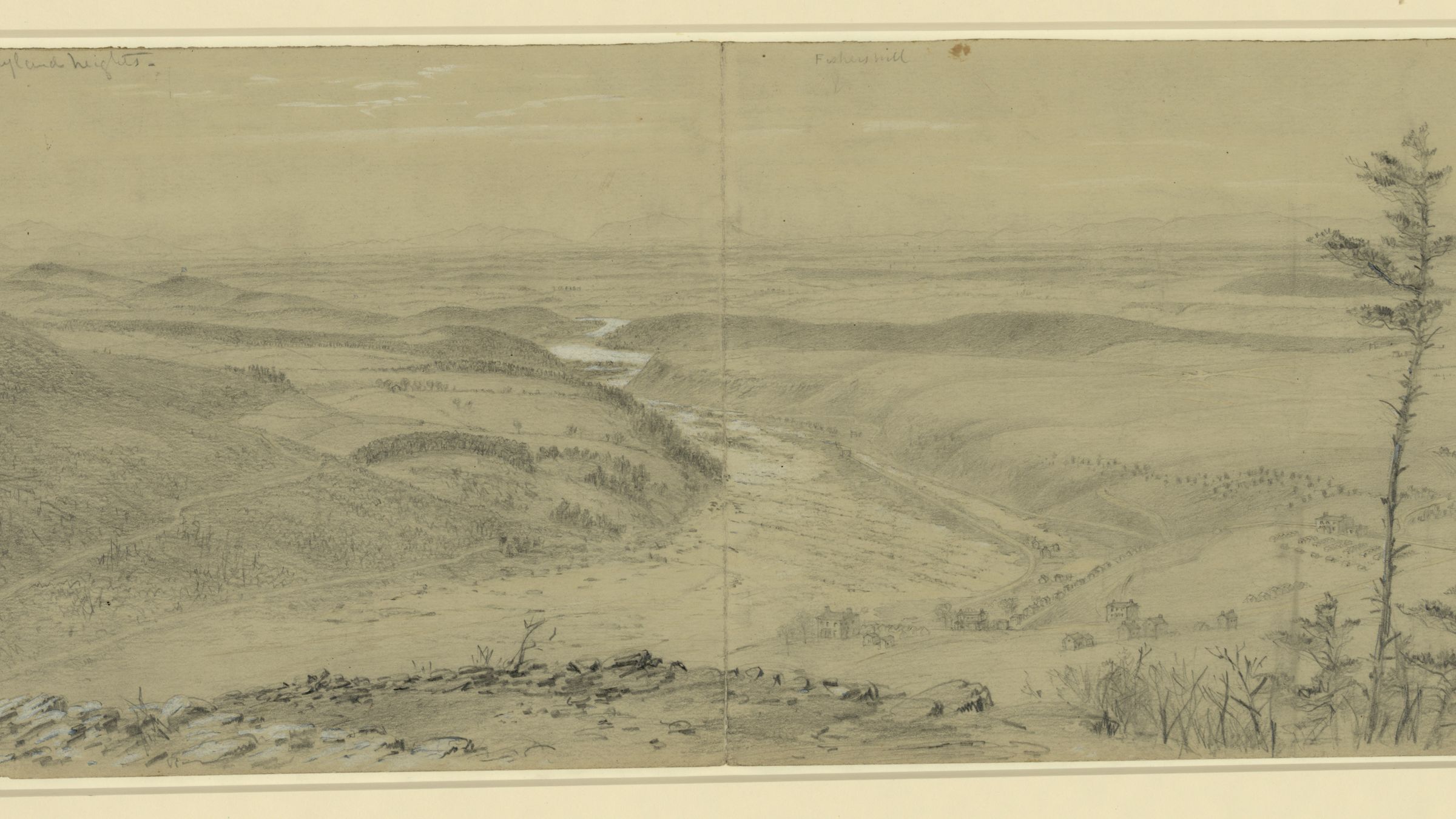
The Shenandoah Valley, sketched during the Civil War by Alfred R. Waud. — Alfred R. Waud
Why Shenandoah Valley Battlefields Matters
Not one battlefield but an entire valley shaped by war — its fertile farms fed the Confederacy, its terrain gave Stonewall Jackson a legendary campaign, and its systematic burning by Sheridan's cavalry became one of the Civil War's starkest examples of total war against a civilian economy.
By the Numbers
Designation
- Type
- National Historic District (est. 1996), covering multiple battle sites rather than one park
History
- Nickname
- "The Breadbasket of the Confederacy"
- 1862 campaign
- Stonewall Jackson defeated several larger Union armies using the valley's terrain
- "The Burning"
- Sheridan's 1864 scorched-earth campaign destroyed barns, mills, and crops
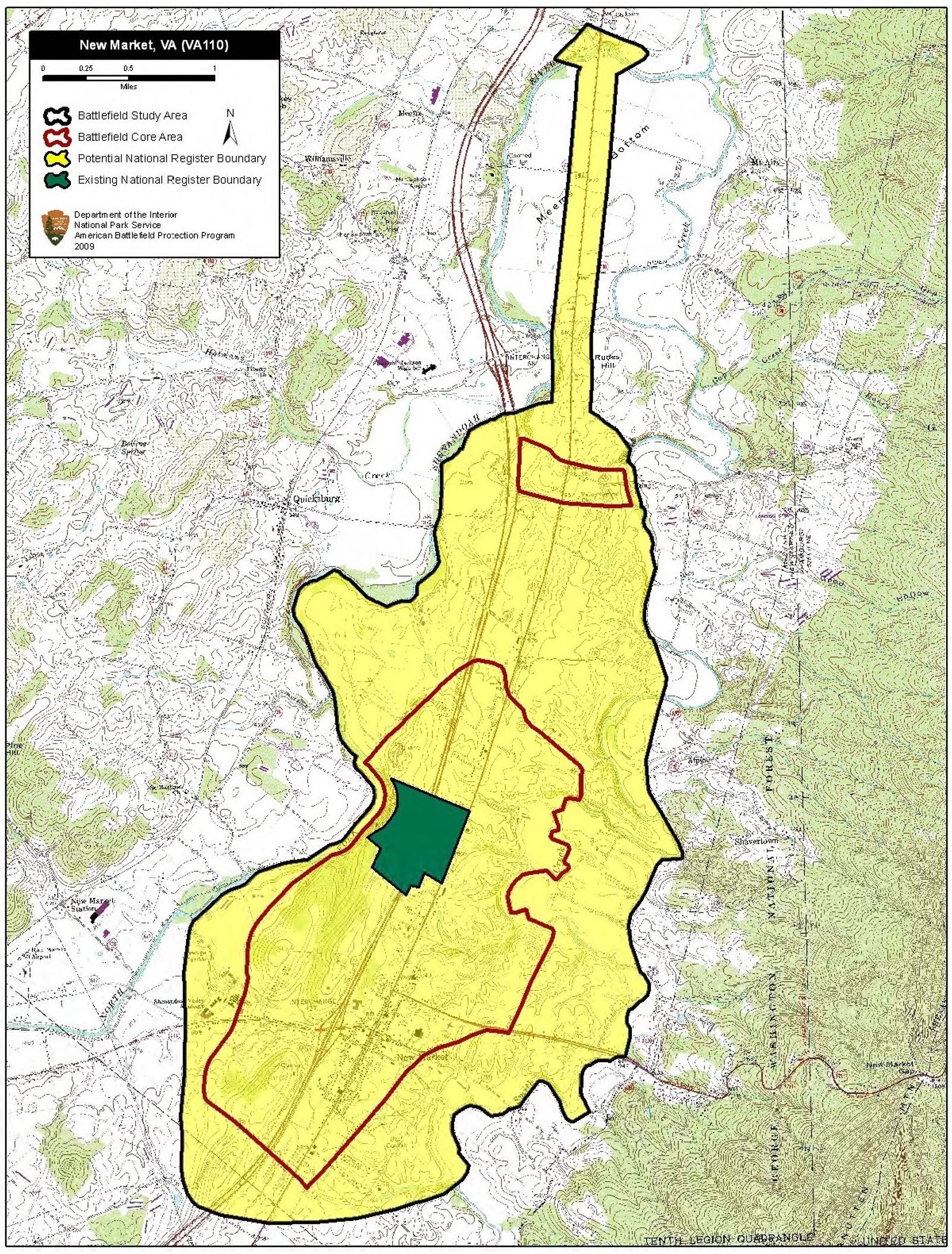
- Battle of New Market
- VMI cadets, some as young as 15, fought in the Confederate line on May 15, 1864
- Battle of Cedar Creek
- October 19, 1864 — effectively ended major Confederate resistance in the valley
Site
- Management
- Shenandoah Valley Battlefields Foundation, in partnership with the National Park Service
Timeline
- 1862Stonewall Jackson's Valley Campaign defeats a series of larger Union forces
- 1864Battle of New Market, May 15 — VMI cadets fight in the Confederate line
- 1864Sheridan's cavalry carries out 'the Burning,' destroying valley farms and mills
- 1864Battle of Cedar Creek, October 19 — effectively ends major Confederate resistance in the valley
- 1996Congress establishes the Shenandoah Valley Battlefields National Historic District
Complete History
The Shenandoah Valley's fertile farmland made it a vital source of food for Confederate armies, earning it the nickname 'the Breadbasket of the Confederacy,' while its northeast-southwest orientation — running opposite to most maps' intuitive sense of direction — repeatedly confused Union commanders. In the spring of 1862, Confederate General Thomas 'Stonewall' Jackson exploited that terrain in a lightning campaign, marching his smaller force up and down the valley to defeat a series of larger Union armies in rapid succession and tie down troops that might otherwise have reinforced the Union assault on Richmond.
By 1864 the valley had become a battleground again, this time centered on cutting off the Confederacy's supply line for good. At the Battle of New Market on May 15, 1864, Confederate forces short on manpower threw in a corps of Virginia Military Institute cadets, some as young as 15, to help hold the line. That fall, Union General Philip Sheridan's cavalry carried out a deliberate campaign of destruction remembered as 'the Burning,' torching barns, mills, and crops across the valley to permanently cripple its ability to supply Confederate armies.
Sheridan's campaign culminated at the Battle of Cedar Creek on October 19, 1864, where a surprise Confederate attack nearly routed Union forces before Sheridan personally rallied his troops for a decisive counterattack that effectively ended major Confederate resistance in the valley. Because the war touched so many sites across the valley's length rather than a single field, Congress in 1996 established the Shenandoah Valley Battlefields National Historic District, an unusual designation that protects more than a dozen separate battlefields through a partnership between a private foundation and the National Park Service rather than a conventional single park.
Historic Images
Interesting Facts
- The Shenandoah Valley runs 'backwards' from a map's perspective — flowing northeast toward the Potomac — which repeatedly confused Union commanders during the war.
- VMI cadets as young as 15 fought at the Battle of New Market in May 1864.
- Sheridan's 1864 'Burning' campaign destroyed thousands of barns and mills to cripple Confederate supply lines.
- The valley earned the nickname 'Breadbasket of the Confederacy' for the grain it supplied Confederate armies.
- Unlike most Civil War sites, the district protects more than a dozen separate battlefields across the length of the valley rather than a single park.
Visiting Today
- Hours
- Varies by individual battlefield site
- Admission
- Free at most sites; some visitor centers charge a small fee
- Best time to visit
- Fall, when the valley's foliage recalls the season of Sheridan's 1864 campaign
- Nearby
- Cedar Creek and Belle Grove National Historical Park, New Market Battlefield, Harpers Ferry
Start at the New Market Battlefield State Historical Park or Cedar Creek and Belle Grove National Historical Park visitor centers for maps of the wider district
Frequently Asked Questions
Why is the Shenandoah Valley called the 'Breadbasket of the Confederacy'?
Its fertile farmland supplied enormous quantities of grain and livestock to Confederate armies throughout the war, making control of the valley strategically vital.
What was Sheridan's 'Burning'?
In the fall of 1864, Union cavalry under Philip Sheridan systematically destroyed the valley's barns, mills, and crops to deny Confederate forces the food supply the region provided — a deliberate campaign of economic warfare.
Who fought at the Battle of New Market?
Alongside regular Confederate troops, a corps of Virginia Military Institute cadets, some as young as 15, was thrown into the battle line on May 15, 1864, suffering significant casualties.
Is this one battlefield park?
No. It's a National Historic District established in 1996 encompassing more than a dozen separate battle sites across the length of the valley, managed through a partnership between the Shenandoah Valley Battlefields Foundation and the National Park Service.