- Colonial America (1607–1775)
- 42.5222° N, 70.8850° W
Salem Maritime
Salem, Massachusetts · Established 1790
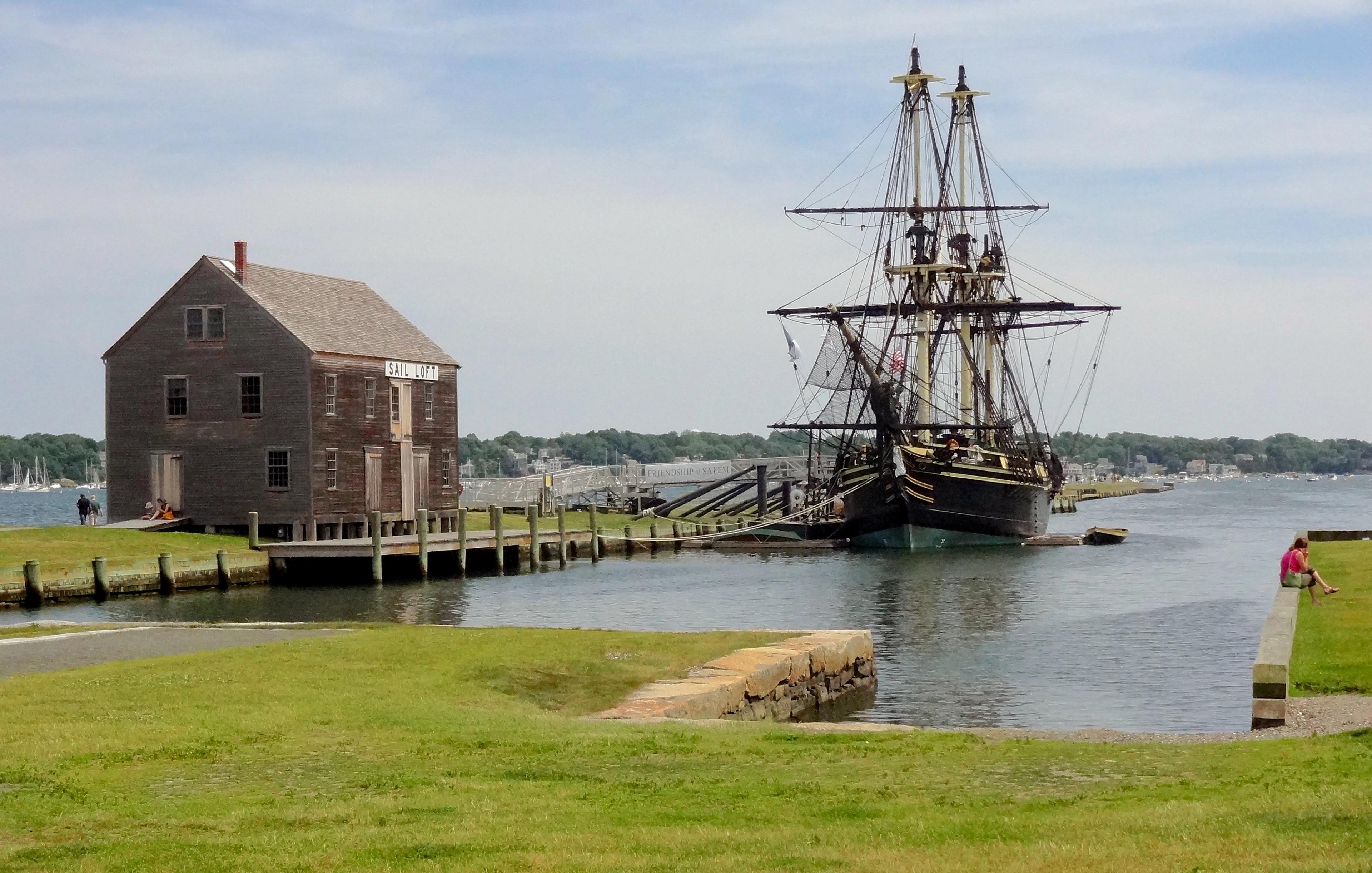
Rizka · CC BY-SA · via Wikimedia Commons
Why It Matters
In the decades after the Revolution, Salem, Massachusetts became one of the richest ports in America by trading directly with the far side of the world. Its merchant captains opened commerce with India, China, and the East Indies while larger Atlantic ports were still consolidating, filling Salem's wharves with pepper, silk, and porcelain and its Custom House with the wealth of a genuinely global colonial-era trade network run from a small New England harbor.
The History
Salem's Derby Wharf, built beginning in 1762 by merchant Richard Derby, grew into the longest wharf in the harbor as Salem's shipping fortunes rose. After the Revolution cut off traditional British trade routes, Salem captains including Derby's son Elias Hasket Derby pioneered new, highly profitable routes to India, Sumatra, and China, briefly making Salem one of the wealthiest cities per capita in the young United States and a first American window onto Asian trade.
The federal government built Salem's Custom House in 1819 to collect duties on this lucrative trade; author Nathaniel Hawthorne, a descendant of Salem's original Puritan settlers, worked there as a surveyor from 1846 to 1849 and drew on the experience to open his novel The Scarlet Letter. By the mid-19th century, however, the harbor's shallow waters could not accommodate the larger ships of the industrial era, and Salem's maritime trade gradually declined in favor of deeper ports like Boston and New York.
Congress established Salem Maritime National Historic Site in 1938, the first National Historic Site in the National Park System, preserving Derby Wharf, the Custom House, and several merchant-era buildings along Salem's waterfront. A full-scale replica of the merchant ship Friendship, built in 1797 and lost in the War of 1812, was constructed in 2000 and now docks at the wharf.
Through the Years
- 1762
Richard Derby begins building Derby Wharf
- 1785
Elias Hasket Derby pioneers new trade routes to Asia after the Revolution
- 1797
The merchant ship Friendship is built in Salem
- 1819
The Salem Custom House is built
- 1846
Nathaniel Hawthorne begins working as a surveyor at the Custom House
- 1938
Salem Maritime becomes the first National Historic Site in the NPS system
The Archive
 Plate 01
The Derby House at Salem Maritime.
Fletcher6 · CC BY-SA · via Wikimedia Commons
 Plate 02
Canon Demonstration at the Salem Maritime Festival.
NPS · Public domain · via Wikimedia Commons
Facts & Figures
History
- Derby Wharf begun
- 1762
- Custom House built
- 1819
Trade
- Trading partners
- India, China, Sumatra, East Indies
People
- Notable surveyor
- Nathaniel Hawthorne (1846–49)
Site
- Ship replica
- Friendship (built 2000; original 1797)
Designation
- First of its kind
- First National Historic Site (1938)
Geography
- Wharf
- Derby Wharf, once the longest in Salem
The Register
- Established
- 1790
- Area of significance
- Maritime trade; colonial commerce
Frequently Asked
Why was Salem such an important port?
After the Revolution cut off old British trade routes, Salem merchants pioneered profitable new trade with India, China, and the East Indies, making the small port briefly one of America's wealthiest cities.
What is the connection to Nathaniel Hawthorne?
Hawthorne worked as a surveyor at the Salem Custom House from 1846 to 1849, and the experience inspired the introductory sketch of his novel The Scarlet Letter.
Why was Salem Maritime historically significant as a park?
Established in 1938, it was the very first National Historic Site designated within the National Park System, setting the precedent for preserving historic sites beyond natural landscapes.
What can you see at Salem Maritime today?
Visitors can walk Derby Wharf, tour the 1819 Custom House, and board a full-scale replica of the merchant ship Friendship.