- Geological & Natural (Deep time)
- 37.8967° N, 122.5811° W
Muir Woods National Monument
Mill Valley, California · Established 1908
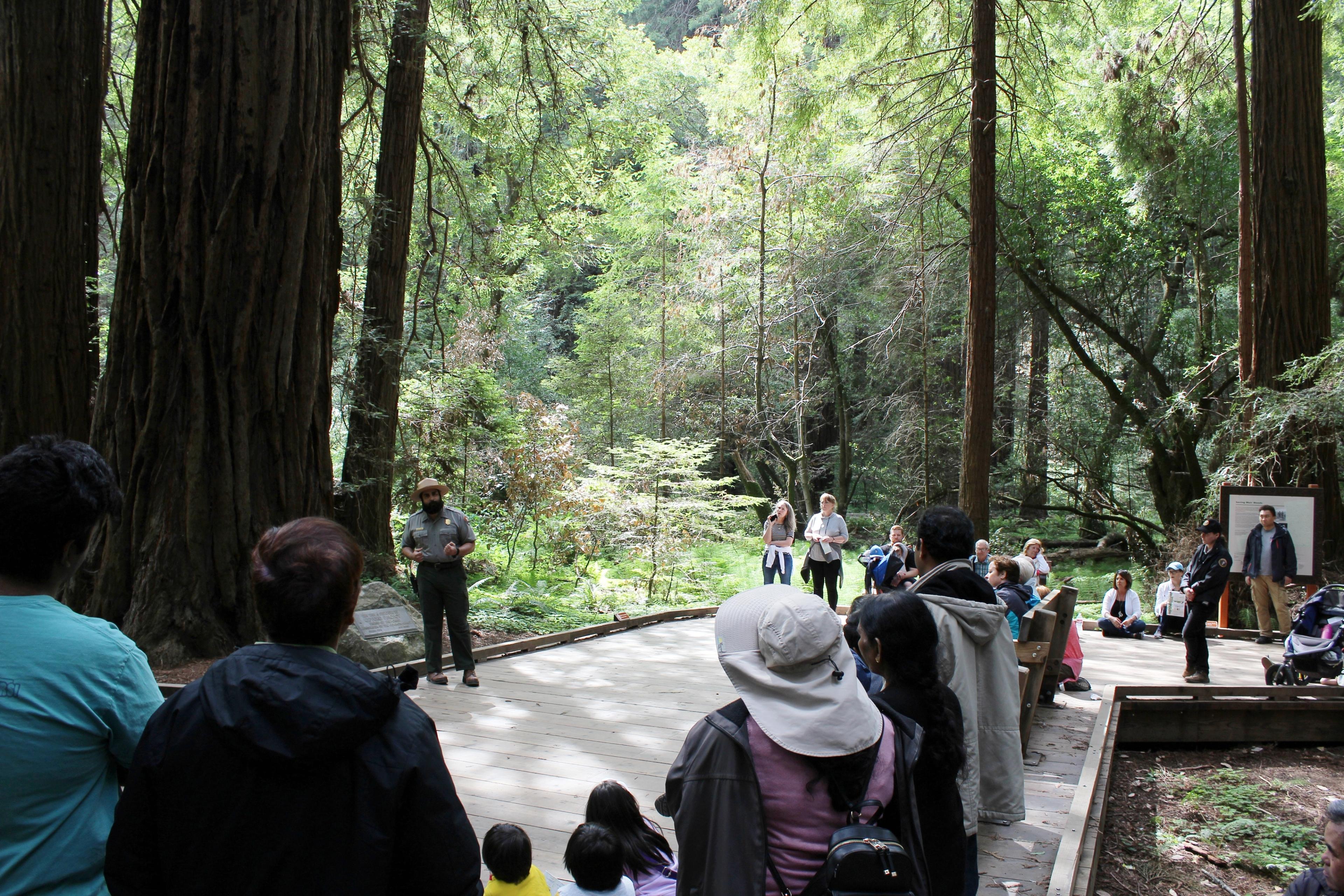
Sarbjit Bahga · CC BY-SA · via Wikimedia Commons
Why It Matters
One of the last stands of old-growth redwoods near San Francisco, saved from a water company's dam by a conservationist who then declined to have the grove named after himself, insisting it honor John Muir instead.
The History
By the early 1900s, most of the old-growth redwood forest around San Francisco Bay had already been logged to build the rapidly growing region, and the grove then known as Redwood Canyon faced a new threat in 1905, when a local water company proposed damming the creek running through it and flooding the area for a reservoir. Conservationists William Kent and his wife Elizabeth Thacher Kent purchased the grove outright in 1907 specifically to prevent its destruction.
Rather than rely on private ownership alone to protect the land permanently, Kent donated the grove to the federal government, and President Theodore Roosevelt designated it a National Monument in 1908 under the Antiquities Act. When Roosevelt offered to name the new monument 'Kent Monument' in his honor, Kent declined, insisting instead that it be named for naturalist John Muir, whose writing had helped inspire the conservation movement.
Muir Woods today preserves one of the last old-growth coast redwood stands remaining in the San Francisco Bay Area, with some trees exceeding 250 feet in height and estimated to be more than 800 years old. The monument stands as an early and influential example of private conservation action leading directly to permanent federal protection, a model later repeated at other threatened natural sites across the country.
Through the Years
- 1905
A local water company proposes damming the creek and flooding the grove
- 1907
William and Elizabeth Kent purchase the redwood grove to protect it
- 1908
President Theodore Roosevelt designates the site Muir Woods National Monument
The Archive
 Plate 01
A wooden carving of John Muir at the Muir Woods National Monument.
Aljawad · CC BY-SA · via Wikimedia Commons
 Plate 02
Entrance to the Muir Woods National Monument.
Carol M. Highsmith Archive, Library of Congress · No known restrictions · via Library of Congress
 Plate 03
Path through the forest in Muir Woods National Monument.
Carol M. Highsmith Archive, Library of Congress · No known restrictions · via Library of Congress
Facts & Figures
Founding
- Named for
- Naturalist John Muir
- Donors
- William Kent and Elizabeth Thacher Kent, who purchased the grove to save it
History
- Threat averted
- A local water company's plan to dam the creek and flood the grove
- Kent's request
- He declined to have the monument named after himself, insisting on 'Muir Woods'
Designation
- Designation
- National Monument, 1908, by Theodore Roosevelt under the Antiquities Act
Nature
- Trees
- Some redwoods exceed 250 feet tall and more than 800 years old
Significance
- Significance
- One of the last old-growth redwood stands remaining in the San Francisco Bay Area
The Register
- Established
- 1908
- Area of significance
- Conservation, Natural History
Frequently Asked
Why is it called Muir Woods if John Muir didn't donate the land?
Landowner William Kent donated the property to the federal government but declined President Theodore Roosevelt's offer to name the monument after him, insisting instead that it honor naturalist John Muir.
What threat did the redwoods originally face?
A local water company planned to dam the creek running through the grove and flood the area for a reservoir, which would have destroyed the redwoods; the Kents purchased the land specifically to prevent this.
How old are the trees in Muir Woods?
Some of the coast redwoods are estimated to be more than 800 years old, and several exceed 250 feet in height.
Is this the largest redwood forest in California?
No, but it's one of the last old-growth redwood stands remaining in the San Francisco Bay Area, since most regional redwood forest was logged in the 19th century.