- The 20th Century (1900–2000)
- 34.1122° N, 118.3391° W
Hollywood Bowl
Los Angeles, California · Established 1922
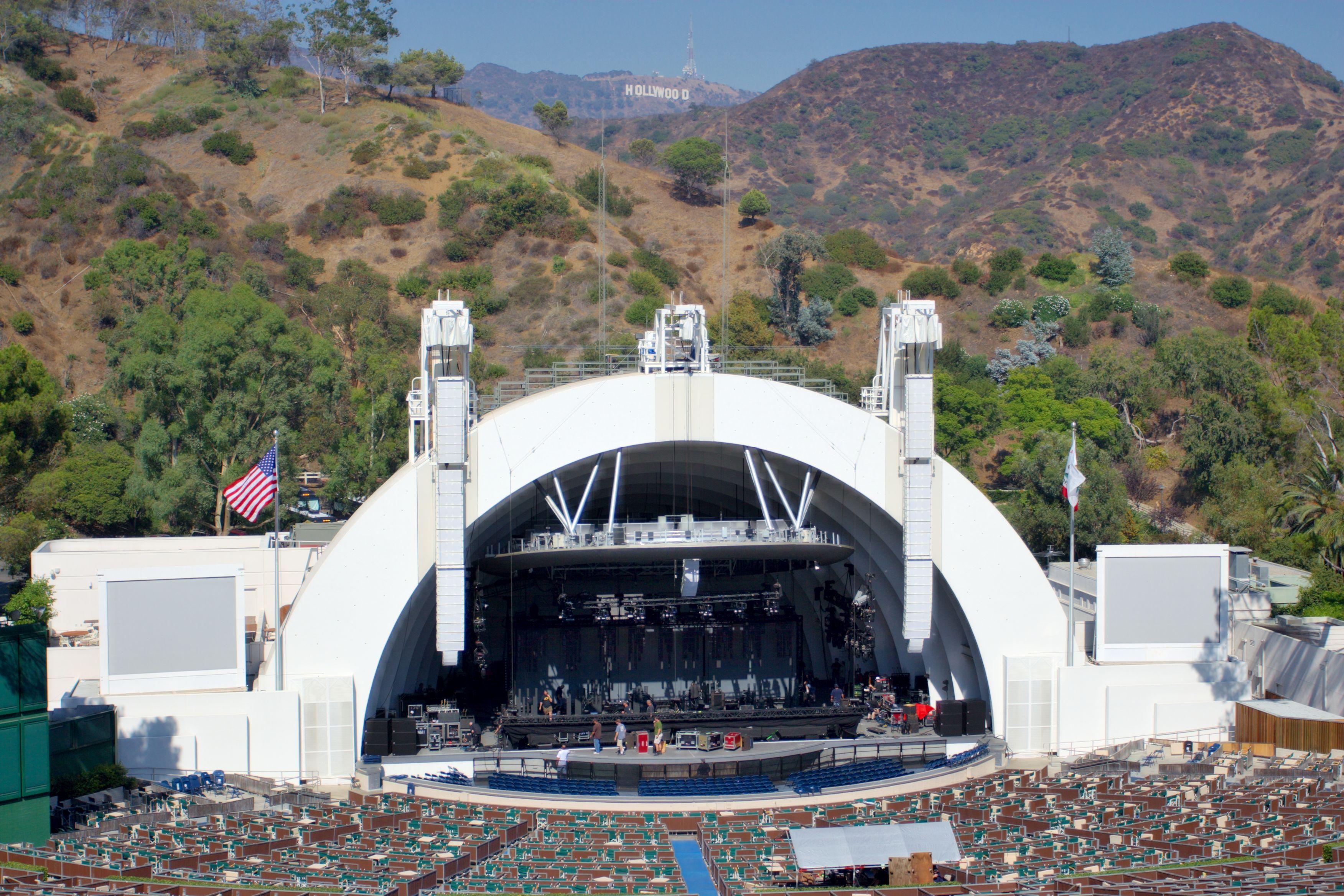
Matthew Field, http://www.photography.mattfield.com · CC BY-SA · via Wikimedia Commons
Why It Matters
A natural canyon turned into one of the world's great outdoor concert venues, the Hollywood Bowl's iconic concentric-arch shell has hosted everyone from the Los Angeles Philharmonic's founding 'Symphonies Under the Stars' to the Beatles.
The History
Community boosters acquired the bowl-shaped canyon known as Daisy Dell in 1919, drawn to its natural acoustics at a time before amplification made such considerations less critical. The venue formally opened in 1922, when the newly organized Los Angeles Philharmonic gave its first outdoor 'Symphonies Under the Stars' concert, establishing a summer tradition that has continued for over a century.
Through the 1920s, a series of experimental band shells were built, tested, and torn down as engineers and architects worked to improve the venue's sound. Architect Lloyd Wright, son of Frank Lloyd Wright, designed influential shells during this period whose stepped, concentric-arch form shaped the silhouette audiences recognize today, even as later architects and engineers refined the design further.
The Hollywood Bowl grew into one of the largest natural amphitheaters in the world, seating roughly 17,500 people, and became a stage for far more than classical music — the Beatles played two sold-out shows there in 1964 and 1965, and the venue hosted an annual Easter Sunrise Service for decades. In 2004 the shell underwent a major acoustic rebuild, preserving its historic arched profile while modernizing the technology behind it.
Through the Years
- 1919
The Daisy Dell canyon site is acquired for a community concert venue
- 1922
The Hollywood Bowl opens with the LA Philharmonic's first 'Symphonies Under the Stars' concert
- 1929
Architect Lloyd Wright's concentric-arch shell design establishes the venue's iconic silhouette
- 1964
The Beatles perform at the Hollywood Bowl
- 2004
The band shell undergoes a major acoustic rebuild while preserving its historic profile
The Archive
 Plate 01
Concert at the Hollywood Bowl.
Mcarey10419 · CC BY-SA · via Wikimedia Commons
Facts & Figures
Founding
- Opened
- 1922, as home to the Los Angeles Philharmonic's outdoor summer season
Scale
- Capacity
- Approximately 17,500, one of the largest natural amphitheaters in the world
Architecture
- Design
- Iconic concentric-arch band shell shaped by architect Lloyd Wright's 1920s designs
- Rebuilds
- The shell has been substantially rebuilt multiple times, most recently in 2004
Culture
- Notable performance
- The Beatles played the Hollywood Bowl in 1964 and 1965
- Tradition
- Hosted an annual Easter Sunrise Service for decades
Site
- Setting
- Built into a natural canyon in the Hollywood Hills, chosen originally for its acoustics
The Register
- Established
- 1922
- Architectural style
- Concentric-arch amphitheater shell
- Builder
- Lloyd Wright (shell design)
- Area of significance
- Music, Architecture, Entertainment
Frequently Asked
Who designed the Hollywood Bowl's famous shell?
Its concentric-arch silhouette traces to designs by architect Lloyd Wright, son of Frank Lloyd Wright, in the 1920s; the shell has since been rebuilt and modernized several times, most recently in 2004, while preserving that historic profile.
What makes the Hollywood Bowl's location special?
It's built into a natural bowl-shaped canyon in the Hollywood Hills, chosen in the venue's early years because the terrain itself amplified and projected sound before modern sound systems existed.
Did the Beatles really play there?
Yes — the Beatles performed sold-out concerts at the Hollywood Bowl in both 1964 and 1965.
Is the Los Angeles Philharmonic still based there?
Yes. The Hollywood Bowl has been the Los Angeles Philharmonic's summer home since the venue opened in 1922.