Colonial · Pennsylvania
Fort Necessity
Also known as Fort Necessity National Battlefield
The reconstructed Fort Necessity. — National Park Service
Why Fort Necessity Matters
A hastily built log fort where a 22-year-old George Washington suffered the only surrender of his military career, in a skirmish that touched off the French and Indian War and, with it, the global Seven Years' War.
By the Numbers
Founding
- Built
- 1754, by 22-year-old Lieutenant Colonel George Washington
History
- Jumonville Glen
- Washington's forces killed French officer Jumonville nearby on May 28, 1754
- Battle
- French and allied forces attacked and defeated Washington on July 3, 1754
- Surrender
- The only surrender of Washington's military career
- Translation error
- Washington unknowingly admitted to Jumonville's 'assassination' in the surrender document
- Global significance
- Considered the opening engagement of the French and Indian War / Seven Years' War
Designation
- Designation
- Fort Necessity National Battlefield, designated 1932
Timeline
- 1754Washington's forces ambush a French party at Jumonville Glen on May 28, killing Joseph Coulon de Jumonville
- 1754Washington's troops hastily build Fort Necessity in the Great Meadows
- 1754French and Native American forces attack and defeat Washington at Fort Necessity on July 3
- 1932The site is designated Fort Necessity National Battlefield
Complete History
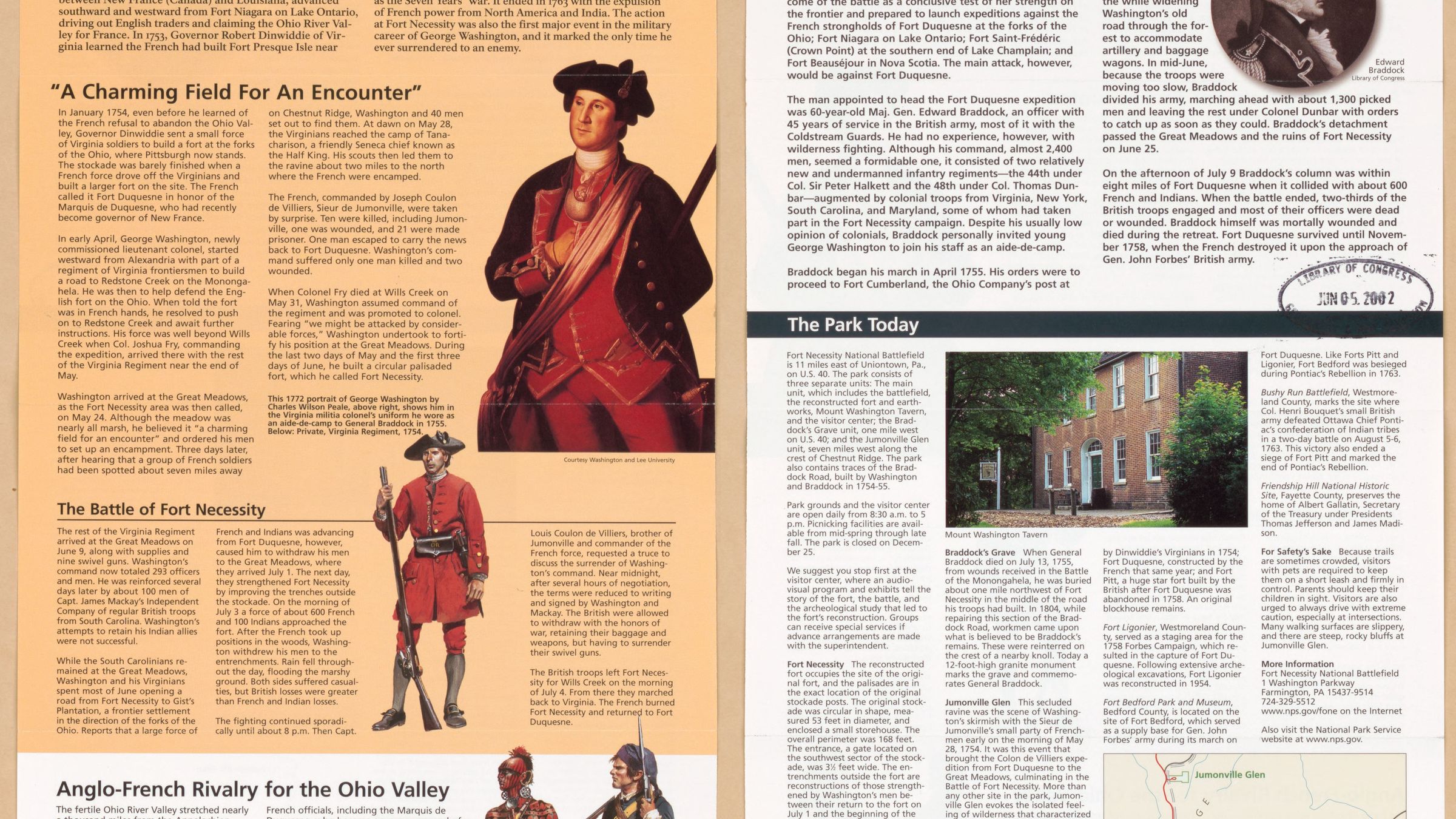
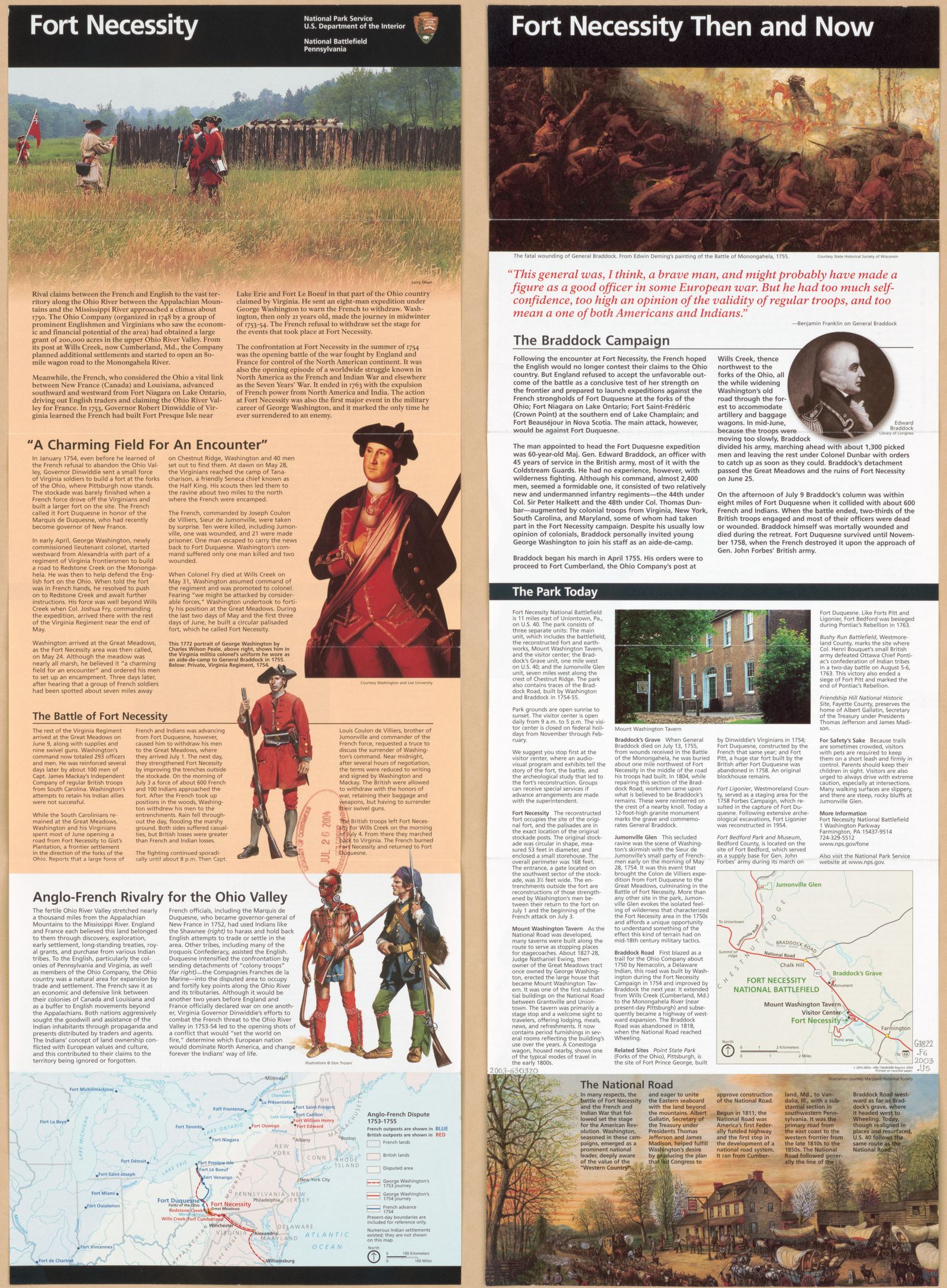
In May 1754, a young Lieutenant Colonel George Washington led Virginia militia into the disputed Ohio Country, where his men ambushed a small French party at a rocky glen, killing French officer Joseph Coulon de Jumonville. The incident, later known as the Jumonville Affair, provoked immediate French retaliation and is widely considered the spark that ignited the French and Indian War.
Anticipating a French response, Washington's troops hastily built a small circular palisade they called Fort Necessity in the open meadow known as the Great Meadows. On July 3, 1754, a larger force of French soldiers and their Native American allies attacked the fort, and after a day of fighting in heavy rain that flooded the position and soaked the defenders' gunpowder, Washington was forced to surrender.
The surrender document, written in French, included a clause in which Washington, relying on a flawed translation, unknowingly admitted to the 'assassination' of Jumonville, an admission French propaganda seized upon internationally. Washington and his surviving men were permitted to withdraw, but the engagement at Fort Necessity is remembered as the opening battle of the French and Indian War, a conflict that escalated into the worldwide Seven Years' War and reshaped the balance of colonial power in North America.
Historic Images
Interesting Facts
- George Washington built Fort Necessity at age 22, and its surrender was the only one of his military career.
- The battle here is often cited as the spark that ignited the global Seven Years' War.
- Washington's earlier ambush at nearby Jumonville Glen killed a French officer and provoked the French response.
- A translation error in Washington's surrender document had him unknowingly admit to an 'assassination.'
- The fort was a hastily built circular palisade, not a substantial fortification, and fell after just one day of fighting.
Visiting Today
- Hours
- Grounds and visitor center open daily; hours vary seasonally
- Admission
- Free
- Best time to visit
- Spring through fall for the best access to outdoor trails and the reconstructed fort
- Nearby
- Jumonville Glen, Braddock's Grave, Ohiopyle State Park
Visit nearby Jumonville Glen as well to see where the conflict's opening skirmish took place
Frequently Asked Questions
Did George Washington really surrender here?
Yes. On July 3, 1754, after a day of fighting in heavy rain, Washington surrendered Fort Necessity to French and Native American forces — the only surrender of his entire military career.
What was the Jumonville Affair?
Weeks before the battle at Fort Necessity, Washington's forces ambushed a small French party at nearby Jumonville Glen, killing officer Joseph Coulon de Jumonville, an incident that provoked French retaliation and helped ignite the war.
Why is this considered the start of a world war?
The fighting here is often cited as the opening engagement of the French and Indian War, which escalated into the global Seven Years' War fought across Europe, the Americas, Africa, and Asia.
What was unusual about Washington's surrender document?
A translation error meant Washington unknowingly signed a document admitting to the 'assassination' of Jumonville, an admission French propaganda later used against the British.