Colonial · Virginia
Mount Vernon
Library of Congress (via Wikimedia Commons)
Why Mount Vernon Matters
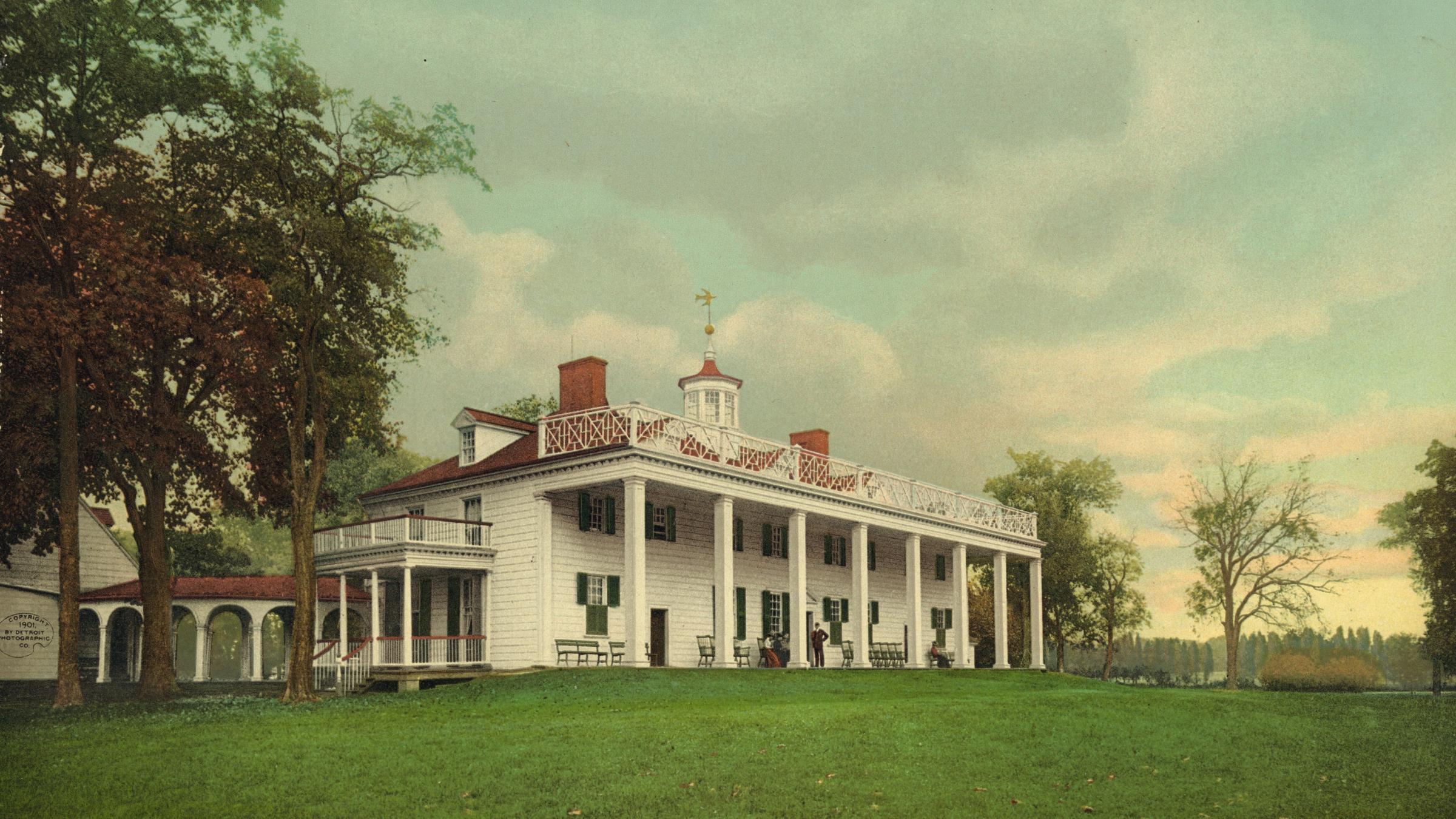
Mount Vernon was the home of George Washington — commander of the Continental Army and the first President of the United States. Overlooking the Potomac River in Virginia, the estate was the center of Washington's life for forty-five years and the place he returned to after leading the Revolution and the young nation.
Today the mansion and grounds are preserved both as a memorial to Washington and as a candid record of 18th-century plantation life — including the more than 300 enslaved people whose labor sustained the estate. It is cared for by the Mount Vernon Ladies' Association, the oldest historic-preservation organization in the country.
By the Numbers
The Estate
- Owner
- George Washington
- Architectural style
- Georgian
- Grounds today
- ~500 acres
- Preserved by
- Mount Vernon Ladies' Association
Timeline
- 1743Lawrence Washington names the estate Mount Vernon.
- 1754George Washington takes up residence at Mount Vernon.
- 1758–1778Washington enlarges the house into a 21-room mansion.
- 1799George Washington dies at Mount Vernon on December 14.
- 1860The Mount Vernon Ladies' Association opens the estate to the public.
Complete History
The property on Little Hunting Creek passed to George Washington's half-brother Lawrence, who renamed it Mount Vernon in 1743 after a British admiral he had served under. George Washington took up residence in 1754 and came to own the estate outright in 1761.
Over two decades Washington transformed a modest farmhouse into a 21-room Georgian mansion, adding a cupola and the riverfront piazza, and expanded the estate to roughly 8,000 acres across five farms. Mount Vernon was a working plantation run on the labor of enslaved men, women, and children, who numbered more than 300 by 1799.
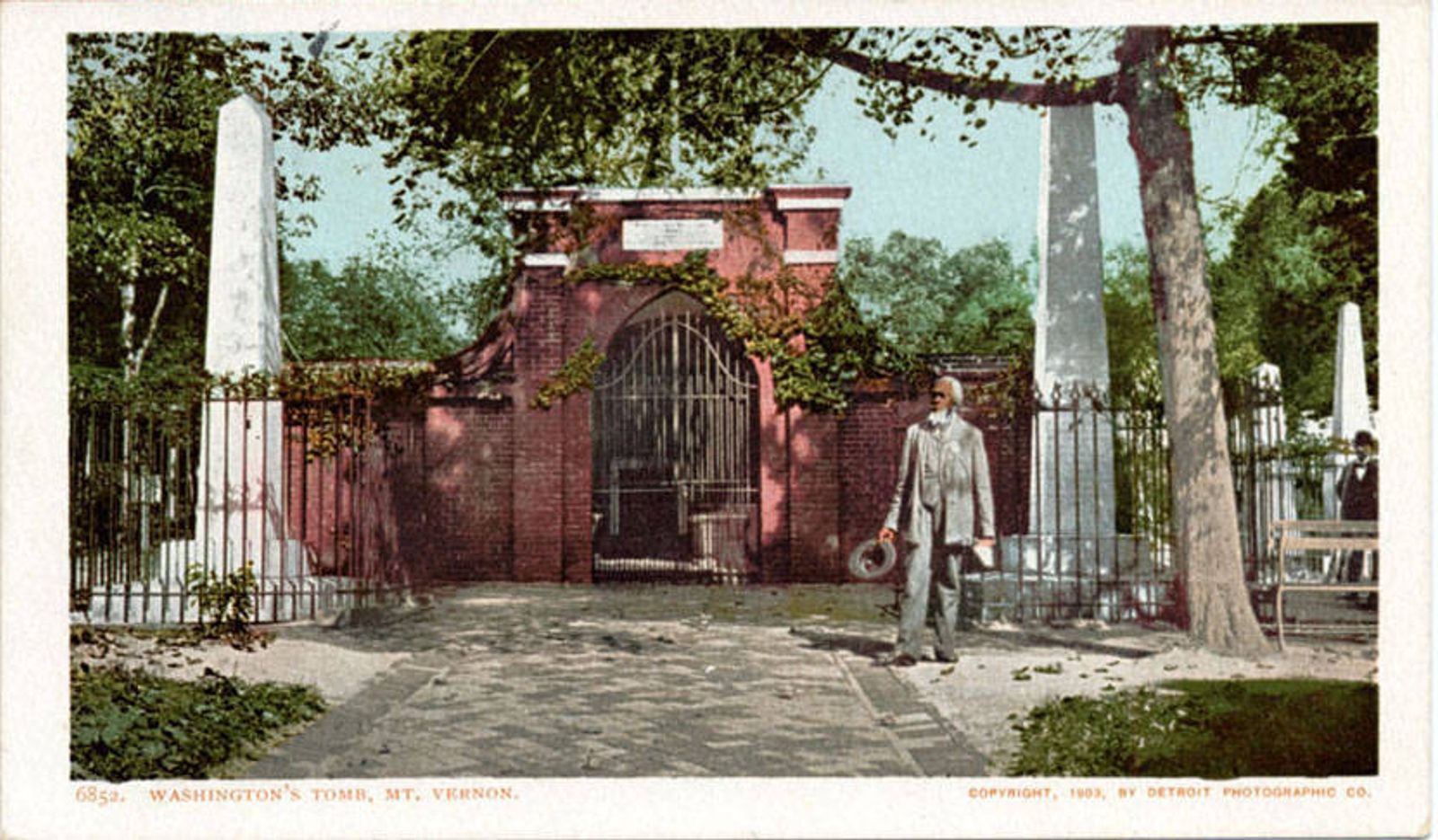
Washington died at Mount Vernon on December 14, 1799, and he and Martha Washington are entombed on the grounds. After years of decline, the Mount Vernon Ladies' Association — founded by Ann Pamela Cunningham — acquired the estate and opened it to the public in 1860, helping to launch the American historic-preservation movement.
Historic Images
Interesting Facts
- Mount Vernon was the plantation home of George Washington, the first U.S. President.
- Washington enlarged a modest farmhouse into a 21-room mansion with a distinctive cupola and a riverfront piazza.
- The mansion's wooden exterior is “rusticated” — beveled and sand-coated to imitate blocks of stone.
- George and Martha Washington are entombed in a family vault on the grounds.
- The estate was a working plantation; more than 300 enslaved people lived and labored at Mount Vernon by 1799.
- Since 1860 it has been preserved by the Mount Vernon Ladies' Association, the nation's oldest historic-preservation organization.
Visiting Today
- Hours
- Open every day of the year; hours vary by season.
- Admission
- Paid, timed admission (a private nonprofit site, not a national park). Tickets are best reserved in advance.
- Best time to visit
- Weekday mornings; spring and fall for the gardens and river views.
- Nearby
- Old Town Alexandria, Washington, D.C., and the George Washington Memorial Parkway along the Potomac.
Allow a half-day to see the mansion, the tomb, the working farm, and the memorial to the estate's enslaved community.
Frequently Asked Questions
Whose home was Mount Vernon?
It was the home of George Washington, the first President of the United States, from 1754 until his death in 1799.
Is George Washington buried at Mount Vernon?
Yes. He and Martha Washington are entombed in a family vault on the estate grounds.
Who runs Mount Vernon today?
The Mount Vernon Ladies' Association, a private nonprofit that has operated the estate since 1860.
Were enslaved people held at Mount Vernon?
Yes. Mount Vernon was a working plantation dependent on enslaved labor; more than 300 enslaved people lived there by 1799, and the estate interprets their lives today.
Can you visit Mount Vernon?
Yes. It is open to the public daily for ticketed admission, about 15 miles south of Washington, D.C.