War of 1812 · Maryland
Fort McHenry
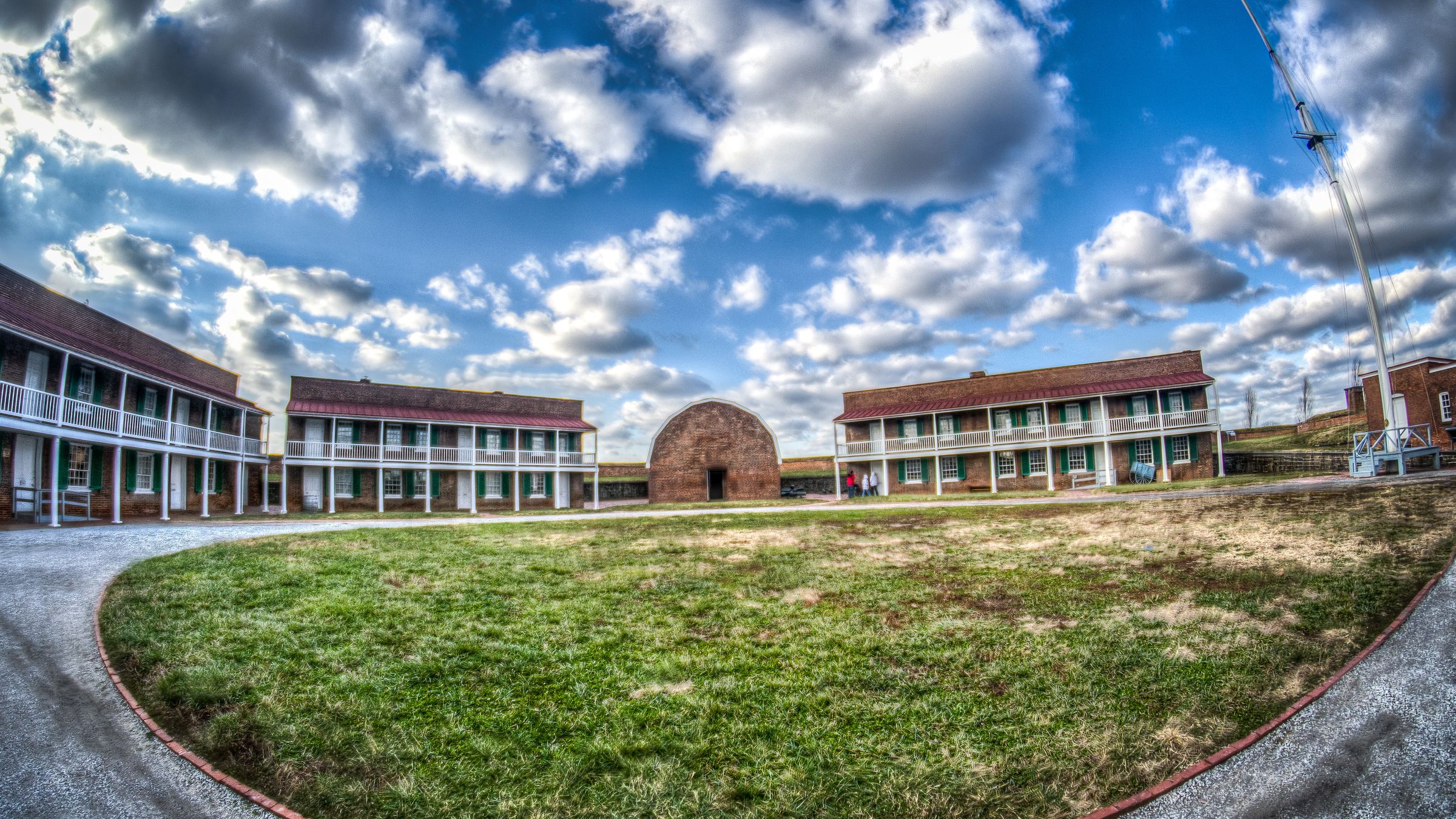
The five-pointed star fort on Baltimore Harbor. — m01229
Why Fort McHenry Matters
Fort McHenry is the birthplace of 'The Star-Spangled Banner.' During the War of 1812, this star-shaped fort guarding Baltimore Harbor withstood a 25-hour British naval bombardment, and the sight of its huge American flag still flying at dawn on September 14, 1814, moved Francis Scott Key to write the words that became the United States' national anthem. The successful defense turned back a major British offensive and gave the young nation one of its most enduring patriotic symbols.
By the Numbers
The Fort
- Built
- 1798-1800
- Design
- Five-pointed bastioned star fort
- Named for
- James McHenry, Secretary of War
The Battle
- Bombardment
- ~25 hours, September 13-14, 1814
The Anthem
- Inspired
- Francis Scott Key's 'Star-Spangled Banner'
The Flag
- Garrison flag
- 30 x 42 ft, sewn by Mary Pickersgill
Today
- Operator
- National Park Service
Timeline
- 1798-1800Fort McHenry is built to defend Baltimore Harbor.
- 1814British warships bombard the fort for ~25 hours on September 13-14.
- 1814Francis Scott Key writes the poem that becomes the national anthem.
- 1861-1865The fort is used as a military prison during the Civil War.
- 1925Designated a National Monument and Historic Shrine.
- 1931'The Star-Spangled Banner' officially becomes the U.S. national anthem.
Complete History
Fort McHenry was built between 1798 and 1800 to defend the busy port of Baltimore, its five-pointed star design typical of the era's coastal fortifications. It was named for James McHenry, a Maryland statesman who served as Secretary of War. For its first years the fort saw little action — until the War of 1812 brought a British fleet to the Chesapeake.
In September 1814, fresh from burning Washington, British forces moved on Baltimore. On September 13 their warships began bombarding Fort McHenry, hurling rockets and mortar shells for about 25 hours. The garrison held firm, and unable to pass the fort, the British broke off their assault on the city. Watching from a truce ship in the harbor was Francis Scott Key, a lawyer who had come to negotiate a prisoner's release.
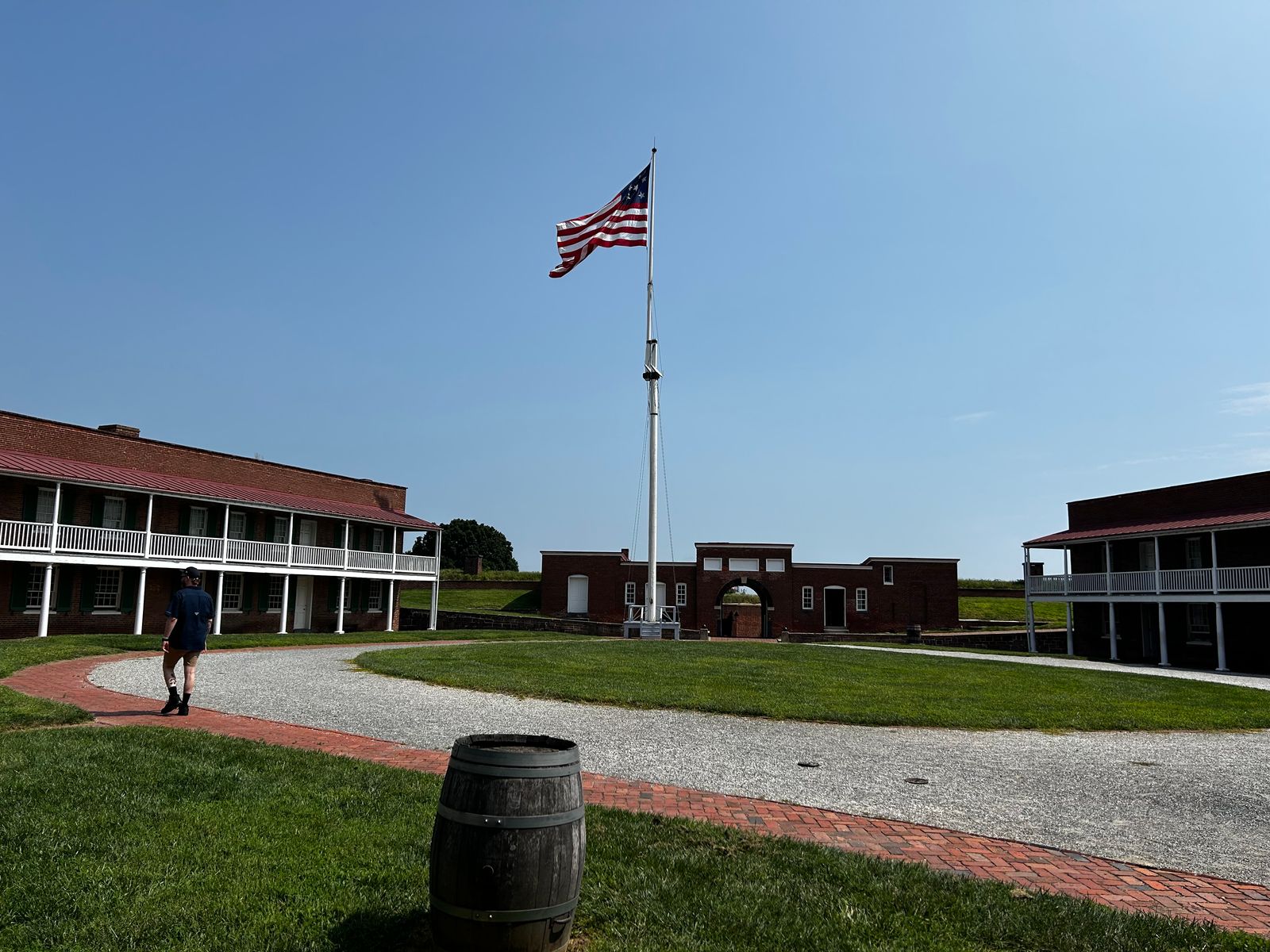
At dawn on September 14, Key saw the fort's enormous garrison flag — a 30-by-42-foot banner sewn by Baltimore flagmaker Mary Pickersgill — still flying, and he was inspired to write the poem 'Defence of Fort M'Henry.' Set to music, it became 'The Star-Spangled Banner' and, in 1931, the national anthem. The fort later served as a prison and a hospital, and in 1925 it was made a national monument — the only site in the country also designated a 'historic shrine.'
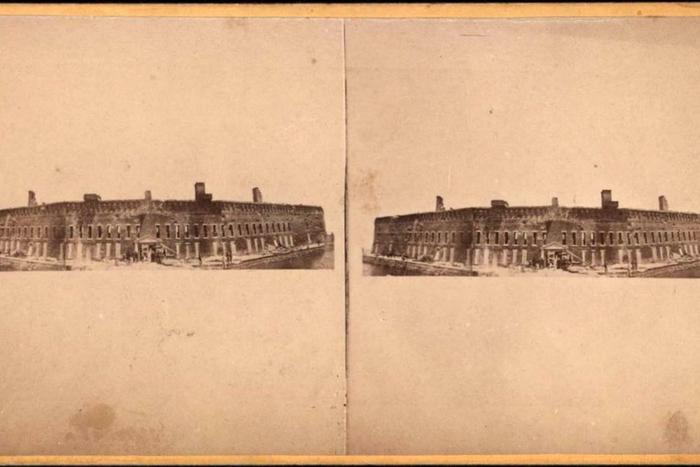
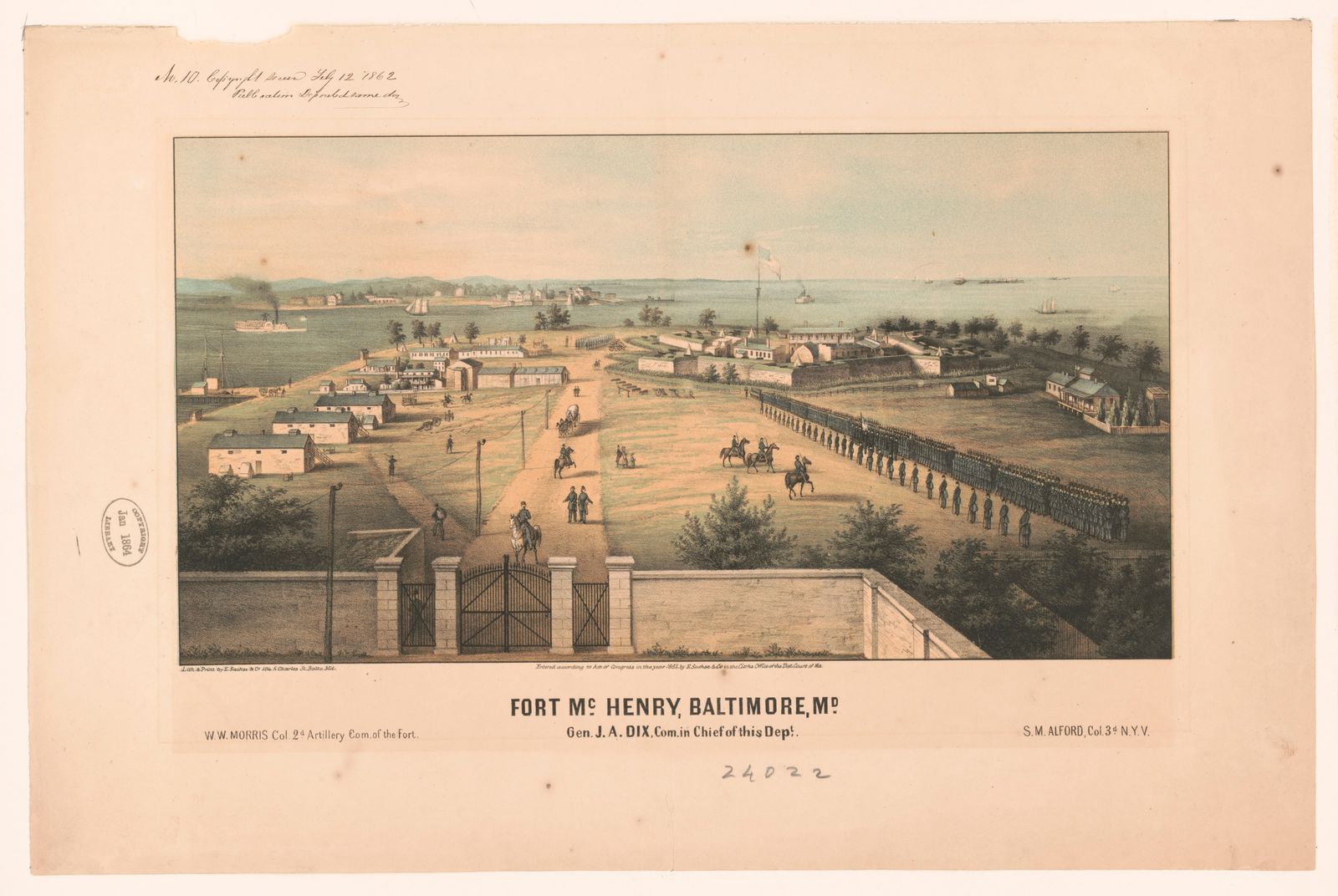
Historic Images
Interesting Facts
- The defense of Fort McHenry in 1814 inspired Francis Scott Key to write the poem that became 'The Star-Spangled Banner.'
- The huge flag that flew over the fort measured 30 by 42 feet and was sewn by Baltimore flagmaker Mary Pickersgill; it is now preserved at the Smithsonian.
- British warships bombarded the fort for about 25 hours, but its defenders held and the attack on Baltimore was called off.
- 'The Star-Spangled Banner' did not officially become the U.S. national anthem until 1931, more than a century after it was written.
- Fort McHenry is the only place in the United States designated both a national monument and a 'historic shrine.'
Visiting Today
- Hours
- The fort grounds and visitor center are open daily except Thanksgiving and Christmas, with hours that vary by season. Check the National Park Service for current times.
- Admission
- An entrance fee is charged to tour the historic star fort; the surrounding grounds and seawall are free to walk. National Park passes are accepted.
- Best time to visit
- Spring through fall offers the best weather; Defenders Day in mid-September commemorates the 1814 battle with special programs.
- Nearby
- Baltimore's Inner Harbor, Fell's Point, and the historic ship USS Constellation.
Watch for the daily flag programs, and time a visit around Defenders Day in September for reenactments. The grassy grounds along the water are pleasant for a walk even beyond the fort itself.
Frequently Asked Questions
Why is Fort McHenry famous?
It successfully defended Baltimore against a British bombardment in the War of 1812, and the flag flying over it inspired Francis Scott Key to write 'The Star-Spangled Banner,' the U.S. national anthem.
Who wrote 'The Star-Spangled Banner' at Fort McHenry?
Francis Scott Key, a lawyer watching the bombardment from a ship in the harbor. Seeing the fort's flag still flying at dawn, he wrote a poem that was later set to music and became the national anthem.
When was the Battle of Fort McHenry?
The British bombarded the fort on September 13-14, 1814, during the War of 1812. The defense lasted about 25 hours before the British withdrew.
Can you visit Fort McHenry?
Yes. Fort McHenry is a national monument in Baltimore run by the National Park Service, with the star fort, ramparts, and a visitor center open to the public, plus flag-changing ceremonies.