Gilded Age · New York
Statue of Liberty
Also known as Liberty Enlightening the World, Lady Liberty
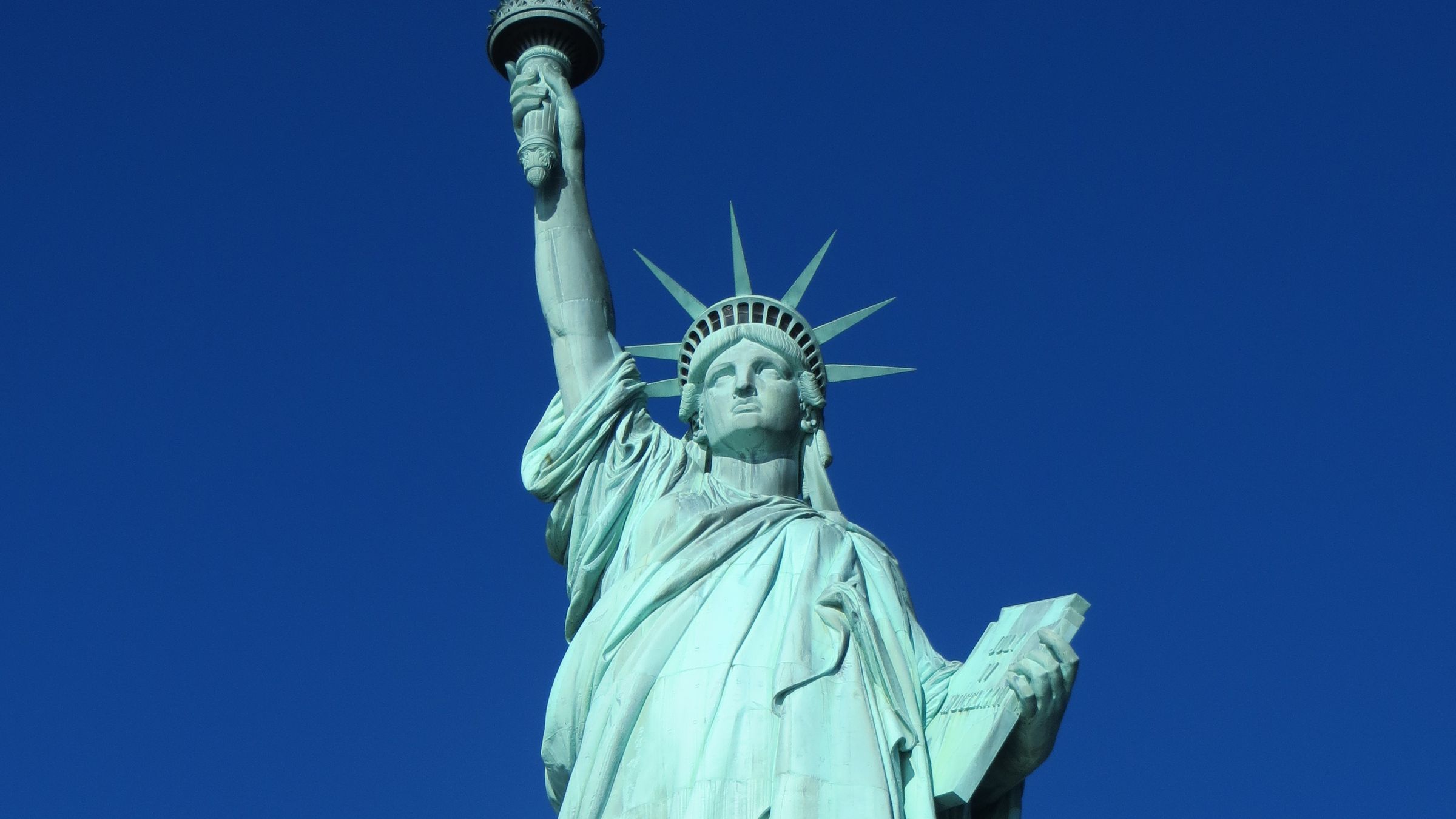
Statue of Liberty — Alex Liivet, via Wikimedia Commons
Why Statue of Liberty Matters
The Statue of Liberty — formally Liberty Enlightening the World — was a gift from the people of France to the United States, dedicated on October 28, 1886. Conceived as a monument to the alliance between the two nations and to the idea of liberty itself, it has become one of the most recognized symbols of freedom and democracy in the world.
For the millions of immigrants who arrived in New York Harbor in the late 19th and early 20th centuries — many of them processed at nearby Ellis Island — the statue was often the first sight of America. Emma Lazarus's 1883 sonnet "The New Colossus," with its lines "Give me your tired, your poor, / Your huddled masses yearning to breathe free," was placed on a plaque inside the pedestal in 1903, permanently linking the monument to the nation's identity as a haven for immigrants.
By the Numbers
Dimensions
- Height (heel to top of head)
- 111 ft 6 in (34 m)
- Height (ground to torch tip)
- 305 ft 6 in (93 m)
- Height (heel to torch tip)
- 151 ft 1 in (46 m)
- Length of right arm
- 42 ft (12.8 m)
- Length of hand
- 16 ft 5 in (5 m)
- Tablet
- 23 ft 7 in tall, inscribed JULY IV MDCCLXXVI
- Thickness of copper skin
- 3/32 in (2.4 mm)
Details
- Rays on the crown
- 7
- Windows in the crown
- 25
- Steps from pedestal to crown
- 354
- Material
- Copper sheet over an iron framework
Timeline
- 1865French historian Édouard de Laboulaye proposes a monument to liberty and Franco-American friendship.
- 1876The statue's arm and torch are displayed at the Centennial Exhibition in Philadelphia.
- 1884The completed statue is presented to the U.S. Minister in Paris, then disassembled for shipment.
- 1885The statue arrives in New York Harbor aboard the French frigate Isère in 214 crates.
- 1886The Statue of Liberty is dedicated by President Grover Cleveland on October 28.
- 1903Emma Lazarus's sonnet "The New Colossus" is mounted on a plaque inside the pedestal.
- 1924The statue is proclaimed a National Monument.
- 1984Designated a UNESCO World Heritage Site; a major restoration begins.
- 1986The restored statue, with a new gold-leaf torch, is rededicated during its centennial.
Complete History
The idea for the statue is traditionally traced to the French historian and abolitionist Édouard de Laboulaye, who envisioned a monument celebrating liberty and the friendship between France and the United States. The sculptor Frédéric Auguste Bartholdi took up the project, designing a colossal neoclassical figure of a robed woman — modeled on Libertas, the Roman goddess of liberty — holding a torch aloft and cradling a tablet inscribed with the date of American independence.
Work began in France in the 1870s. To support the enormous copper skin, Bartholdi enlisted the engineer Gustave Eiffel, who designed an innovative internal iron framework that lets the copper exterior flex with changes in temperature and wind. The arm and torch were exhibited at the 1876 Centennial Exhibition in Philadelphia, and the completed statue was assembled in Paris before being taken apart into 214 crates and shipped aboard the French frigate Isère, arriving in New York in June 1885.
The United States was responsible for the pedestal, designed by the architect Richard Morris Hunt. When fundraising lagged, the publisher Joseph Pulitzer used his newspaper, the New York World, to rally small donations from ordinary Americans. The statue was mounted on its pedestal on what was then Bedloe's Island and dedicated by President Grover Cleveland on October 28, 1886. It was proclaimed a National Monument in 1924 and designated a UNESCO World Heritage Site in 1984, following a major restoration completed for its centennial in 1986.
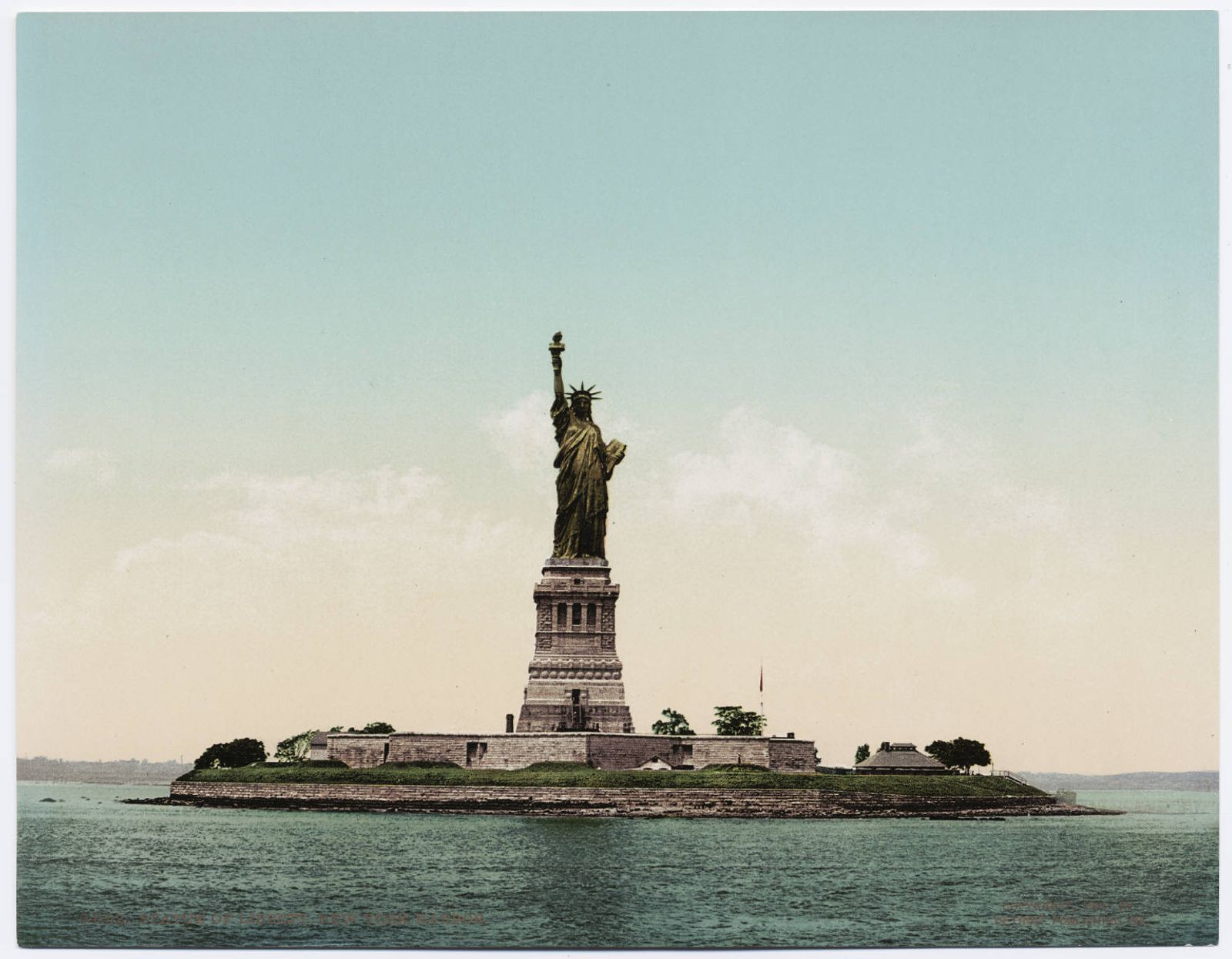
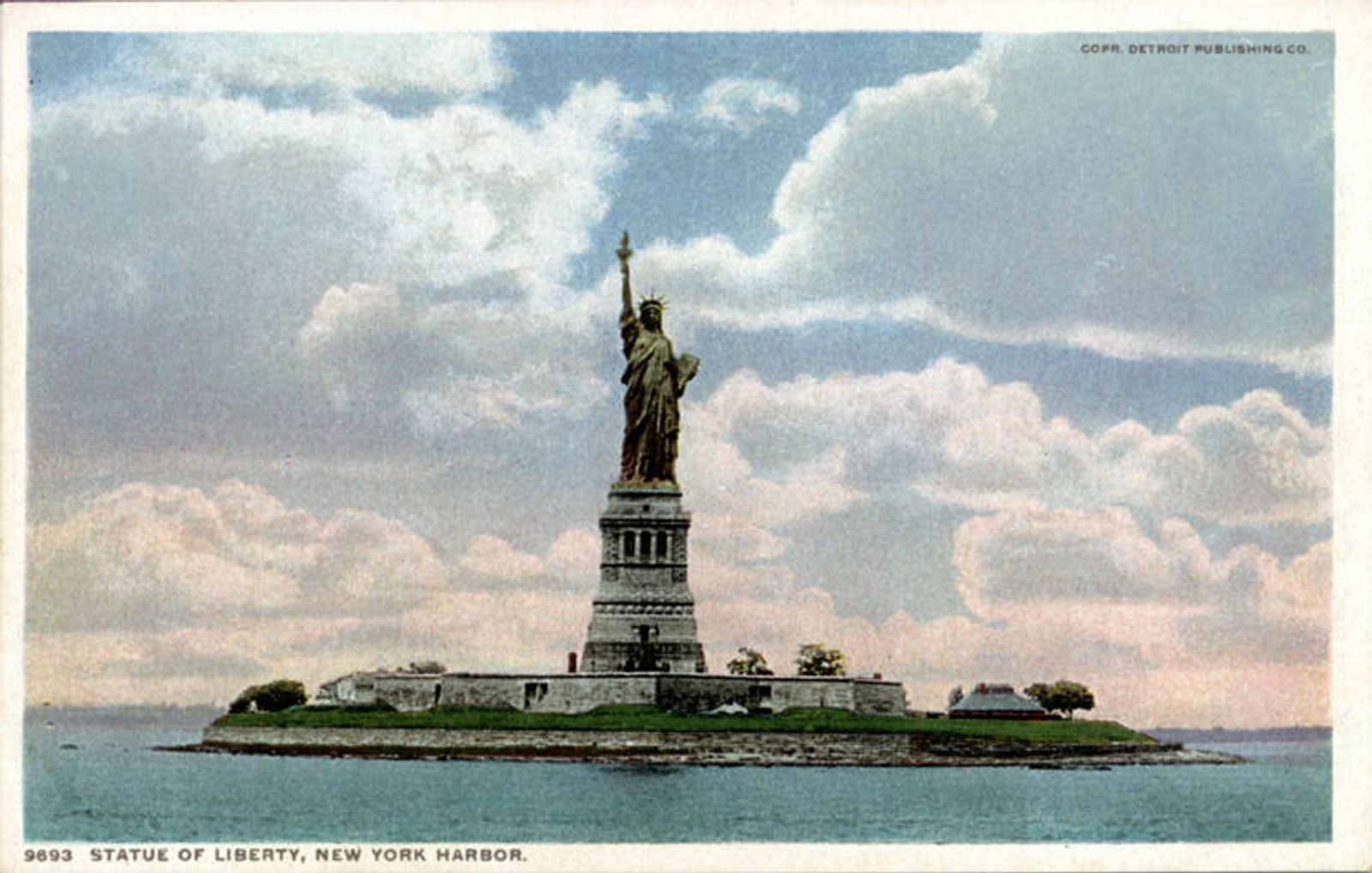
Historic Images
Interesting Facts
- The statue's copper skin is only about 3/32 of an inch thick — roughly the width of two stacked pennies.
- Weathering turned the originally shiny brown copper to its familiar green patina within about three decades.
- The seven rays of the crown are commonly said to represent the seven seas and seven continents.
- Gustave Eiffel, who engineered the statue's internal framework, later built the Eiffel Tower in Paris.
- The tablet in the statue's left hand reads JULY IV MDCCLXXVI — July 4, 1776, the date of the Declaration of Independence.
Visiting Today
- Hours
- Liberty Island is open daily except December 25; ferry schedules vary by season.
- Admission
- Access to Liberty Island is free, but all visitors must take a ticketed ferry operated by the official concessioner. Pedestal and crown access require advance reservations.
- Best time to visit
- Early-morning ferries are the least crowded, especially in summer.
- Nearby
- Ellis Island and the National Museum of Immigration; Battery Park in Lower Manhattan; the 9/11 Memorial & Museum.
Crown tickets are limited and often sell out weeks in advance, so book early. Ferries depart from Battery Park in Manhattan and from Liberty State Park in New Jersey.
Frequently Asked Questions
Who designed the Statue of Liberty?
The statue was designed by the French sculptor Frédéric Auguste Bartholdi. Its internal iron framework was engineered by Gustave Eiffel, and the pedestal was designed by the American architect Richard Morris Hunt.
When was the Statue of Liberty dedicated?
It was dedicated on October 28, 1886, by President Grover Cleveland.
Was the Statue of Liberty a gift from France?
Yes. It was a gift from the people of France to the United States, celebrating the friendship between the two nations and their shared commitment to liberty.
How tall is the Statue of Liberty?
The copper statue measures 111 feet 6 inches from heel to the top of the head, and 305 feet 6 inches from the ground to the tip of the torch.
What does the tablet say?
The tablet held in the statue's left hand is inscribed JULY IV MDCCLXXVI — July 4, 1776 in Roman numerals, the date of American independence.