Civil War · South Carolina
Fort Sumter
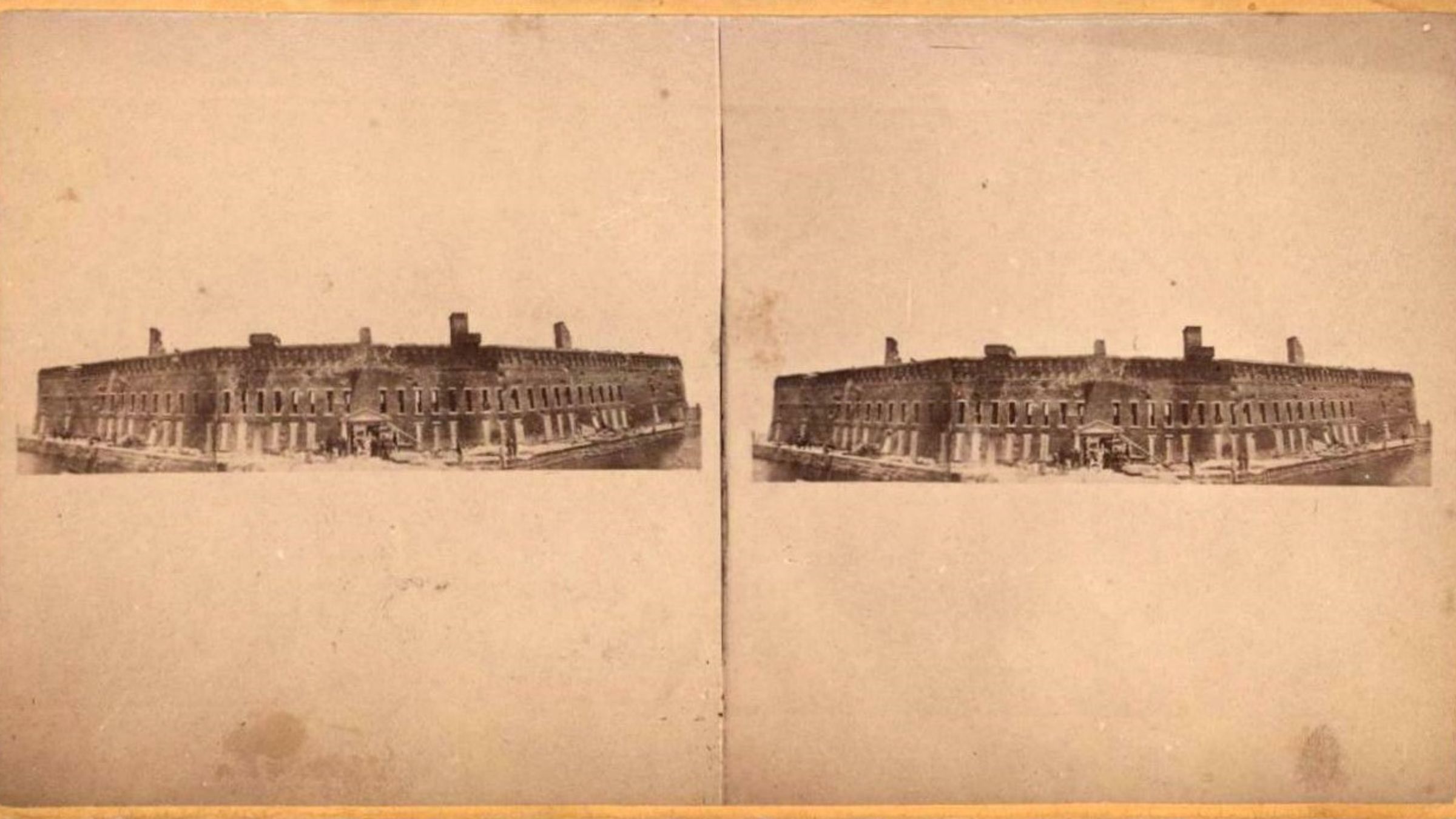
Fort Sumter photographed in 1861, the year the Civil War began. — F.A. Nowell Co.
Why Fort Sumter Matters
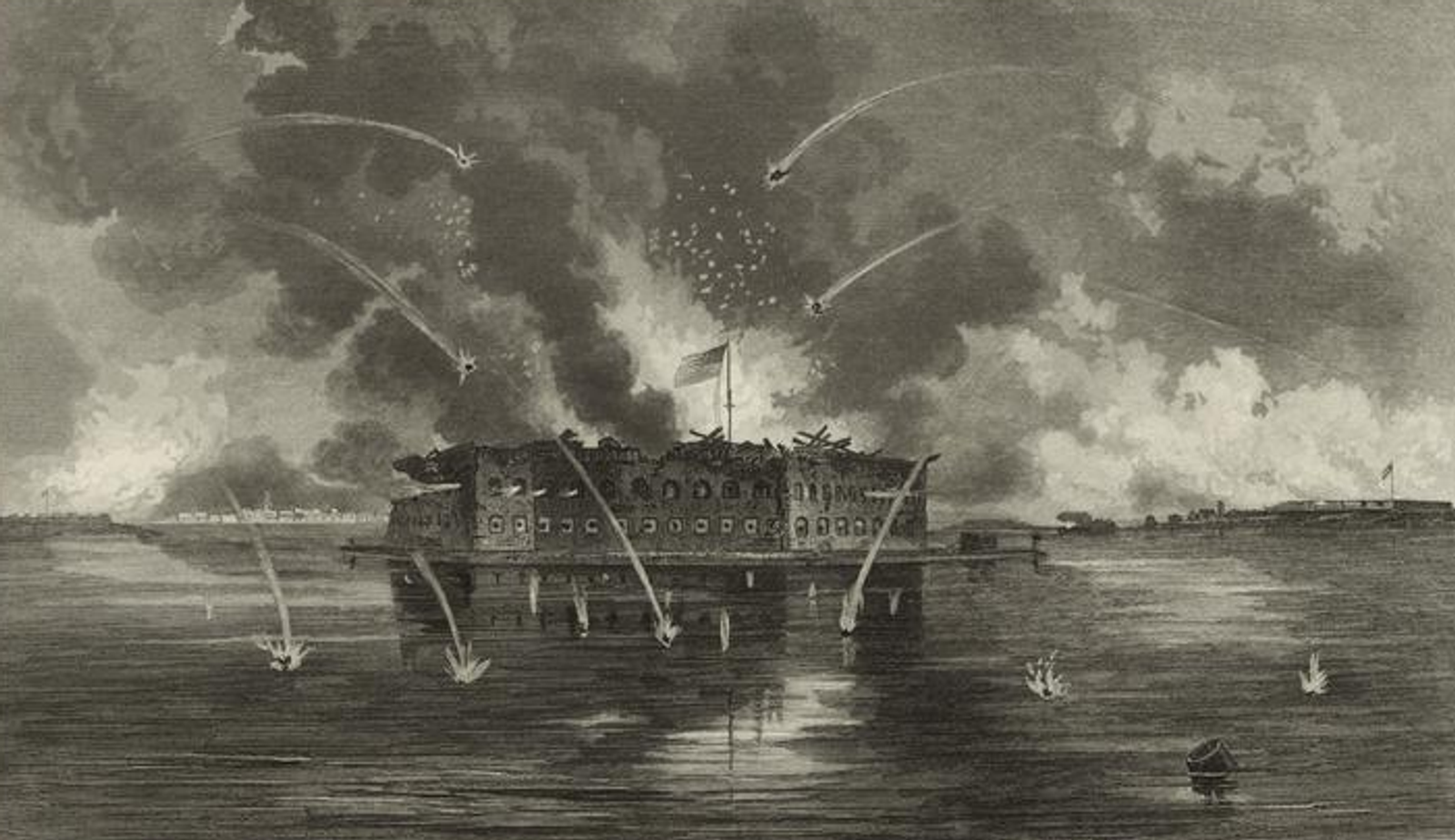
Fort Sumter is where the American Civil War began. In the pre-dawn hours of April 12, 1861, Confederate artillery ringing Charleston Harbor opened fire on the small Union garrison holding this unfinished brick fort — the first shots of a war that would claim more American lives than any other. The roughly 34-hour bombardment forced the fort's surrender without a single combat death, yet it shattered the last hope of a peaceful end to the secession crisis and rallied both North and South for four years of war.
By the Numbers
Fortification
- Type
- Third System masonry sea fort
- Original garrison
- ~85 U.S. Army soldiers under Maj. Robert Anderson
The Battle
- First shots
- April 12, 1861, ~4:30 a.m.
- Bombardment
- ~34 hours
- Combat deaths
- None during the bombardment
Today
- Access
- By ferry only, from Charleston
Timeline
- 1829Construction of Fort Sumter begins on a man-made island in Charleston Harbor.
- 1860Major Robert Anderson moves the U.S. garrison to Fort Sumter on December 26.
- 1861Confederate bombardment on April 12 opens the Civil War; the fort surrenders April 13.
- 1863Union forces begin a prolonged siege that reduces the fort to rubble.
- 1865Confederates evacuate; Anderson raises the U.S. flag again on April 14.
- 1948Fort Sumter is established as a unit of the National Park System.
- 2019Redesignated part of Fort Sumter and Fort Moultrie National Historical Park.
Complete History
Fort Sumter was conceived after the War of 1812, when the vulnerability of America's coastline prompted Congress to fund a chain of masonry sea forts known as the Third System. Work on Sumter — built on an artificial island of granite and rubble at the mouth of Charleston Harbor and named for Revolutionary War general Thomas Sumter — began in 1829 and dragged on for decades. It was still unfinished in December 1860, when South Carolina became the first state to secede from the Union.
On the night of December 26, 1860, Major Robert Anderson secretly moved his U.S. Army garrison from the exposed Fort Moultrie across the harbor to the more defensible Sumter. For months the standoff simmered as the new Confederate government demanded the fort's evacuation and President Lincoln resolved to resupply it. On April 12, 1861, Confederate forces under General P.G.T. Beauregard opened fire. After roughly 34 hours of bombardment, his ammunition and provisions exhausted, Anderson surrendered on April 13 and evacuated the following day.
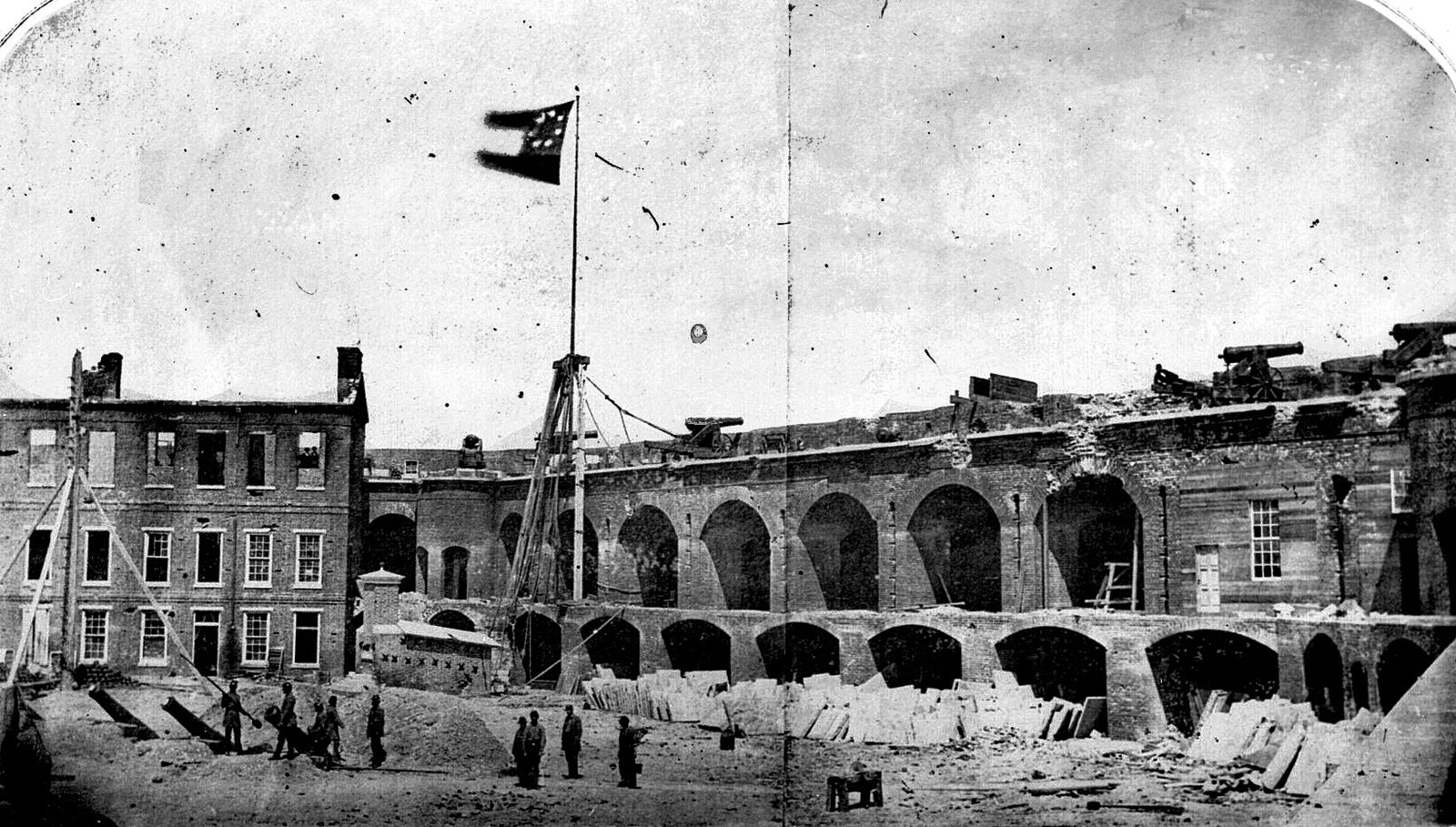
Confederate forces held Fort Sumter for most of the war, enduring one of the longest sieges in modern history as Union batteries and ironclads pounded it to rubble between 1863 and 1865. The Confederates finally abandoned the ruined fort in February 1865 as Sherman's army approached. On April 14, 1865 — four years to the day after the surrender — Anderson returned to raise the same flag he had lowered. Today the fort is preserved as part of Fort Sumter and Fort Moultrie National Historical Park, reachable only by boat.
Historic Images
Interesting Facts
- Fort Sumter is named for Thomas Sumter, the Revolutionary War militia general nicknamed the 'Carolina Gamecock.'
- The fort sits on a man-made island built from tons of granite and rubble shipped to the harbor mouth.
- Although the opening bombardment killed no one, two Union soldiers died in an accidental explosion during the surrender salute on April 14, 1861.
- By the war's end, Confederate defenders had endured nearly two years of Union bombardment that reduced the three-story fort to a low pile of rubble.
- Fort Sumter can only be reached by boat; the National Park Service operates it together with nearby Fort Moultrie.
Visiting Today
- Hours
- The park grounds are open on a seasonal schedule set by the ferry service. Check the National Park Service and the ferry concessioner for current departure times.
- Admission
- Entrance to Fort Sumter is free, but the ferry that provides the only access charges a fare.
- Best time to visit
- Spring and fall offer mild weather and calmer harbor crossings; early-morning ferries are less crowded.
- Nearby
- Fort Moultrie, Patriots Point Naval & Maritime Museum, and historic downtown Charleston.
The ferry ride across Charleston Harbor is part of the experience — arrive early to allow time for boarding, and bring sun protection, as there is little shade on the fort's parade ground.
Frequently Asked Questions
Why is Fort Sumter famous?
Fort Sumter is where the American Civil War began. On April 12, 1861, Confederate forces bombarded the Union-held fort in Charleston Harbor, and its surrender the next day marked the start of four years of war.
Can you visit Fort Sumter?
Yes. Fort Sumter is a national park site accessible only by boat. Concession-operated ferries depart from Liberty Square in downtown Charleston and from Patriots Point in Mount Pleasant.
Did anyone die in the Battle of Fort Sumter?
No soldiers were killed during the 34-hour bombardment itself. Two Union soldiers died in an accidental cannon explosion during a surrender salute the following day.
Who won the Battle of Fort Sumter?
The Confederacy. Major Robert Anderson surrendered the fort to Confederate forces on April 13, 1861, and the South held it for most of the war.