- Colonial America (1607–1775)
- 37.2707° N, 76.7075° W
Colonial Williamsburg
Williamsburg, Virginia · Colonial capital 1699–1780; restored from 1926
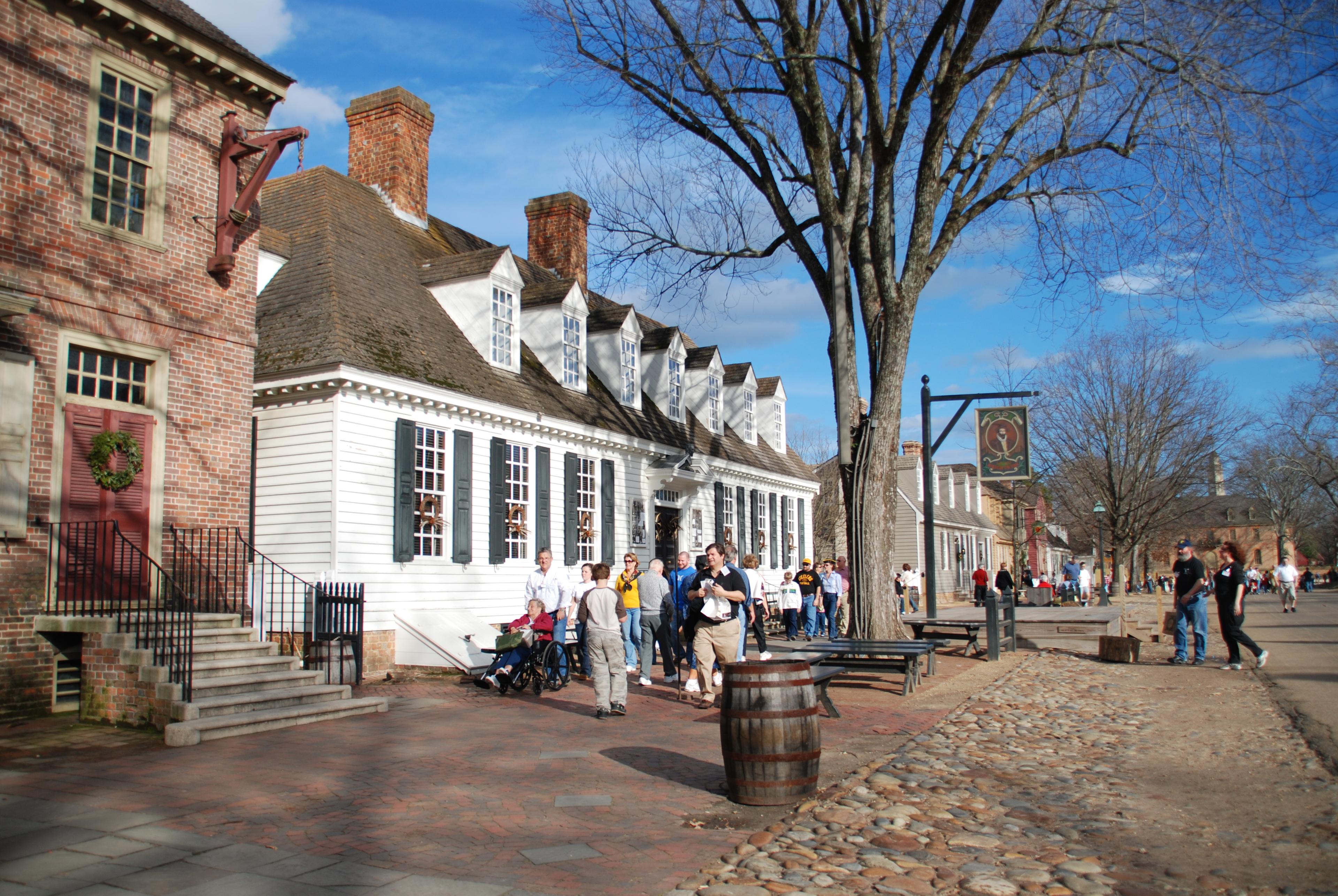
Humberto Moreno · CC BY · via Wikimedia Commons
Why It Matters
Colonial Williamsburg is the restored 18th-century capital of the Virginia colony and the largest living-history museum in the United States. Across a 300-acre historic area, costumed interpreters, tradespeople, and restored buildings recreate the town as it was on the eve of the American Revolution.
Williamsburg was a center of Revolutionary-era politics, where figures like Patrick Henry and Thomas Jefferson debated the ideas that shaped the new nation. Restored beginning in 1926 with the backing of John D. Rockefeller Jr., it has become one of the country's most influential experiments in historic preservation and public history.
The History
Williamsburg became the capital of the Virginia colony in 1699, laid out around the grand axis of Duke of Gloucester Street between the College of William & Mary and the Capitol. For eight decades it was a political and social hub of Britain's largest American colony.
When Virginia moved its capital to Richmond in 1780, Williamsburg faded into a quiet college town. In the 1920s, the local rector W.A.R. Goodwin persuaded philanthropist John D. Rockefeller Jr. to fund an ambitious restoration — buying, restoring, and reconstructing hundreds of buildings to return the town to its 18th-century appearance.
Opened progressively through the 1930s, Colonial Williamsburg pioneered immersive living history, with costumed interpreters demonstrating colonial trades and daily life — and, increasingly, telling the fuller story of the enslaved and free Black residents who made up roughly half the town's population. It is operated today by the nonprofit Colonial Williamsburg Foundation.
Through the Years
- 1699
Williamsburg becomes the capital of colonial Virginia.
- 1780
The capital moves to Richmond and Williamsburg declines.
- 1926
W.A.R. Goodwin and John D. Rockefeller Jr. begin the restoration.
- 1930s
Restored and reconstructed buildings open to the public.
- Today
Operated by the Colonial Williamsburg Foundation as a living-history museum.
The Archive
 Plate 01
Historic house in Colonial Williamsburg, Virginia
ProfReader · CC BY-SA · via Wikimedia Commons
 Plate 02
Colonial Williamsburg Blacksmith
Elizabeth Rowe · CC BY-SA · via Wikimedia Commons
 Plate 03Historic · 2019
The 1771 courthouse at Colonial Williamsburg in Williamsburg, Virginia
Library of Congress · No known restrictions · via Library of Congress
Facts & Figures
The Museum
- Colonial capital years
- 1699–1780
- Restoration begun
- 1926
- Benefactor
- John D. Rockefeller Jr.
- Historic area
- ~300 acres
The Register
- Established
- colonial capital 1699–1780; restored from 1926
- Architectural style
- Colonial / Georgian
- Builder
- Restoration led by W.A.R. Goodwin, funded by John D. Rockefeller Jr.
- Area of significance
- Historic – Non-Aboriginal; Politics/Government
Frequently Asked
What is Colonial Williamsburg?
A restored 18th-century town and living-history museum — the former colonial capital of Virginia — where costumed interpreters recreate life on the eve of the Revolution.
Who funded the restoration?
Philanthropist John D. Rockefeller Jr., beginning in 1926, at the urging of the local rector W.A.R. Goodwin.
Is it a real historic town?
Yes. It preserves and reconstructs the actual colonial capital on its original site, blending original buildings with careful reconstructions.
What can you see there?
The Governor's Palace, the Capitol, taverns, trade shops, and costumed interpreters demonstrating colonial crafts and daily life.
Can you visit Colonial Williamsburg?
Yes. The streets are open to stroll, and a ticket grants entry to the historic buildings, trade shops, and programs.