20th Century · New York
Carnegie Hall
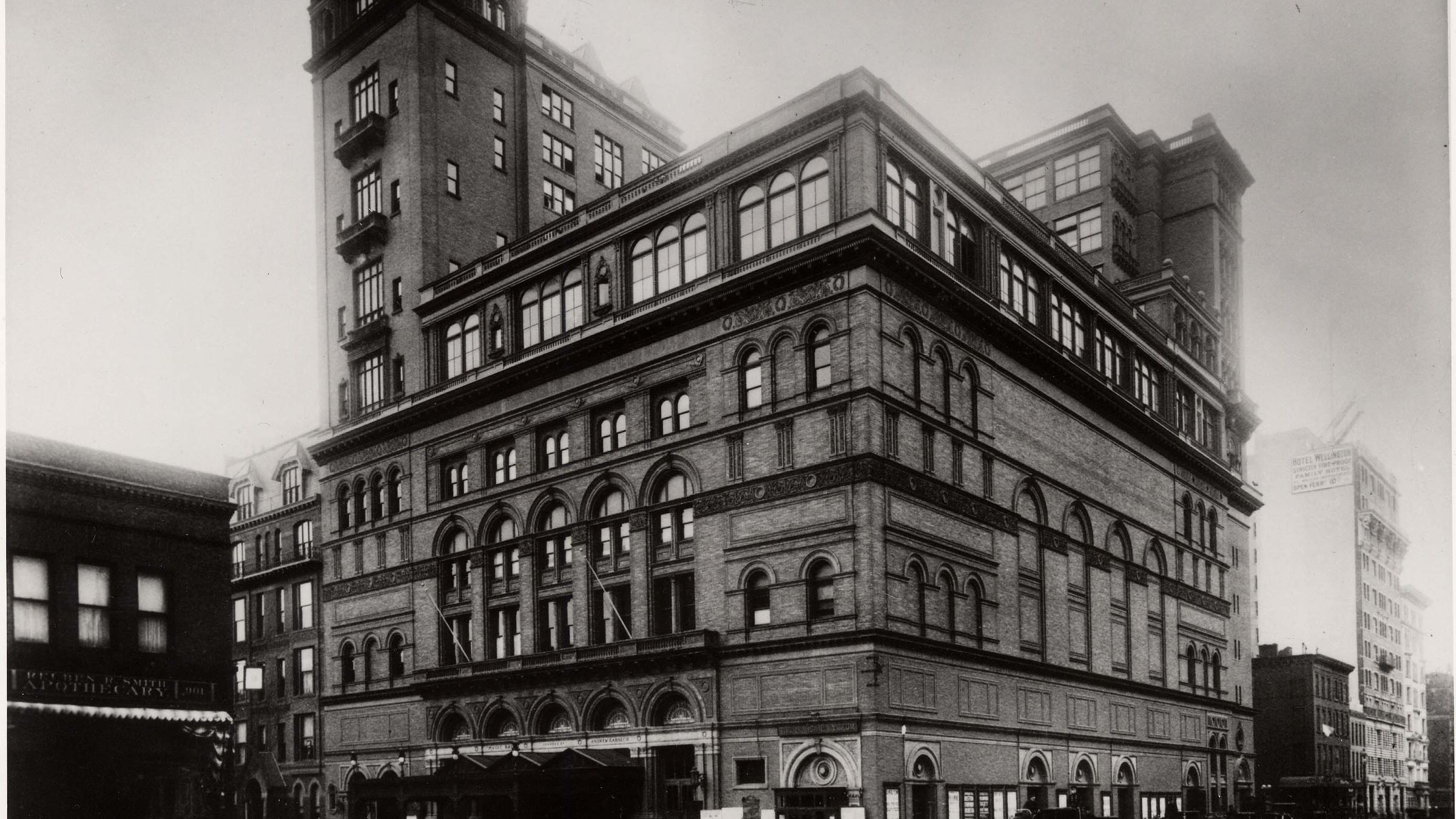
Carnegie Hall in 1899. — Unknown author
Why Carnegie Hall Matters
"How do you get to Carnegie Hall? Practice" — the old joke captures the venue's outsized place in American musical life. Built by steel magnate Andrew Carnegie and opened in 1891 with Pyotr Ilyich Tchaikovsky himself conducting, Carnegie Hall became the aspirational summit for classical musicians, and later for jazz greats and popular artists, from Benny Goodman's 1938 jazz concert to The Beatles' 1964 American debut performances. Its acclaimed acoustics and storied stage have made simply playing there a marker of artistic arrival.
By the Numbers
History
- Opened
- May 5, 1891
- Financed by
- Andrew Carnegie
- Opening conductor
- Pyotr Ilyich Tchaikovsky
- Rescue campaign
- Led by Isaac Stern, 1960
Architecture
- Architect
- William Burnet Tuthill
Music
- Landmark concerts
- Benny Goodman (1938); The Beatles (1964)
Designation
- National Historic Landmark
- Designated 1964
Timeline
- 1891Carnegie Hall opens May 5 with Tchaikovsky conducting
- 1938Benny Goodman's jazz concert legitimizes the genre on the classical stage
- 1960New York City purchases the hall, saving it from demolition
- 1964Carnegie Hall is designated a National Historic Landmark
- 1964The Beatles perform their first American concerts at Carnegie Hall
Complete History
Andrew Carnegie financed the concert hall at the urging of conductor Walter Damrosch and his violinist brother-in-law, seeking a world-class venue befitting New York's growing cultural ambitions. Designed by architect William Burnet Tuthill in an Italian Renaissance style, the hall opened on May 5, 1891, with a five-day music festival featuring Tchaikovsky as guest conductor, one of his only appearances in the United States.
Over the following decades, Carnegie Hall became home to the New York Philharmonic and hosted a who's-who of classical performers, while also opening its stage to popular and jazz music. Benny Goodman's January 1938 concert there is often credited with legitimizing jazz as a serious art form worthy of the classical stage, and in 1964 The Beatles played two sold-out shows during their first American tour.
By the mid-20th century, the New York Philharmonic's planned move to the new Lincoln Center in the early 1960s threatened Carnegie Hall with demolition to make way for a skyscraper. Violinist Isaac Stern led a public campaign that saved the building, and the City of New York purchased it in 1960, placing it under the nonprofit Carnegie Hall Corporation. It was designated a National Historic Landmark in 1964 and remains one of the most prestigious concert venues in the world.
Historic Images
Interesting Facts
- Carnegie Hall opened on May 5, 1891, with composer Tchaikovsky himself conducting, one of his rare U.S. appearances.
- Benny Goodman's 1938 jazz concert at Carnegie Hall is credited with legitimizing jazz as serious concert music.
- The Beatles performed their first American concerts at Carnegie Hall in February 1964.
- Violinist Isaac Stern led the public campaign that saved the hall from demolition in 1960 when the Philharmonic moved to Lincoln Center.
- The old joke 'How do you get to Carnegie Hall? Practice' reflects the venue's status as the pinnacle of musical achievement.
Visiting Today
- Hours
- Guided tours run on a limited schedule outside of rehearsals and performances; check carnegiehall.org for availability.
- Admission
- Tours require a ticketed fee; concert tickets are priced individually by performance.
- Best time to visit
- During the concert season, September through June, for the fullest program of performances.
- Nearby
- Central Park and the shops of Midtown Manhattan are just steps away.
Book a guided tour to see the Rose Museum and learn the hall's history, or better yet, attend a live performance to experience its famous acoustics firsthand.
Frequently Asked Questions
Who built Carnegie Hall?
Steel magnate Andrew Carnegie financed the hall, which opened in 1891, designed by architect William Burnet Tuthill in the Italian Renaissance style.
Was Carnegie Hall almost demolished?
Yes. When the New York Philharmonic planned to move to Lincoln Center around 1960, the hall faced demolition, but a campaign led by violinist Isaac Stern saved it, and New York City purchased the building.
What famous concerts have happened at Carnegie Hall?
Notable performances include Tchaikovsky's 1891 opening concerts, Benny Goodman's genre-defining 1938 jazz concert, and The Beatles' first American shows in 1964.
Can you tour Carnegie Hall?
Yes. Carnegie Hall offers guided tours when the schedule permits, alongside its regular season of concerts across multiple genres.