- The 19th Century (1800–1900)
- 35.2508° N, 75.5281° W
Cape Hatteras Lighthouse
Buxton, North Carolina · Established 1870
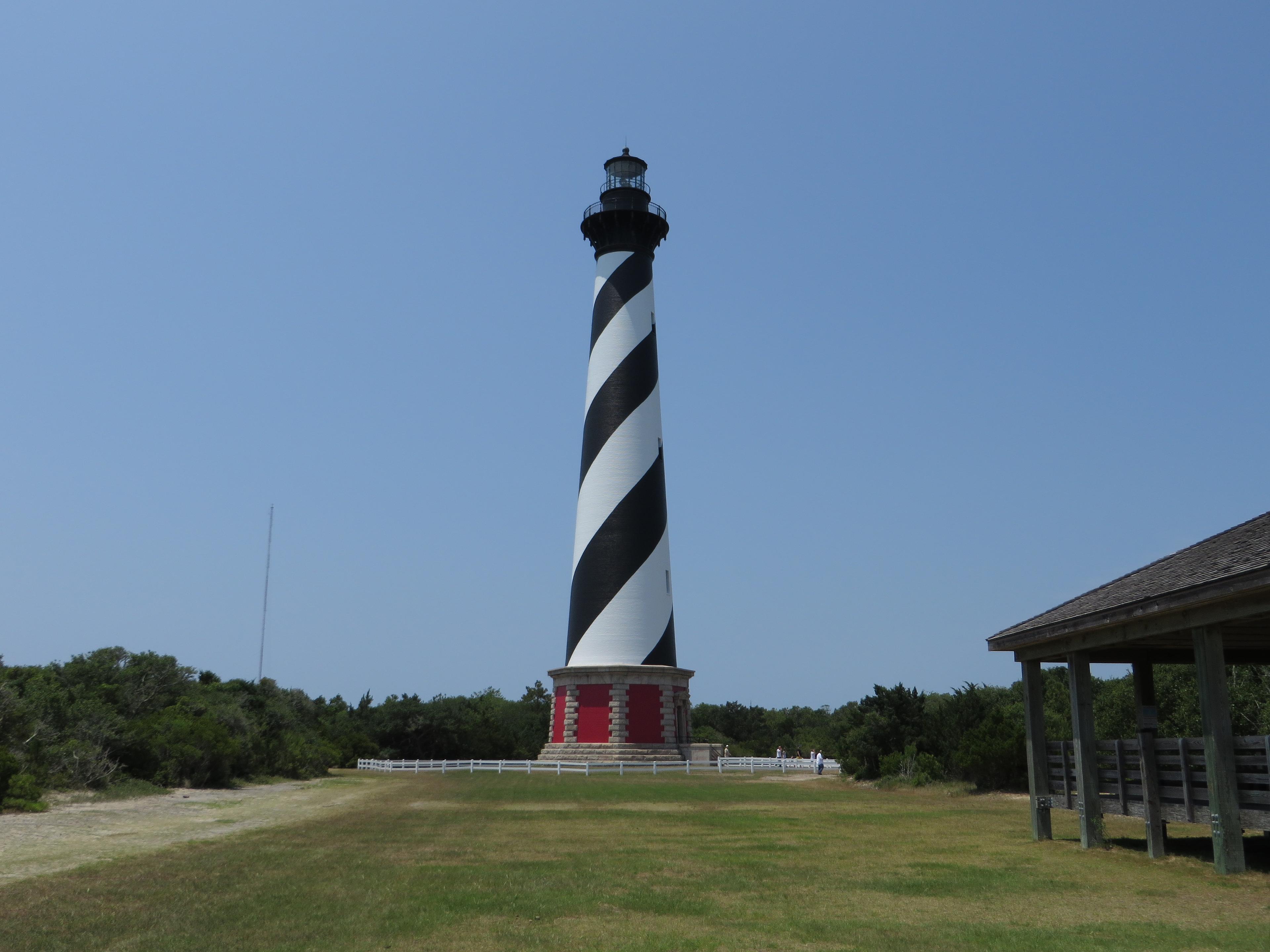
Ken Lund from Reno, Nevada, USA · CC BY-SA · via Wikimedia Commons
Why It Matters
Off North Carolina's Outer Banks, the shifting sandbars of Diamond Shoals have wrecked so many ships that the waters earned the name 'Graveyard of the Atlantic.' Rising 198 feet in bold black-and-white spirals, Cape Hatteras Lighthouse is America's tallest brick lighthouse and has warned mariners away from that danger since 1870. In 1999, as erosion brought the sea to its very foundation, engineers achieved one of the most remarkable feats of historic preservation in American history: they moved the entire 4,800-ton tower nearly half a mile inland, intact.
The History
An earlier, shorter lighthouse first marked Cape Hatteras in 1803, but it proved too weak to warn ships away from Diamond Shoals, a network of shifting underwater sandbars extending miles offshore that had already claimed hundreds of vessels. The U.S. Lighthouse Board built the current 198-foot brick tower in 1870, the tallest brick lighthouse in the country, its distinctive black-and-white spiral pattern designed as a daytime marker distinguishing it from nearby lighthouses.
Coastal erosion steadily narrowed the beach around the lighthouse over the 20th century, and by the 1980s the Atlantic had crept dangerously close to its foundation despite repeated efforts to armor the shoreline. Engineers and preservationists debated solutions for years before settling on an audacious plan: physically relocating the entire structure.
In the summer of 1999, engineers lifted the intact 4,800-ton lighthouse onto a system of steel rails and hydraulic jacks and moved it 2,900 feet inland over 23 days, restoring roughly the same distance from the shoreline it had when built in 1870. The relocation is regarded as one of the greatest historic preservation engineering achievements in the world. The lighthouse remains an active aid to navigation, maintained by the National Park Service within Cape Hatteras National Seashore.
Through the Years
- 1803
An earlier, weaker lighthouse is built at Cape Hatteras
- 1870
The current 198-foot brick lighthouse is completed
- 1980s
Coastal erosion brings the shoreline dangerously close to the tower
- 1999
The lighthouse is moved 2,900 feet inland over 23 days
The Archive
 Plate 01
Cape Hatteras Lighthouse welcome sign.
rickpilot_2000 · CC BY · via Wikimedia Commons
 Plate 02
Base of the Cape Hatteras Lighthouse.
Azaelpitti07 · CC BY-SA · via Wikimedia Commons
Facts & Figures
History
- Current tower built
- 1870
- 1999 relocation
- Moved 2,900 feet inland
Structure
- Height
- 198 feet (tallest brick lighthouse in the U.S.)
Engineering
- Weight moved
- ~4,800 tons
Geography
- Danger zone
- Diamond Shoals, 'Graveyard of the Atlantic'
Design
- Pattern
- Black-and-white diagonal spiral
Status
- Function
- Still an active navigational aid
The Register
- Architectural style
- Brick conical tower
- Builder
- United States Lighthouse Board
- Area of significance
- Maritime navigation; coastal engineering
Frequently Asked
Why is it called the 'Graveyard of the Atlantic'?
The waters off Cape Hatteras contain Diamond Shoals, shifting underwater sandbars that have wrecked hundreds of ships over the centuries, giving the area its grim nickname.
How was the lighthouse moved?
In 1999, engineers lifted the intact 4,800-ton tower onto steel rails and hydraulic jacks and moved it 2,900 feet inland over 23 days to escape advancing coastal erosion.
Is Cape Hatteras Lighthouse still in use?
Yes. It remains an active aid to navigation, warning ships away from Diamond Shoals just as it has since 1870.
Can you climb the lighthouse?
Yes, seasonally. Visitors can climb the 257 steps to the top for panoramic views of the Outer Banks, weather and staffing permitting.