- Colonial America (1607–1775)
- 40.4614° N, 74.0104° W
Sandy Hook Lighthouse
Highlands, New Jersey · Established 1764
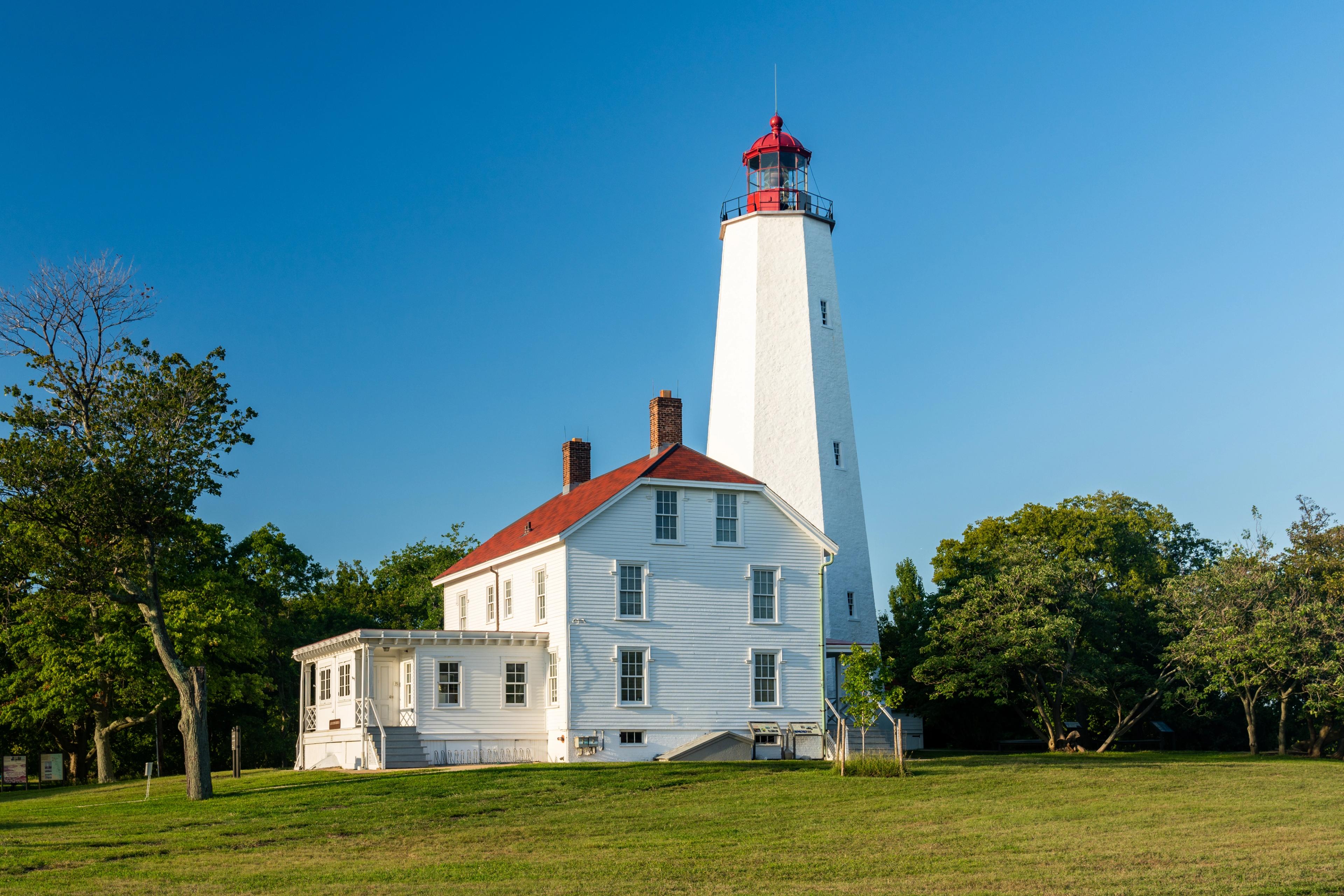
FirozAnsari · CC BY-SA · via Wikimedia Commons
Why It Matters
The oldest continuously operating lighthouse in the United States, built seven years before the Revolution to guide ships into New York Harbor, has kept its light burning through a war fought over it and two and a half centuries of shifting coastline.
The History
New York merchants, eager to reduce shipwrecks at the treacherous entrance to New York Harbor, funded construction of what was originally called the 'New York Lighthouse' in 1764, more than a decade before the American Revolution. Builder Isaac Conro raised an 85-foot octagonal masonry tower at the tip of the Sandy Hook peninsula, and the light went into service that same year, guiding merchant ships safely toward port.
During the Revolutionary War, British forces occupied the lighthouse and used it to guide their own shipping into the harbor, while American militia made several unsuccessful attempts to disable or destroy it and deny the British that advantage. The light survived the war intact and continued operating afterward, eventually receiving a third-order Fresnel lens in 1857 that dramatically improved its range and brightness.
In the centuries since its construction, longshore drift has steadily extended the Sandy Hook peninsula northward, so the lighthouse that once stood at the water's edge now sits roughly a mile and a half inland from the point. Still an active aid to navigation, it was designated a National Historic Landmark in 1996 and is managed by the National Park Service as part of Gateway National Recreation Area, remaining the oldest continuously operating lighthouse in the country.
Through the Years
- 1764
The lighthouse is built and lit for the first time
- 1776
British forces occupy the lighthouse during the Revolutionary War
- 1857
A third-order Fresnel lens is installed, improving the light's range
- 1996
The lighthouse is designated a National Historic Landmark
The Archive
 Plate 01
A View of Fort Hancock from Inside Sandy Hook Lighthouse.
Mitchell Speert · CC BY-SA · via Wikimedia Commons
 Plate 02Historic · 2014
Historic photograph of the Sandy Hook Lighthouse.
https://www.loc.gov/pictures/item/nj0630.photos.108359p · Public domain · via Wikimedia Commons
 Plate 03
Sandy Hook Lighthouse and the visitor center at Sandy Hook, New Jersey, USA.
Acroterion · CC BY-SA · via Wikimedia Commons
Facts & Figures
Founding
- Built
- 1764, the oldest continuously operating lighthouse in the United States
History
- Original name
- The 'New York Lighthouse,' funded by New York merchants
- Revolutionary War
- Held by the British; American militia made unsuccessful attempts to destroy it
Architecture
- Height
- 85 feet, octagonal tower
Engineering
- Lens
- A third-order Fresnel lens was installed in 1857
Geography
- Coastal change
- Longshore drift has moved the shoreline roughly 1.5 miles from the lighthouse since 1764
Designation
- National Historic Landmark
- Designated 1996
The Register
- Established
- 1764
- Architectural style
- Colonial octagonal masonry tower
- Builder
- Isaac Conro, funded by New York merchants
- Area of significance
- Maritime History, Engineering
Frequently Asked
Why is Sandy Hook Lighthouse historically significant?
Built in 1764, it's the oldest continuously operating lighthouse in the United States, predating the American Revolution by more than a decade and surviving as a working aid to navigation ever since.
What happened to it during the Revolutionary War?
British forces held the lighthouse and used it to guide their ships, while American militia made several unsuccessful attempts to destroy or disable it to deny them that advantage.
Why is the lighthouse so far from the water now?
Longshore drift has gradually extended the Sandy Hook peninsula since 1764, so the shoreline has moved roughly 1.5 miles away from the lighthouse's original position at the point.
Can visitors climb the lighthouse?
Yes, on ranger-led tours; the National Park Service, which manages the site as part of Gateway National Recreation Area, offers scheduled climbs to the top.