Mississippian · Illinois
Cahokia Mounds
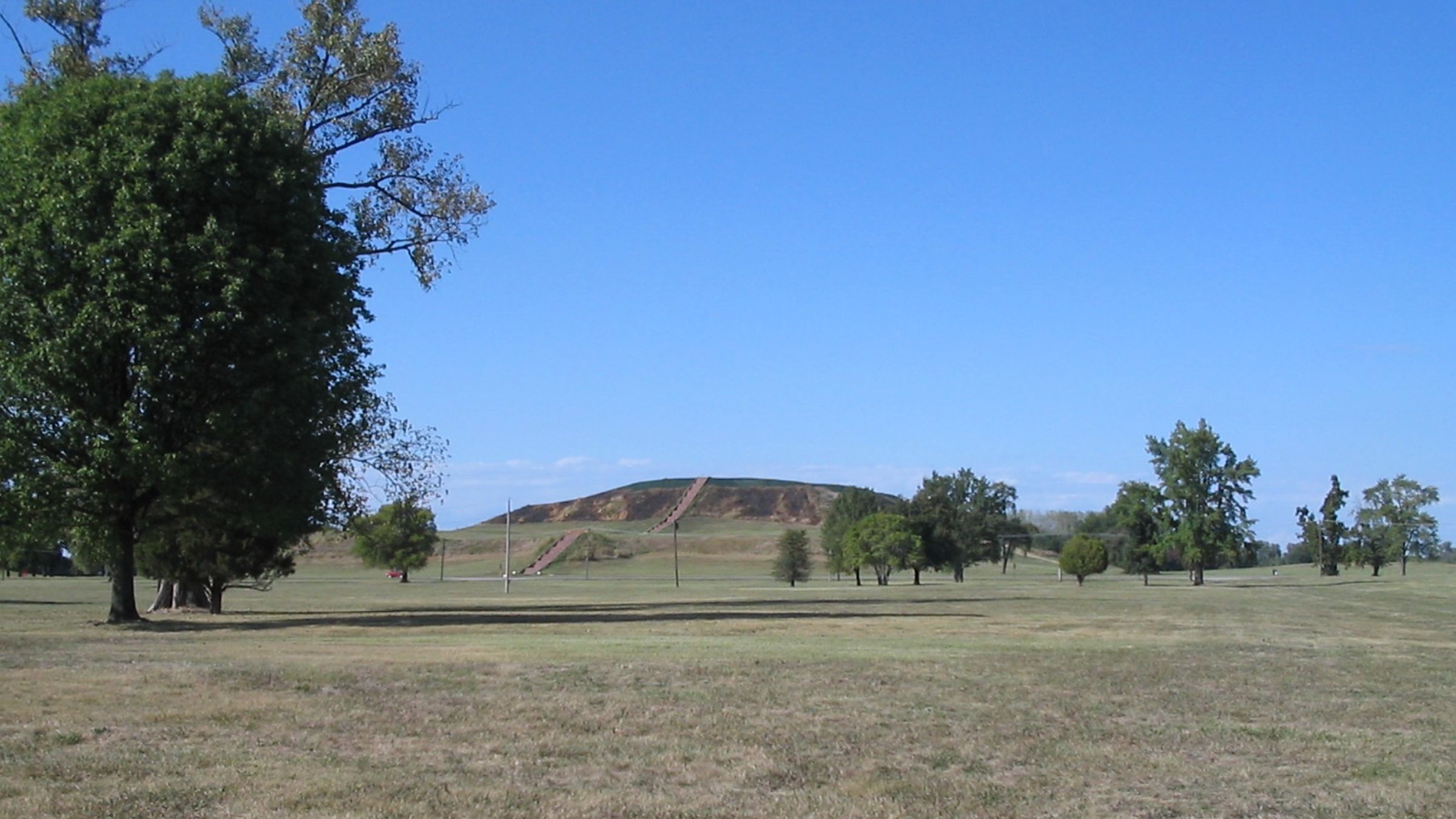
Monks Mound, the largest earthwork in the Americas. — Joe Passe
Why Cahokia Mounds Matters
Cahokia Mounds preserves the remains of the largest and most sophisticated ancient city north of Mexico — a Mississippian metropolis that flourished a thousand years ago on the Mississippi floodplain. At its height around 1100 CE it may have held more people than London, its skyline dominated by scores of enormous earthen mounds. The greatest of them, Monks Mound, is the largest earthwork in the Americas. Mysteriously abandoned before Europeans arrived, Cahokia is a monument to a vast, complex Native American civilization.
By the Numbers
The City
- Culture
- The Mississippian culture
- Flourished
- c. 1050-1350 CE
- Population
- Perhaps 10,000-20,000+ at its peak
Monks Mound
- Size
- ~100 ft tall; largest earthwork in the Americas
The Mounds
- Surviving
- ~80 of an original ~120
Woodhenge
- Feature
- A circle of posts used as a solar calendar
Status
- UNESCO
- World Heritage Site (1982)
Timeline
- c. 1050 CEThe Mississippian city of Cahokia begins to rise.
- c. 1100Cahokia peaks, perhaps the largest city north of Mexico.
- 1100sMonks Mound and scores of other mounds are built.
- c. 1200-1350The city declines and is abandoned.
- 1982Cahokia Mounds is designated a UNESCO World Heritage Site.
Complete History
Beginning around 1050 CE, the Mississippian people built a great city on the fertile bottomlands east of the Mississippi River, in what is now southern Illinois. Known today as Cahokia — a name borrowed from a later, unrelated tribe, since the builders' own name for it is lost — it grew into the largest urban center in pre-Columbian North America, a hub of trade, religion, and political power.
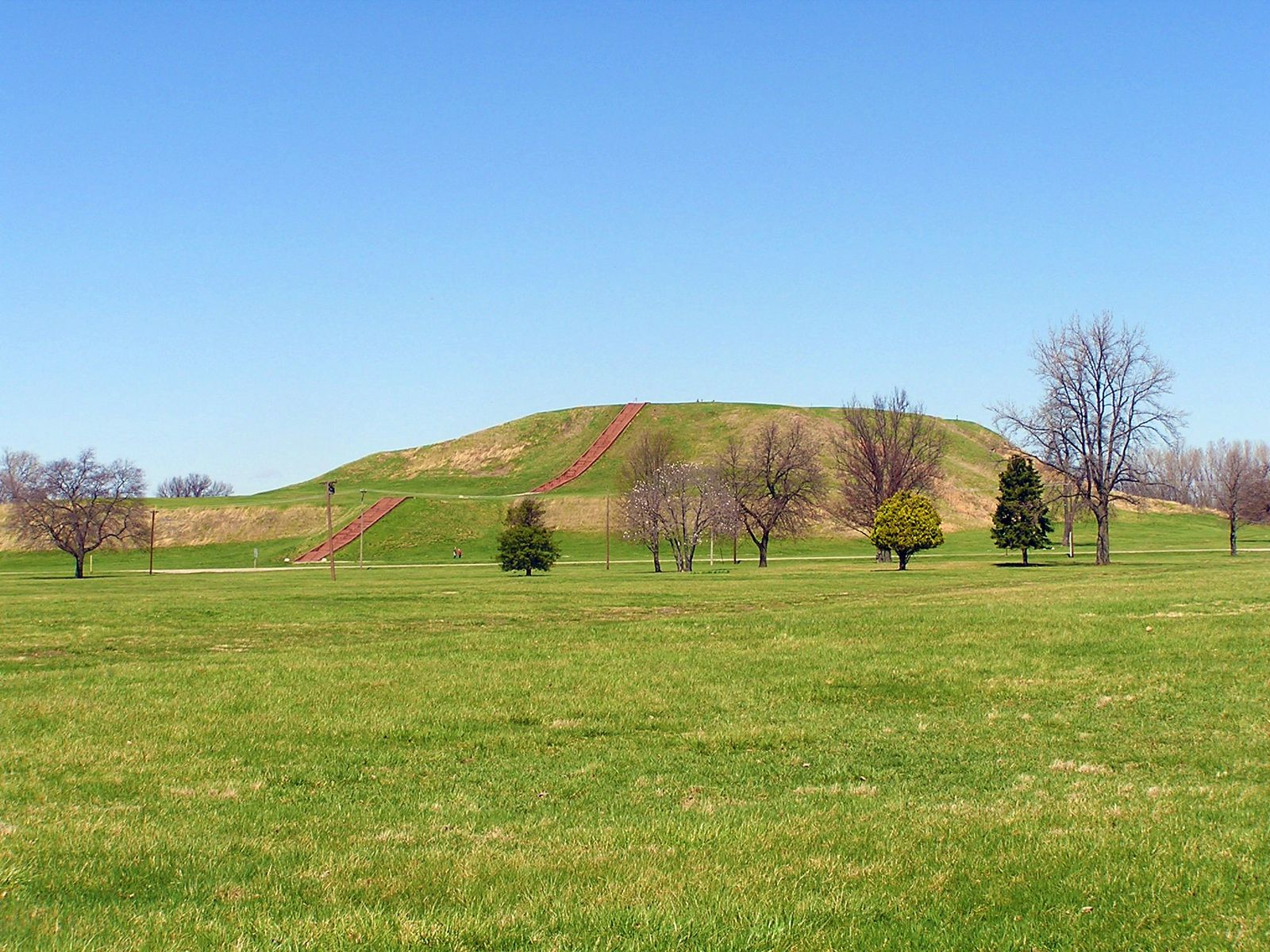
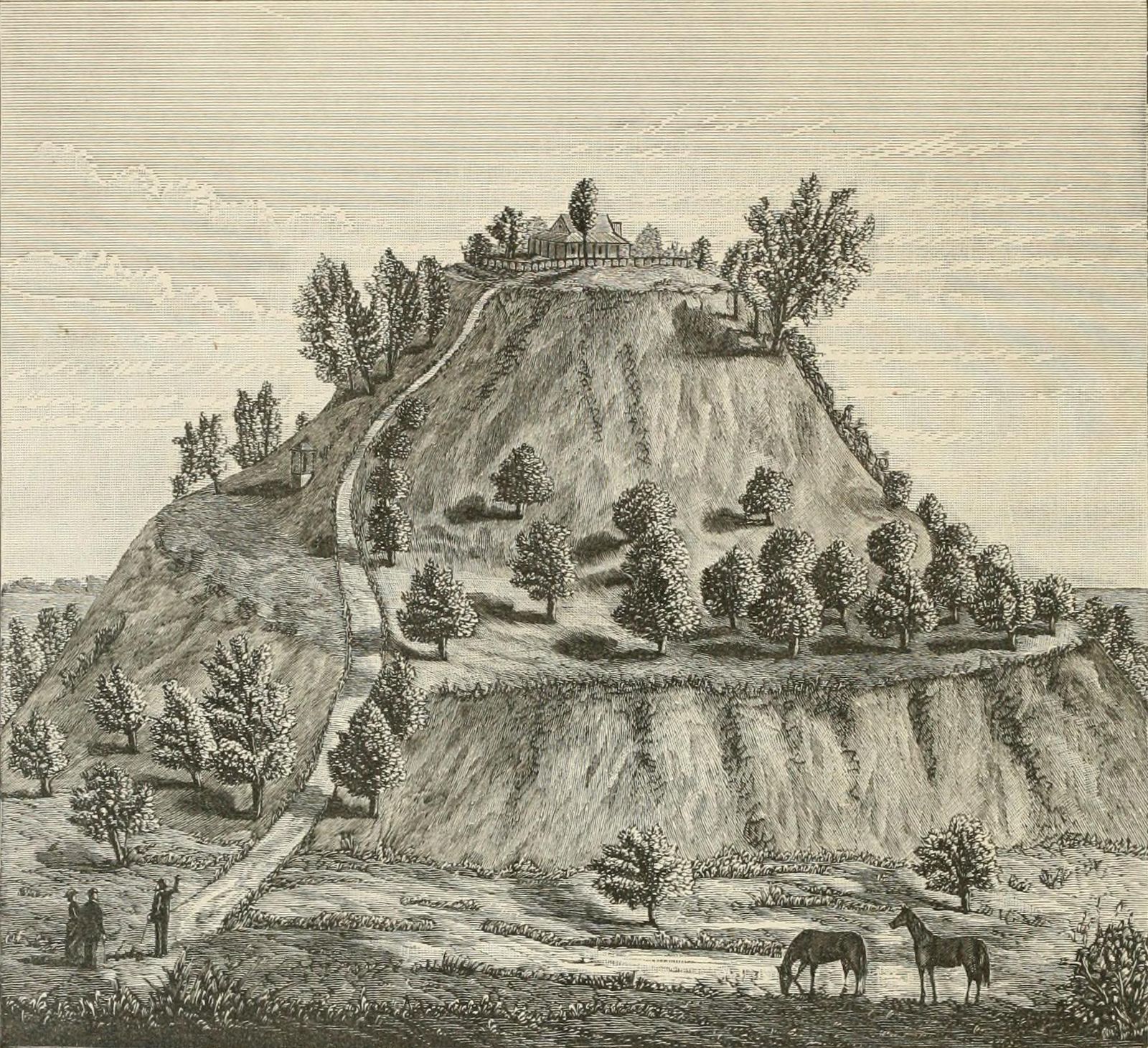
At its peak around 1100 CE, Cahokia may have been home to 10,000 to 20,000 people or more, rivaling the great cities of Europe at the time. Its people raised more than a hundred earthen mounds as platforms for temples, elite residences, and ceremonies. The largest, Monks Mound, rose about 100 feet in four terraces, with a base broader than that of the Great Pyramid of Giza. A circle of tall wooden posts, nicknamed 'Woodhenge,' tracked the sun through the seasons.
For reasons still debated — among them climate change, flooding, resource exhaustion, and political upheaval — Cahokia declined through the 1200s and was abandoned by about 1350, generations before Europeans reached the region. Today around 80 of its mounds survive as Cahokia Mounds State Historic Site, a National Historic Landmark and, since 1982, a UNESCO World Heritage Site.
Historic Images
Interesting Facts
- At its peak around 1100 CE, Cahokia may have had more people than London did at the time, making it the largest city in what is now the United States until Philadelphia surpassed it in the 1780s.
- Monks Mound, about 100 feet tall, is the largest man-made earthen mound in the Americas, with a base larger than that of the Great Pyramid of Giza.
- The city originally had about 120 mounds, of which around 80 survive today.
- A circle of wooden posts known as 'Woodhenge' was used to track the sun and mark the seasons.
- The name 'Cahokia' comes from a later tribe; the original name of the city and its people is unknown.
Visiting Today
- Hours
- The interpretive center and grounds are open several days a week, with hours that vary by season; the mounds themselves are accessible during daylight. Check the site's website before visiting.
- Admission
- Admission is free, though a donation is suggested to support the site. The interpretive center houses exhibits on the ancient city.
- Best time to visit
- Spring and fall offer mild weather for climbing Monks Mound and walking the grounds; summers are hot and humid.
- Nearby
- Downtown St. Louis and the Gateway Arch, just across the Mississippi River, and the city of Collinsville.
Start at the interpretive center to understand the scale of the ancient city, then climb the stairs to the top of Monks Mound for a view over the site and the distant St. Louis skyline. Wear sturdy shoes and bring water.
Frequently Asked Questions
What is Cahokia Mounds?
It is the site of the largest pre-Columbian city north of Mexico, built by the Mississippian culture around 1050-1350 CE near present-day Collinsville, Illinois. It preserves dozens of enormous earthen mounds.
How big was Cahokia?
At its peak around 1100 CE, Cahokia may have had 10,000 to 20,000 or more people, larger than many European cities of the era, spread across a city of more than a hundred mounds.
What is Monks Mound?
Monks Mound is the largest structure at Cahokia and the biggest earthen mound in the Americas — about 100 feet tall, built in terraces, and once topped by a massive building.
Why was Cahokia abandoned?
The city declined and was abandoned by about 1350 CE, before Europeans arrived. The causes are debated but likely include climate change, flooding, resource depletion, and social or political upheaval.