Ancestral Puebloan · Colorado
Mesa Verde
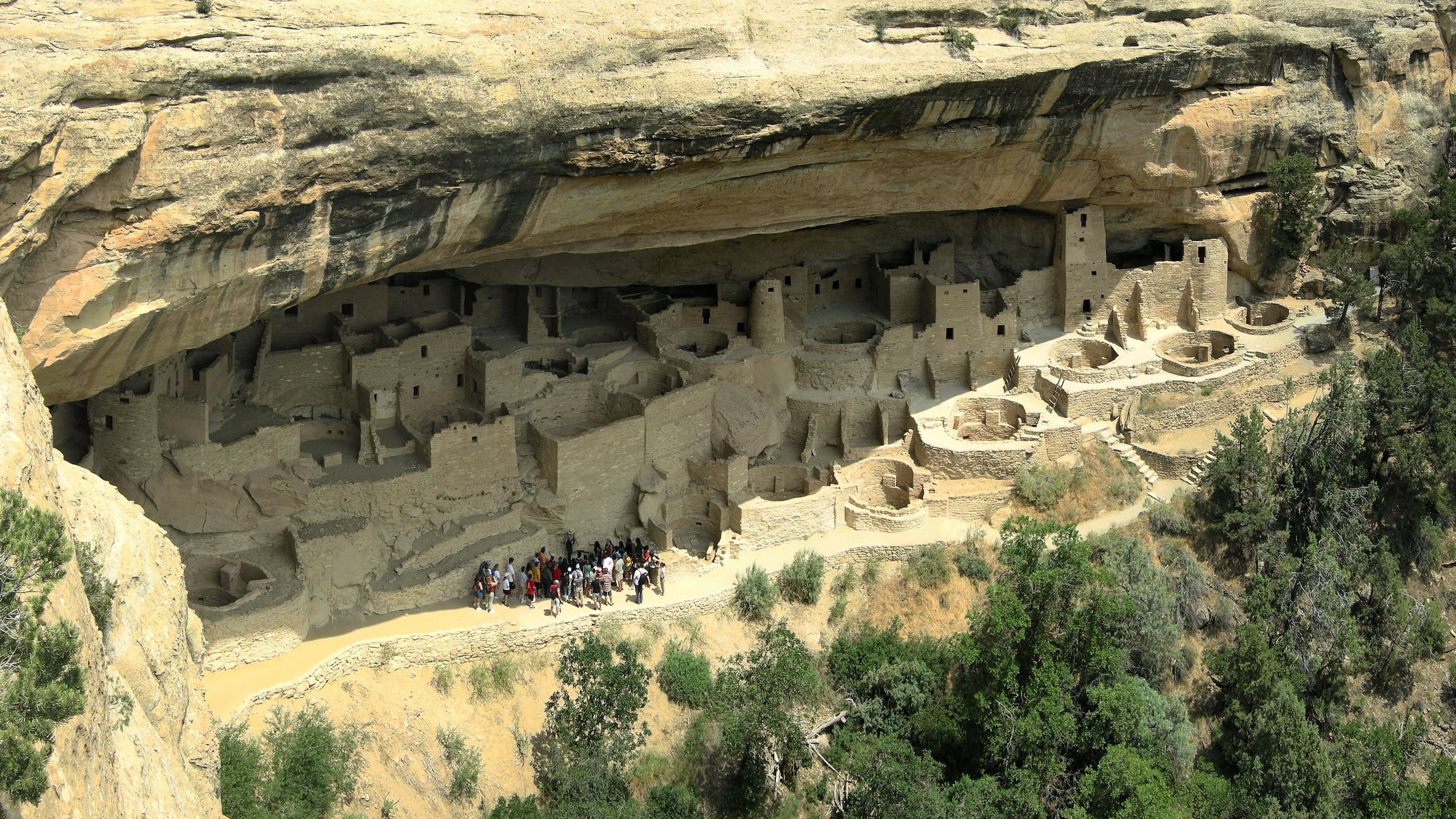
Also known as Cliff Palace
Cliff Palace, the largest cliff dwelling in North America. — Tobi 87
Why Mesa Verde Matters
Mesa Verde preserves the most remarkable cliff dwellings in North America — stone villages built into the canyon alcoves of southwestern Colorado by the Ancestral Puebloans more than seven centuries ago. For some 600 years these people farmed the green mesa tops, then in their final generations raised elaborate multi-story dwellings beneath the cliffs, including Cliff Palace, the largest on the continent. Abandoned around 1300, the sites are a haunting record of a sophisticated society and a sacred link to today's Pueblo peoples.
By the Numbers
The People
- Culture
- Ancestral Puebloans (formerly 'Anasazi')
- Occupied
- c. 550-1300 CE
Cliff Palace
- Size
- ~150 rooms, 23 kivas; largest in North America
The Sites
- Total
- ~5,000 sites, incl. ~600 cliff dwellings
Name
- Meaning
- 'Mesa Verde' is Spanish for 'green table'
Protection
- National park
- Established 1906; UNESCO site 1978
Today
- Operator
- National Park Service
Timeline
- c. 550 CEAncestral Puebloans settle the Mesa Verde mesa tops.
- 750-1150Communities grow from pithouses to stone pueblos.
- c. 1190-1270The great cliff dwellings, including Cliff Palace, are built.
- c. 1300The Ancestral Puebloans leave the region, migrating south.
- 1888Ranchers Richard Wetherill and Charlie Mason document Cliff Palace.
- 1906Mesa Verde is established as a national park.
- 1978Designated a UNESCO World Heritage Site.
Complete History
The Ancestral Puebloans — once called the Anasazi — settled the Mesa Verde region by about 550 CE, living first in pithouses dug into the mesa tops and farming corn, beans, and squash. Over the centuries their architecture grew more sophisticated, from pithouses to above-ground pueblos of stone and adobe, and their communities flourished across the high green tableland the Spanish would later name Mesa Verde, the 'green table.'
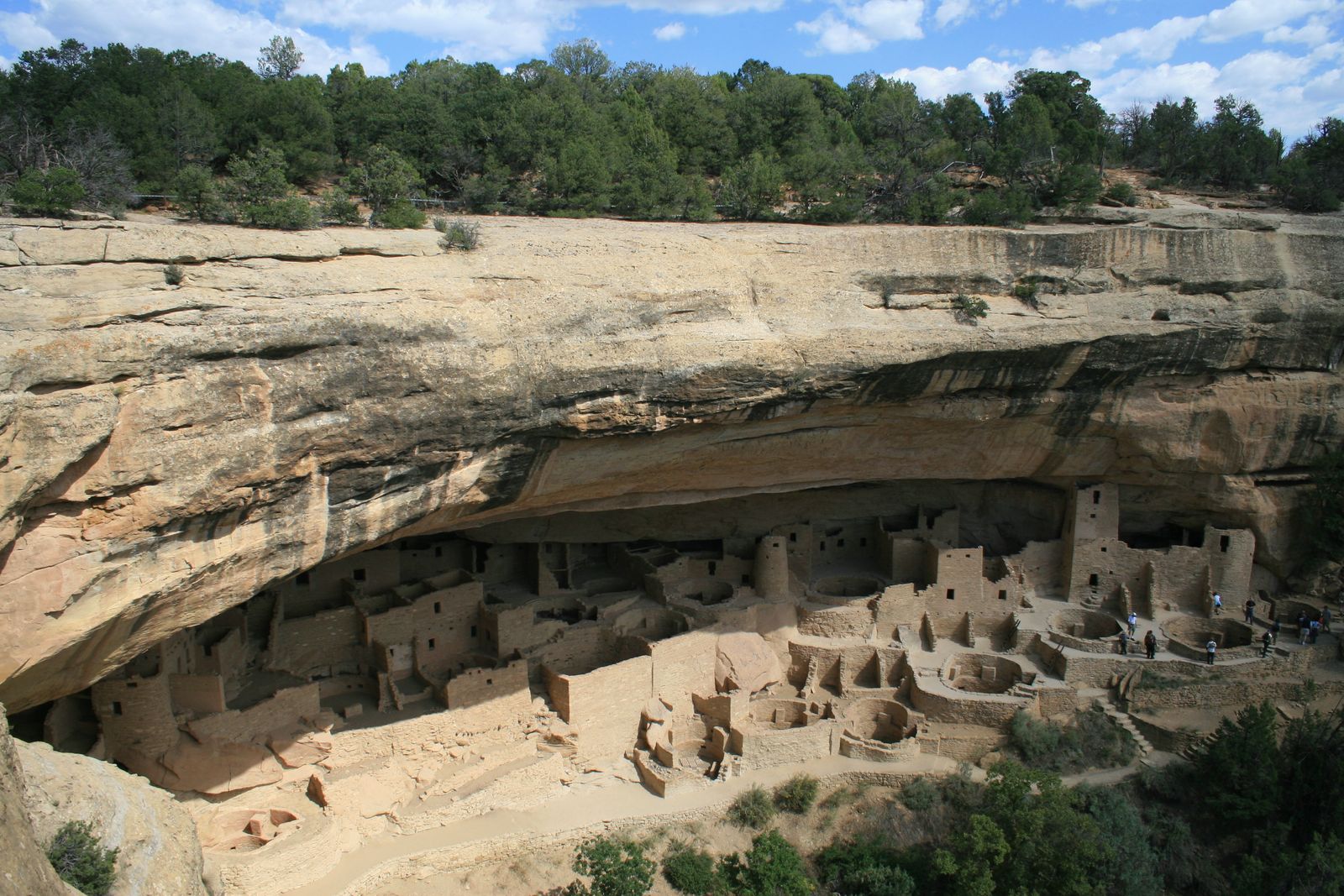
In the late 1190s and early 1200s, for reasons still debated, the people moved off the mesa tops and into the sheltered alcoves of the canyon walls, building the cliff dwellings for which Mesa Verde is famous. The largest, Cliff Palace, contains roughly 150 rooms and more than 20 kivas — circular ceremonial chambers — and once housed around 100 people. Balcony House, Spruce Tree House, and Long House are among hundreds of others tucked into the cliffs.
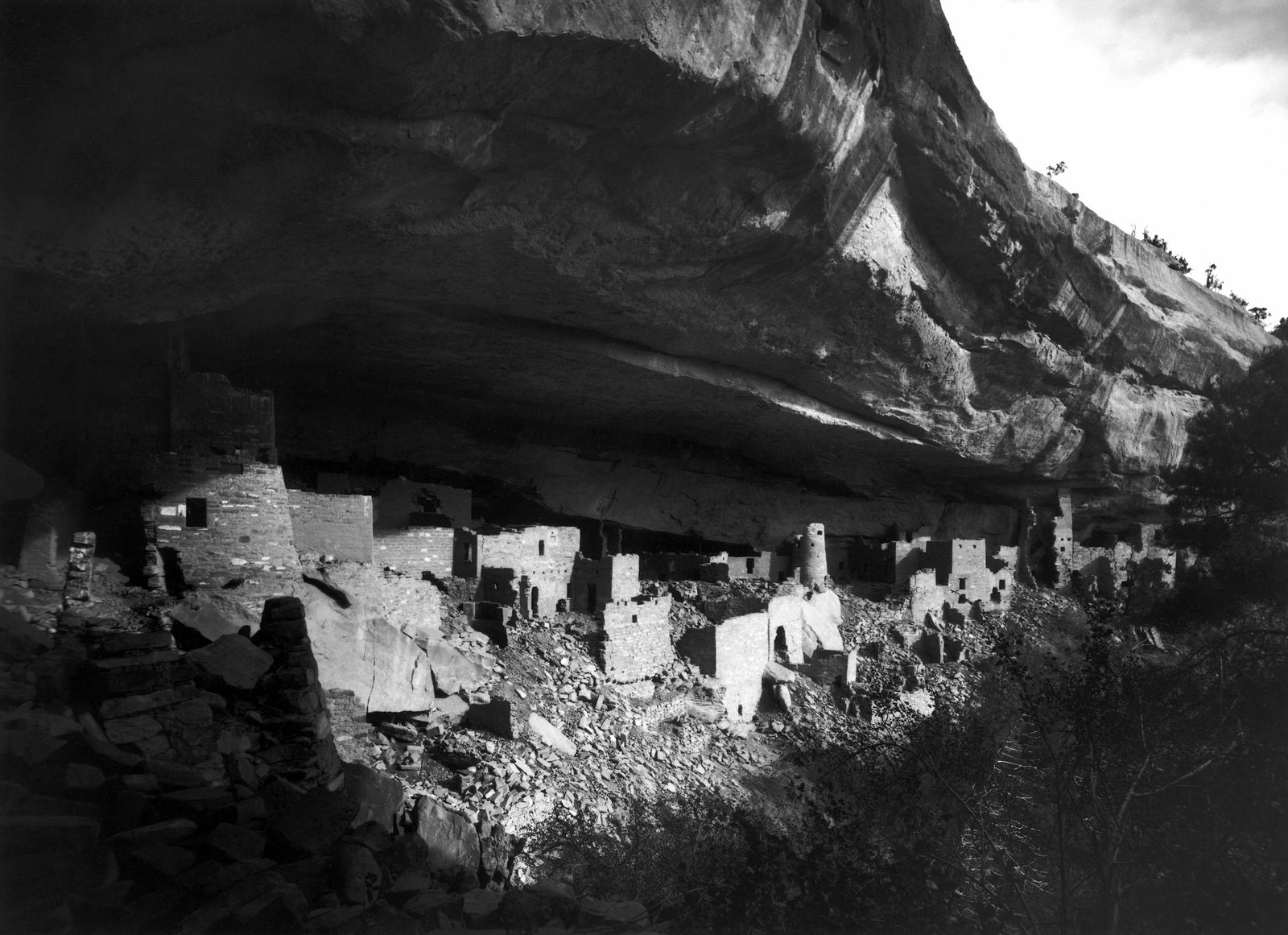
Within a century the dwellings were empty. By about 1300 the Ancestral Puebloans had left the region entirely, most likely driven out by prolonged drought, dwindling resources, and social upheaval, migrating south to the Rio Grande and to what are now the Hopi and Zuni lands. Their descendants are today's Pueblo peoples. The cliff dwellings were brought to wider attention by local ranchers in 1888, and in 1906 Mesa Verde became the first national park created to protect the works of humankind.
Historic Images
Interesting Facts
- Cliff Palace, with about 150 rooms and 23 kivas, is the largest cliff dwelling in North America.
- The Ancestral Puebloans occupied Mesa Verde for roughly 600 years, but lived in the cliff dwellings for less than a century before leaving.
- Mesa Verde, established in 1906, was the first U.S. national park created specifically to protect archaeological and cultural sites rather than natural scenery.
- The park contains around 5,000 known archaeological sites, including some 600 cliff dwellings.
- The Ancestral Puebloans are the ancestors of today's Pueblo peoples, including the Hopi, Zuni, and the Rio Grande pueblos.
Visiting Today
- Hours
- The park is open year-round, but access to specific cliff dwellings is seasonal, generally spring through fall, and often requires a ranger-guided tour. Check the National Park Service for current schedules.
- Admission
- A park entrance fee is charged. Ranger-guided tours of cliff dwellings such as Cliff Palace and Balcony House require separate, timed tickets that are best reserved in advance.
- Best time to visit
- Late spring through early fall is when the most tours run; summer is busiest, and early mornings are cooler and less crowded.
- Nearby
- The town of Cortez, the city of Durango, and the Ute Mountain Tribal Park and Four Corners region.
Popular tours like Cliff Palace sell out, so book tickets ahead. Tours involve steep climbs and ladders at high elevation, so wear sturdy shoes and pace yourself; bring water and sun protection.
Frequently Asked Questions
Who built the Mesa Verde cliff dwellings?
The Ancestral Puebloans, once called the Anasazi, built them in the 1200s. They are the ancestors of today's Pueblo peoples, including the Hopi and Zuni.
How old are the Mesa Verde cliff dwellings?
The cliff dwellings were built mainly between about 1190 and 1270 CE, though the Ancestral Puebloans had lived in the area since around 550 CE.
Why did the Ancestral Puebloans leave Mesa Verde?
They left around 1300, most likely because of a prolonged drought, dwindling resources, and social pressures, migrating south to the regions where their Pueblo descendants live today.
Can you visit the cliff dwellings at Mesa Verde?
Yes. Mesa Verde National Park in Colorado offers ranger-guided tours of major dwellings like Cliff Palace and Balcony House, along with overlooks and mesa-top sites you can explore on your own.