- The 20th Century (1900–2000)
- 32.7341° N, 117.1449° W
Balboa Park
San Diego, California · Established 1868
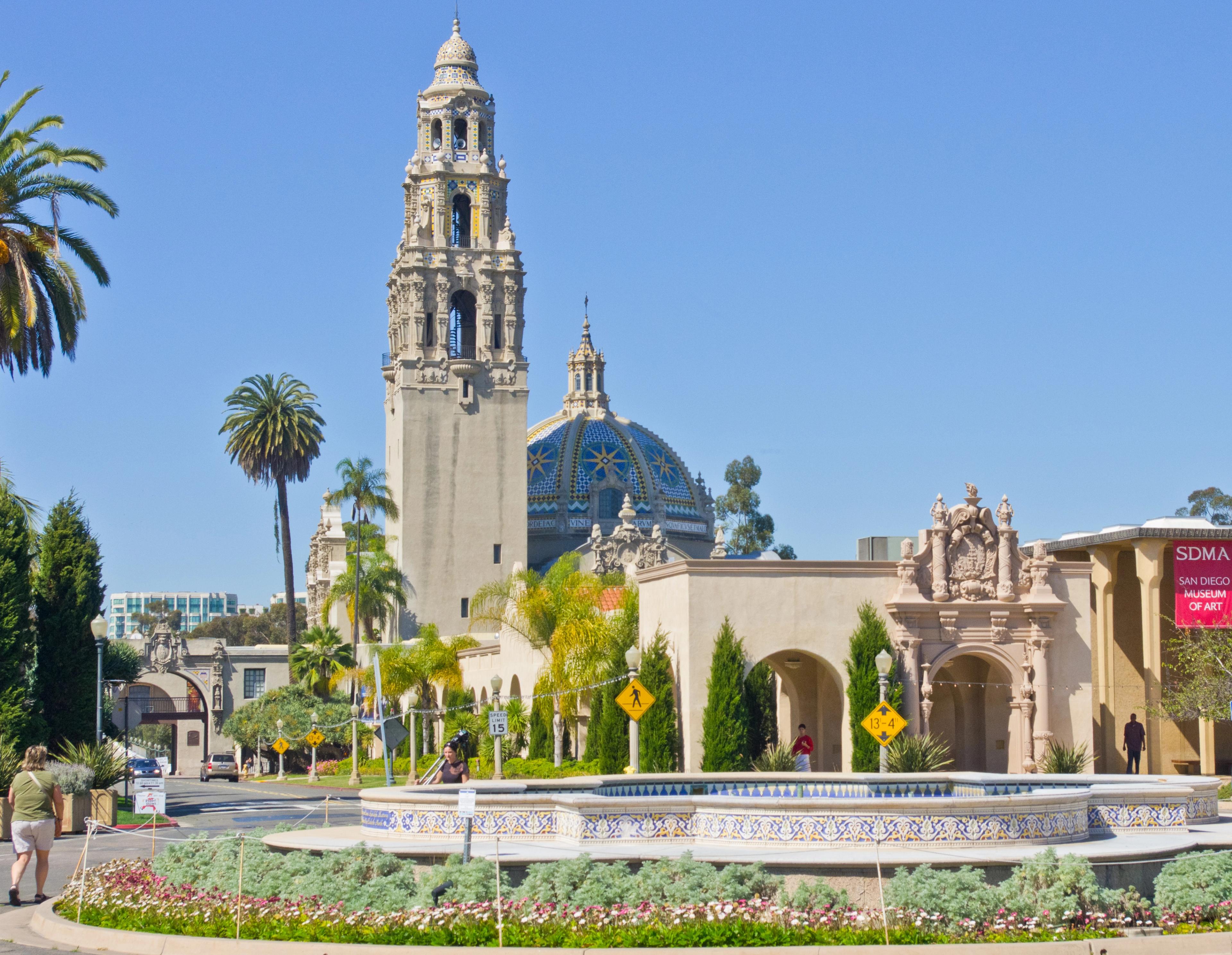
Antoine Taveneaux · CC BY-SA · via Wikimedia Commons
Why It Matters
A 19th-century civic park transformed by two World's Fair-style expositions into one of the largest urban cultural parks in the United States, and the unlikely birthplace of the San Diego Zoo.
The History
San Diego set aside roughly 1,400 acres of undeveloped mesa land as 'City Park' in 1868, one of the earliest urban parks reserved anywhere in the country, decades before it had any of the buildings or gardens that define it today. The park was renamed Balboa Park in 1910, honoring the Spanish explorer Vasco Nunez de Balboa, in anticipation of a major exposition planned to celebrate the opening of the Panama Canal.
That exposition, the Panama-California Exposition of 1915-1916, gave the park its architectural identity: architect Bertram Goodhue designed sweeping Spanish Colonial Revival buildings meant to evoke California's Spanish and Mexican heritage, many intended only as temporary exposition structures but later rebuilt to last. When the exposition closed, the animals that had been displayed there were not relocated, and the collection became the founding stock of the San Diego Zoo, formally established in 1916.
A second fair, the California Pacific International Exposition of 1935-1936, added still more buildings during the Depression to draw tourism, further expanding the park's cultural footprint. Today Balboa Park spans roughly 1,200 acres and houses 17 museums, several performing arts venues including the Old Globe Theatre, and the Spreckels Organ Pavilion, a 1914 gift from the Spreckels family that houses one of the largest outdoor pipe organs in the world.
Through the Years
- 1868
The City of San Diego sets aside land as 'City Park'
- 1910
The park is renamed Balboa Park
- 1915
The Panama-California Exposition opens, filling the park with Spanish Colonial Revival buildings
- 1916
The San Diego Zoo is formally founded from animals left after the exposition
- 1935
The California Pacific International Exposition adds more buildings
- 1977
Balboa Park is designated a National Historic Landmark
The Archive
 Plate 01
Bontanical Building in Balboa Park, San Diego, CA.
Chris M Morris · CC BY · via Wikimedia Commons
 Plate 02
A photograph of the Balboa Park Cactus Garden, specifically Mytrillo cochal, Yucca faxoniana, and Opuntia robusta in the background.
Horse named Apple · CC BY-SA · via Wikimedia Commons
 Plate 03
Walkway into Balboa Park with arches.
HectorFImbres · CC BY-SA · via Wikimedia Commons
 Plate 04
The pond and gardens in front of the Botanical Building at Balboa Park.
Librarybell · CC0 · via Wikimedia Commons
 Plate 05
View of Balboa Park Golf Course and Downtown San Diego. Taken from the golf clubhouse.
Mds08011 · CC BY · via Wikimedia Commons
Facts & Figures
Founding
- Founded
- 1868 as 'City Park,' one of the earliest urban parks set aside in the U.S.
History
- Renamed
- Balboa Park, 1910, after explorer Vasco Nunez de Balboa
- Second exposition
- California Pacific International Exposition (1935-36) added more buildings
Architecture
- Style
- Spanish Colonial Revival, largely designed by Bertram Goodhue for the 1915 exposition
Culture
- Organ
- Spreckels Organ Pavilion houses one of the world's largest outdoor pipe organs, gifted 1914
Legacy
- Zoo origin
- The San Diego Zoo was founded in 1916 from animals left behind after the 1915 exposition
Scale
- Size today
- 17 museums and more than a dozen gardens across roughly 1,200 acres
The Register
- Established
- 1868
- Architectural style
- Spanish Colonial Revival
- Builder
- Bertram Goodhue (chief architect, 1915 exposition)
- Area of significance
- Architecture, Recreation, Culture
- County
- San Diego
- National Register ref.
- 77000331
- Listed on the Register
- December 22, 1977
- National Historic Landmark
- December 22, 1977
Frequently Asked
Why does Balboa Park look like a Spanish colonial city?
Its architecture was designed by Bertram Goodhue for the 1915-1916 Panama-California Exposition, which celebrated the opening of the Panama Canal with Spanish Colonial Revival buildings meant to evoke California's Spanish and Mexican heritage.
Is the San Diego Zoo part of Balboa Park?
Yes. It occupies land within the park and traces its origin to animals left behind after the 1915 exposition closed.
Were the exposition buildings meant to be permanent?
Many were originally built as temporary structures for the 1915 exposition, but their popularity led the city to rebuild several in permanent materials over subsequent decades.
What is the Spreckels Organ Pavilion?
A 1914 gift from the Spreckels family, it houses one of the largest outdoor pipe organs in the world and hosts free public concerts.