Dough4872 · CC BY-SA · via Wikimedia Commons
The Continental Army spent most of the Revolutionary War avoiding the defeat that would have ended it. Its victories were few and hard-won, and four places in the register show how it survived long enough to win: a captured fort, a winter battle, a winter camp and a siege.
Fort Ticonderoga: the guns
At dawn on May 10, 1775, less than a month after the fighting at Lexington and Concord, a small force of Green Mountain Boys under Ethan Allen and Colonel Benedict Arnold surprised the British garrison at Fort Ticonderoga, on Lake Champlain, and took it without a battle.
The fort's real prize was its artillery. That November, Henry Knox — a Boston bookseller who would become Washington's chief of artillery — set out to bring the guns to the army besieging Boston. Over three winter months his men moved about sixty tons of cannon and other armament by boat, sledge, ox and manpower across frozen rivers and snowbound mountains. Mounted on Dorchester Heights overlooking the harbor, the guns made the British position untenable, and in March 1776 the British evacuated Boston.
Princeton: the counterstroke
By December 1776 the cause looked close to finished. The army had been driven out of New York and across New Jersey, and enlistments were running out. That month Thomas Paine published the first of his American Crisis essays.
“These are the times that try men's souls. The summer soldier and the sunshine patriot will, in this crisis, shrink from the service of their country; but he that stands it now, deserves the love and thanks of man and woman.”
Within days Washington crossed the Delaware and struck the Hessian garrison at Trenton on December 26. On January 3, 1777, he followed it with a second blow at Princeton, where Brigadier General Hugh Mercer was mortally wounded in the fighting but the Americans carried the day. The two small victories kept the army — and the Revolution — alive through the winter.
Valley Forge: the winter
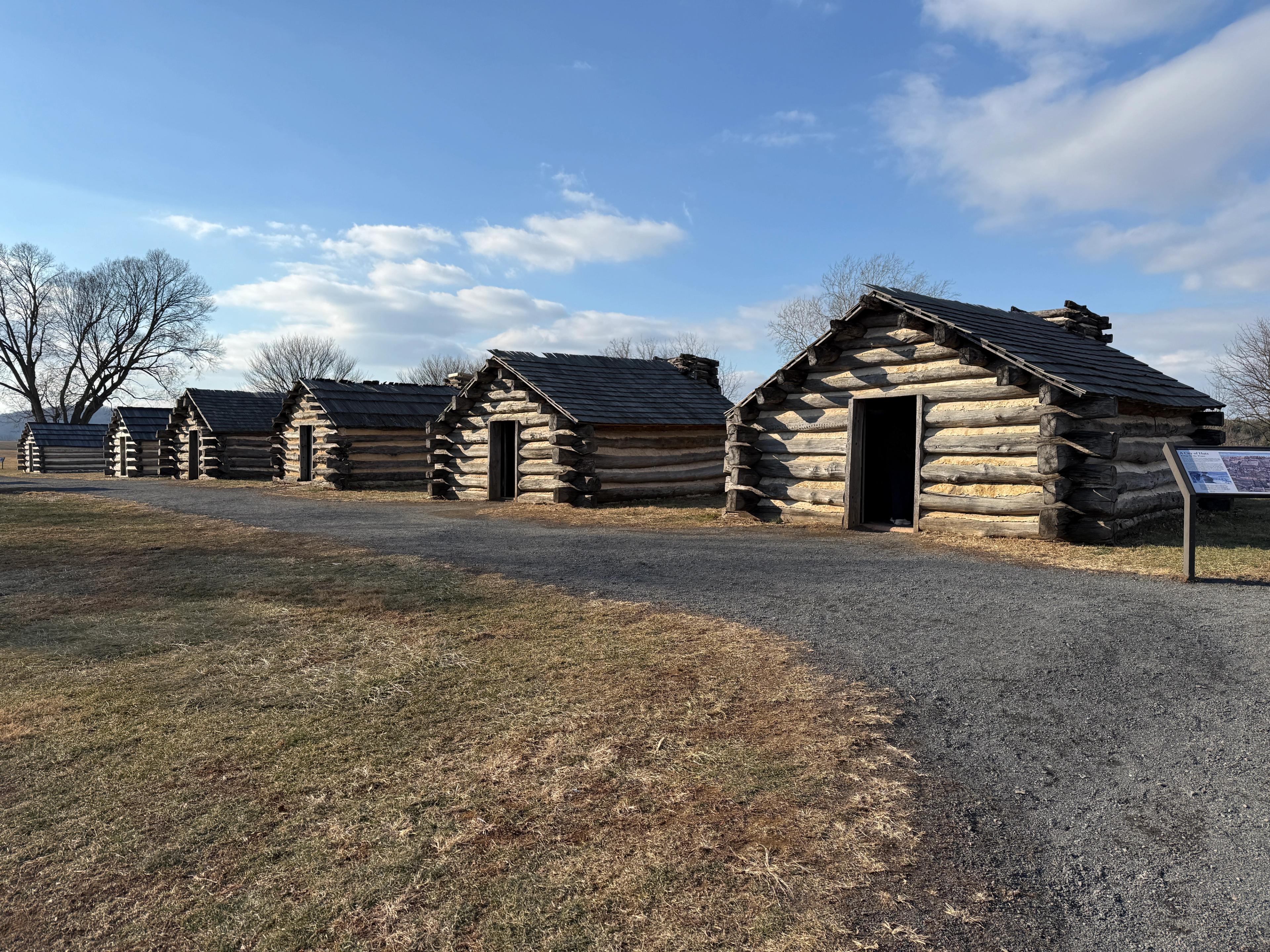
After the British took Philadelphia in September 1777, Washington led an army of about 12,000 into winter quarters at Valley Forge, some eighteen miles northwest of the city, on December 19. They stayed six months. Between 1,700 and 2,000 soldiers died there, most of disease made worse by hunger and cold.
Valley Forge is remembered for its suffering, but it was also where the army was remade. The Prussian officer Friedrich Wilhelm von Steuben drilled the troops in a common system of maneuver, and the army that marched out on June 19, 1778, was better trained than the one that had marched in.
Yorktown: the siege
The war's decisive blow came in Virginia. In the autumn of 1781 the British commander Lord Cornwallis fortified the tobacco port of Yorktown and waited for the Royal Navy. Instead, a French fleet under the Comte de Grasse sailed into Chesapeake Bay and held it, while Washington and the French general the Comte de Rochambeau marched their armies south from New York.
The siege of Yorktown lasted three weeks. On October 19, 1781, Cornwallis surrendered. Fighting sputtered on elsewhere, but Yorktown ended the major campaigns of the war, and the peace that recognized American independence was signed in Paris in 1783.
The four sites span six years and some 500 miles, from Lake Champlain to the York River. Together they tell a story less of glorious battles than of endurance: of an army that kept itself in being until its enemies, and its allies, made victory possible.