20th Century · District of Columbia
Vietnam Veterans Memorial
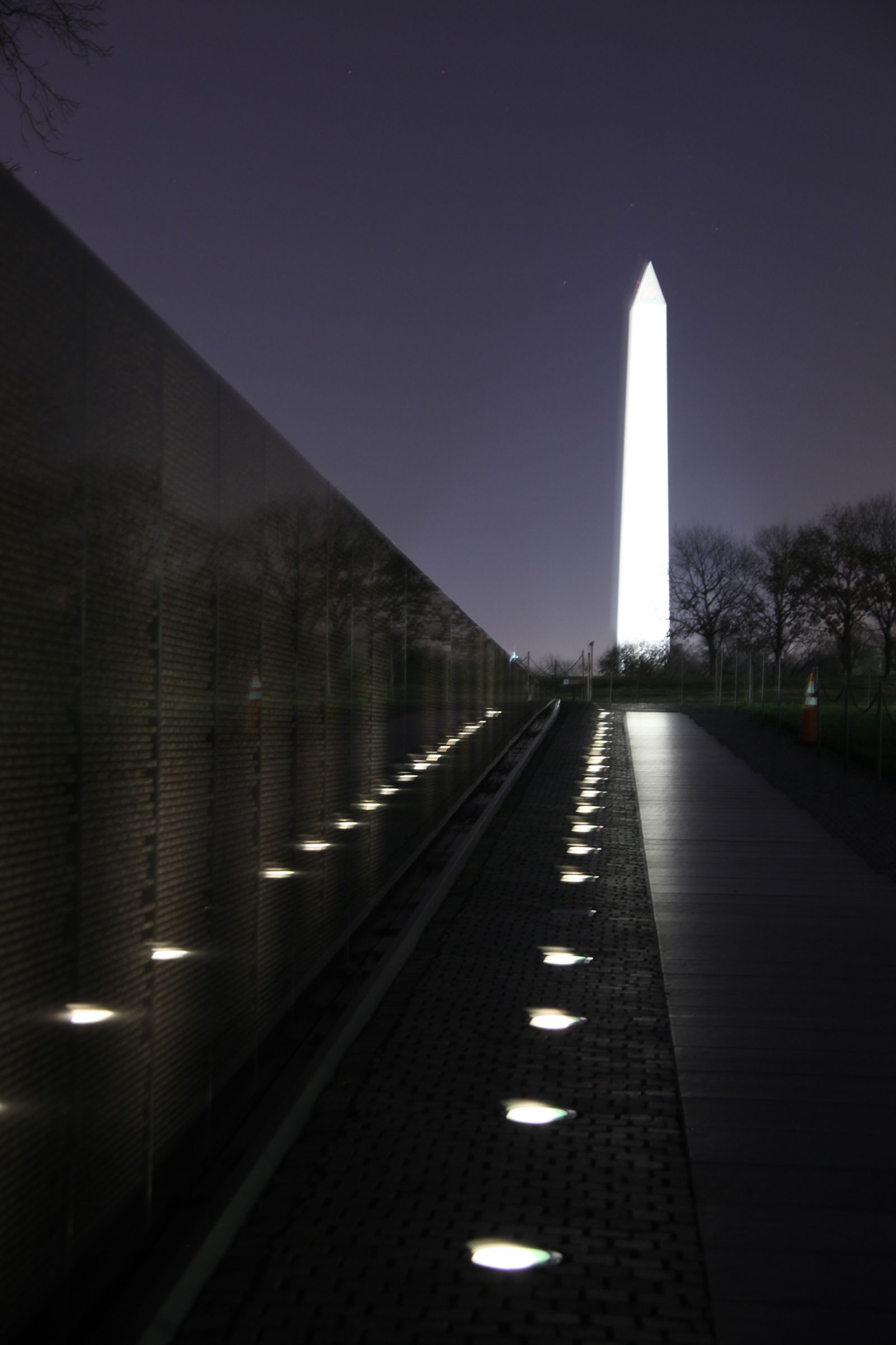
The Wall, with the Washington Monument reflected in its granite. — U.S. Navy photo by Photographer’s Mate 2nd Class Daniel J. McLain
Why Vietnam Veterans Memorial Matters
A stark, unornamented wall of names that broke every rule of heroic war memorial design — and, in doing so, became one of the most visited and emotionally powerful memorials in the world.
By the Numbers
Design
- Designer
- Maya Lin, a 21-year-old Yale undergraduate, selected from 1,421 anonymous entries
- Dimensions
- Two 246-foot-long black granite walls meeting at a 125-degree angle
- Names
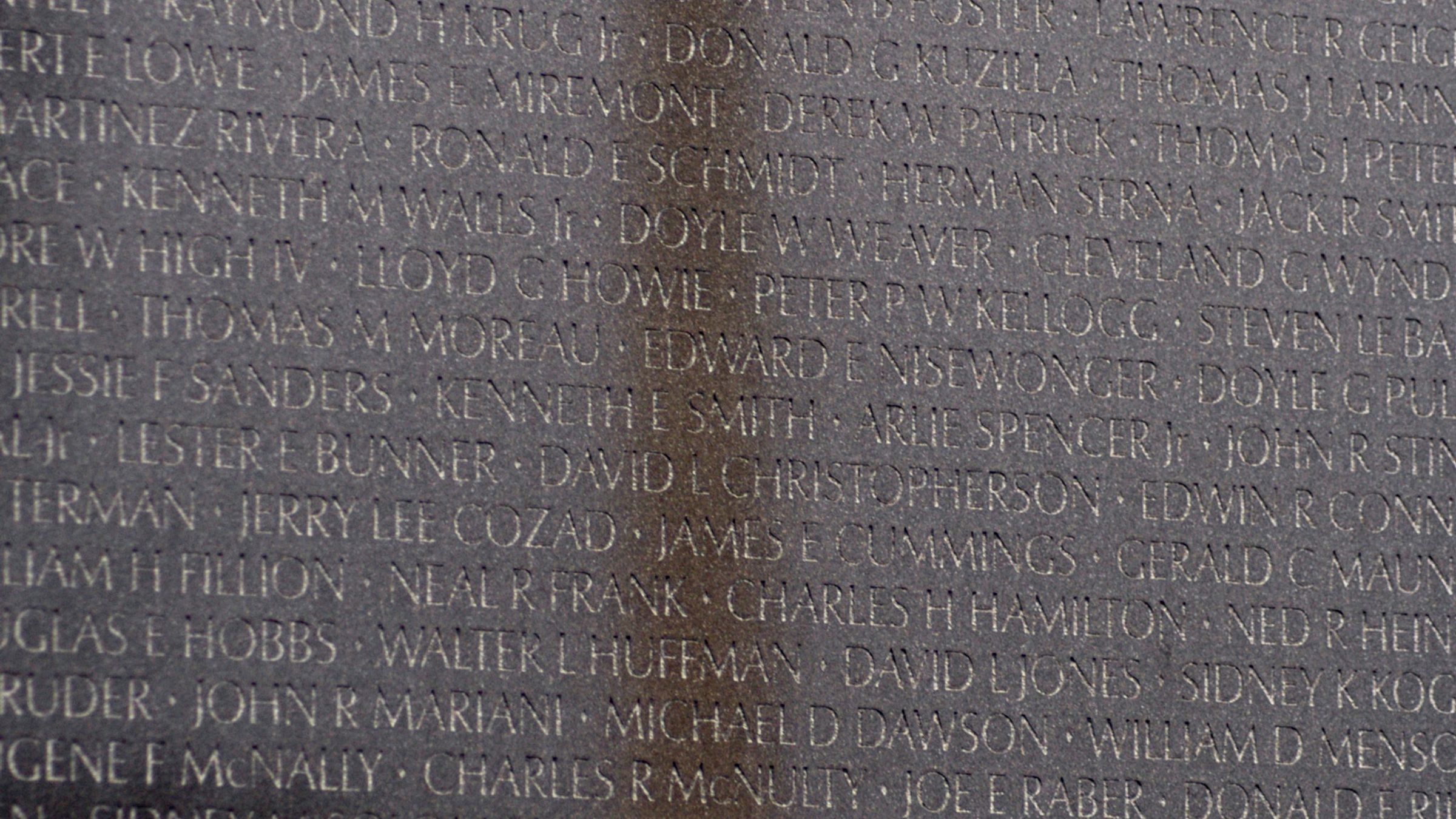
- More than 58,000 U.S. service members killed or missing, listed chronologically by casualty date
- Material
- Polished black granite quarried in Bangalore, India
- Design competition
- Won anonymously; Lin's identity was unknown to judges until after selection
Legacy
- Companion works
- 'Three Servicemen' bronze statue (1984) and the Vietnam Women's Memorial (1993)
History
- Controversy
- Some veterans initially criticized the minimalist design; the added statue was a compromise
Timeline
- 1979Jan Scruggs founds the Vietnam Veterans Memorial Fund
- 1980Congress authorizes a site on the National Mall
- 1981Maya Lin's design is selected from 1,421 anonymous entries
- 1982The memorial is dedicated on November 13
- 1984The 'Three Servicemen' statue and flagpole are added after design controversy
- 1993The Vietnam Women's Memorial is dedicated nearby
Complete History
Vietnam veteran Jan Scruggs founded the Vietnam Veterans Memorial Fund in 1979 to build a memorial to those killed or missing in the war, and Congress authorized a site on the National Mall the following year. A blind national design competition drew 1,421 anonymous entries, and in 1981 the jury selected a spare design of two black granite walls submitted by Maya Lin, then a 21-year-old undergraduate architecture student at Yale, whose identity was unknown to the judges until after her design won.
Lin's design sank two 246-foot-long polished granite walls into the earth, meeting at a 125-degree angle and pointing toward the Lincoln Memorial and the Washington Monument. Rather than heroic statuary, the walls simply list the names of more than 58,000 American service members killed or missing in Vietnam, ordered chronologically by casualty date so that veterans could find comrades who fell together. The memorial was dedicated on November 13, 1982.
The design's radical minimalism proved controversial: some veterans and critics, expecting a traditional heroic monument, derided it before it was even built. As a compromise, a bronze statue of three servicemen by Frederick Hart was added nearby in 1984, and the Vietnam Women's Memorial, honoring the women — mostly nurses — who served, was dedicated in 1993. Names continue to be added to the wall as further deaths and missing service members are confirmed.
Historic Images
Interesting Facts
- Maya Lin was a 21-year-old undergraduate when her design won a blind national competition of 1,421 entries.
- The wall's more than 58,000 names are listed chronologically by date of casualty, not alphabetically.
- The two granite walls point toward the Lincoln Memorial and the Washington Monument.
- Visitors often leave mementos at the wall, which the National Park Service collects and archives.
- The design was initially controversial enough that a traditional bronze statue was added nearby as a compromise.
Visiting Today
- Hours
- Daily, 24 hours (staffed 9:30am–10pm)
- Admission
- Free
- Best time to visit
- Early morning for quiet reflection
- Nearby
- Lincoln Memorial, Korean War Veterans Memorial, National Mall
Look up a name in advance using the National Park Service's online directory, or ask a park ranger for a name rubbing
Frequently Asked Questions
Why are the names not in alphabetical order?
They're listed chronologically by the date each service member was killed or went missing, so veterans can find their fallen comrades grouped by the events they lived through together.
Who designed the memorial?
Maya Lin, then a 21-year-old undergraduate at Yale University, won a blind national design competition in 1981 with 1,421 anonymous entries.
Why was the design controversial?
Its stark, abstract minimalism broke sharply from traditional heroic war memorials, and some veterans and critics objected before a compromise added a bronze statue, the 'Three Servicemen,' in 1984.
Are more names still being added?
Yes. Names are periodically added as deaths from Vietnam-related wounds are confirmed or missing service members are accounted for.