20th Century · District of Columbia
Lincoln Memorial
Carol M. Highsmith
Why Lincoln Memorial Matters
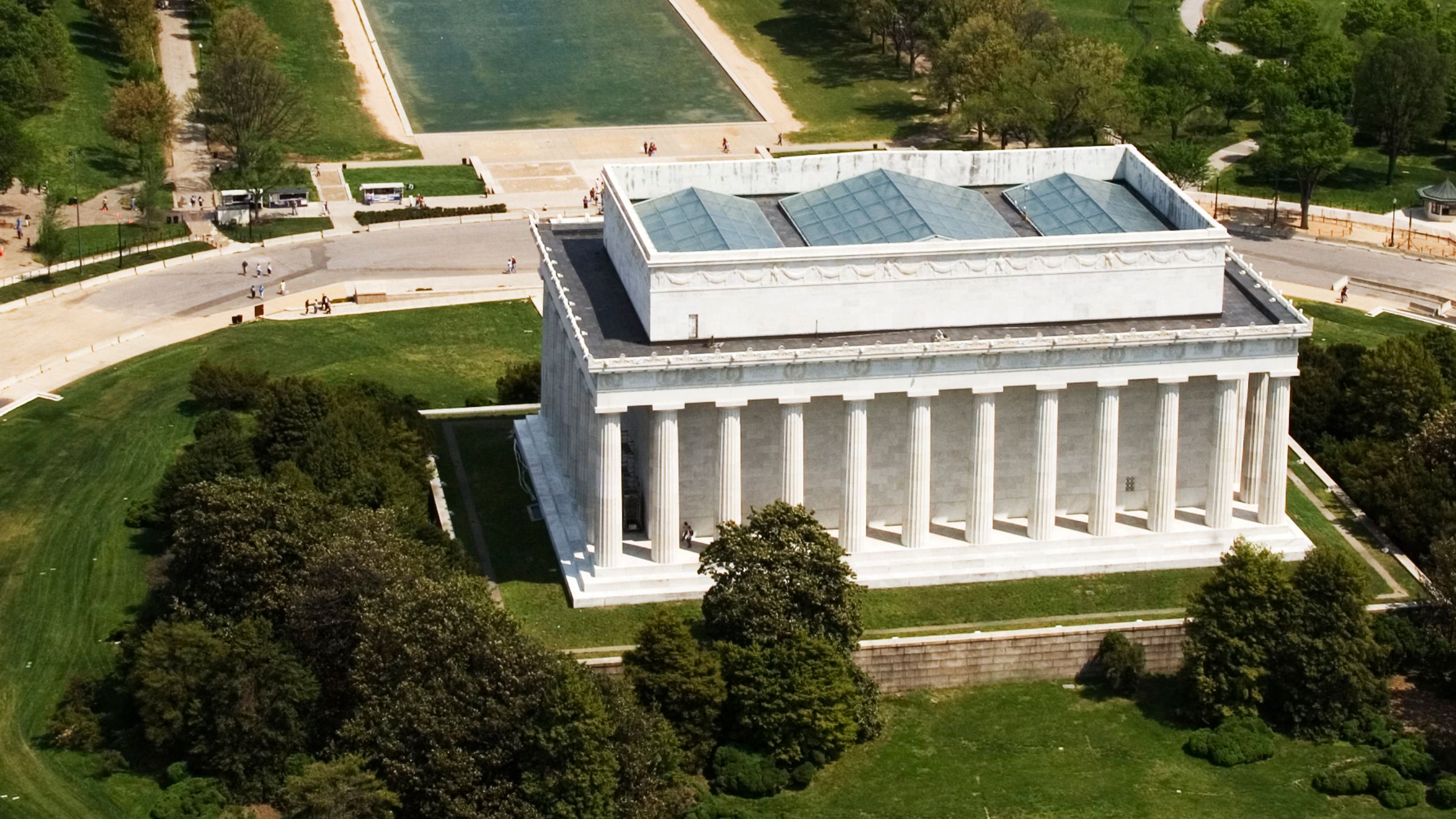
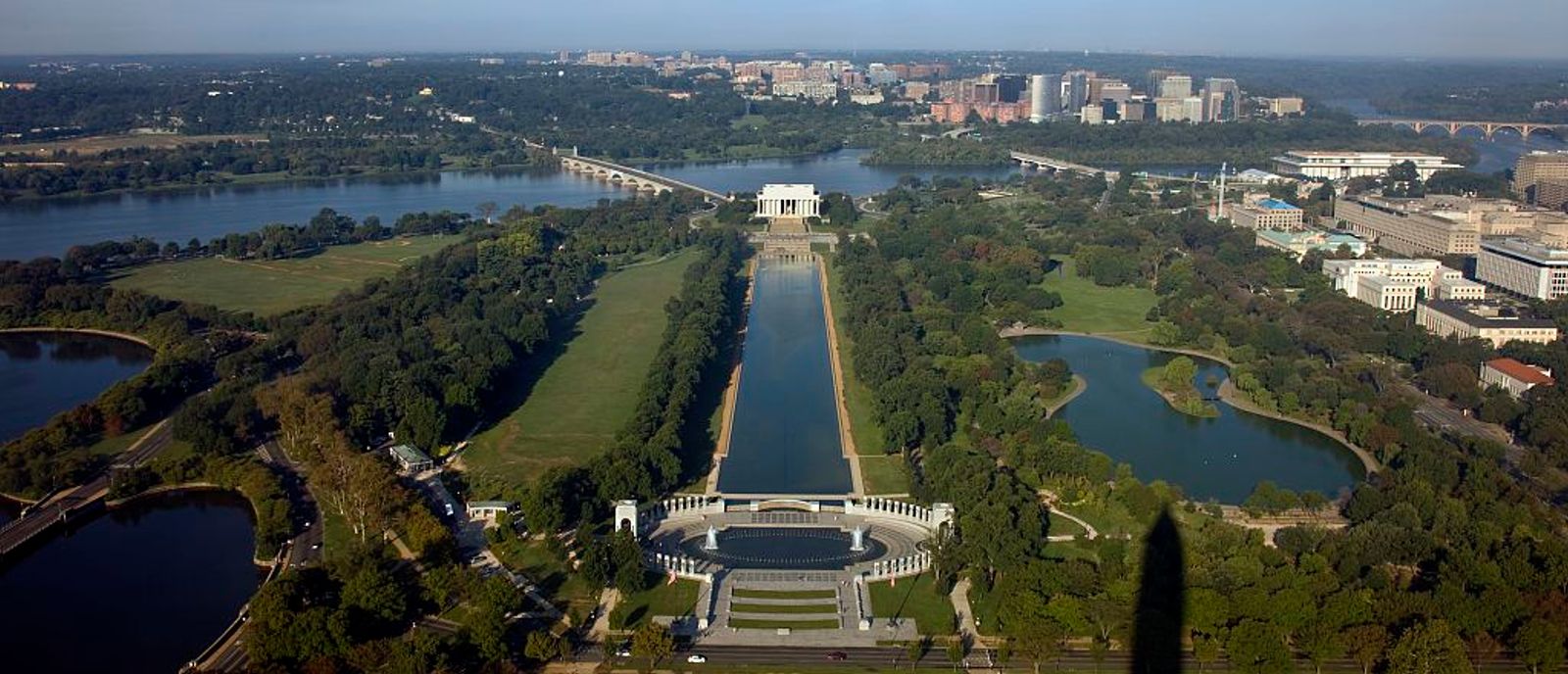
The Lincoln Memorial honors Abraham Lincoln, the sixteenth president, who led the United States through the Civil War and the end of slavery. Modeled on a Greek temple and anchoring the west end of the National Mall, it houses a colossal seated statue of Lincoln gazing out over the Reflecting Pool toward the Washington Monument and Capitol.
The memorial has also become one of the nation's great stages for the cause of equality — most famously in 1963, when Martin Luther King Jr. delivered his “I Have a Dream” speech from its steps during the March on Washington. Lincoln's own words, the Gettysburg Address and Second Inaugural, are carved on its interior walls.
By the Numbers
The Memorial
- Architect
- Henry Bacon
- Statue sculptor
- Daniel Chester French
- Dedicated
- 1922
- Columns
- 36 (one per state at Lincoln's death)
Timeline
- 1914Construction of the Lincoln Memorial begins.
- 1922The memorial is dedicated on May 30.
- 1939Marian Anderson performs on the steps after being barred from Constitution Hall.
- 1963Martin Luther King Jr. delivers “I Have a Dream” at the March on Washington.
Complete History
Proposals to memorialize Lincoln began soon after his assassination in 1865, but the design took decades to settle. Construction on architect Henry Bacon's Greek Doric temple began in 1914 on reclaimed land at the west end of the National Mall.
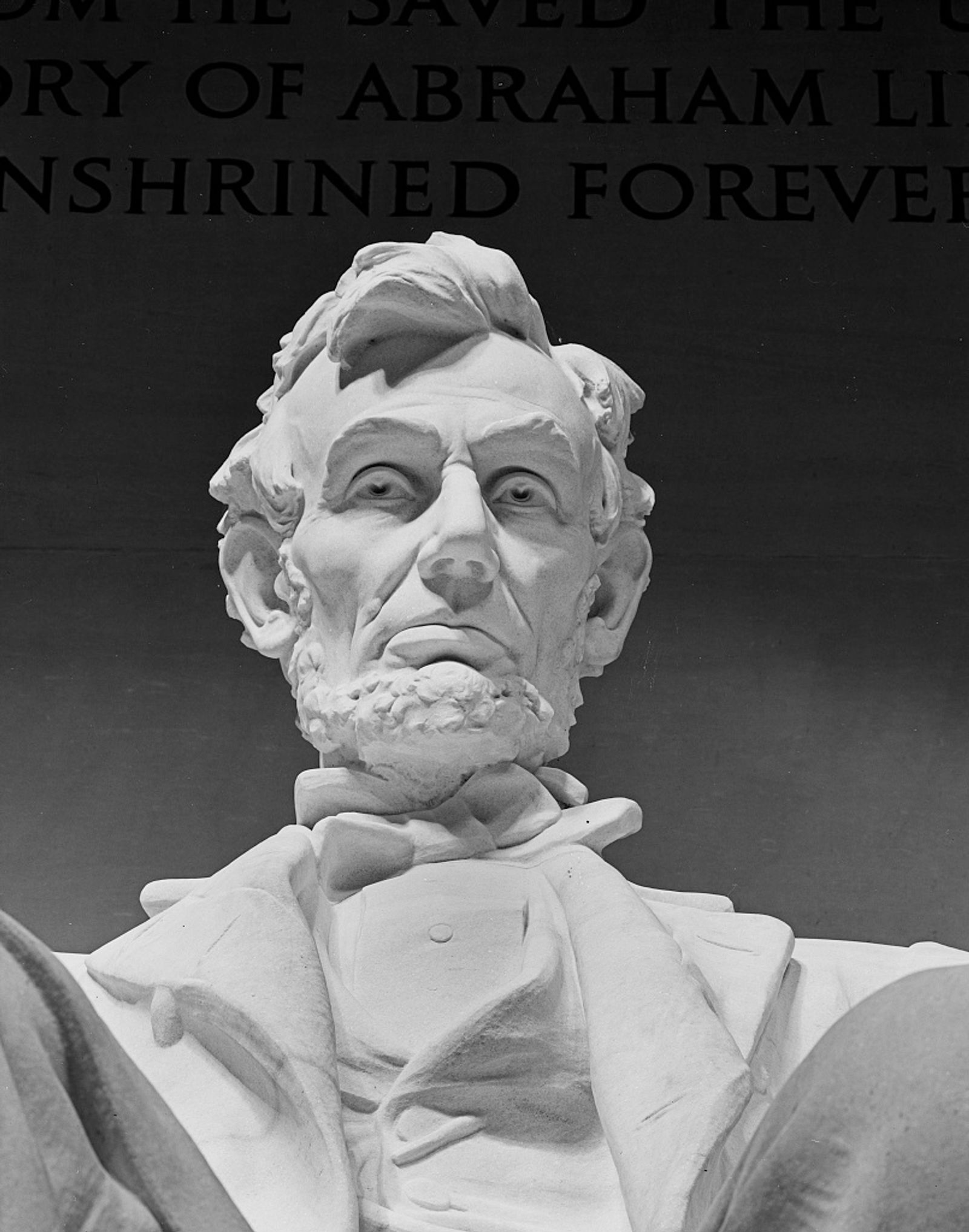
At its heart is a 19-foot-tall seated statue of Lincoln carved from Georgia marble by sculptor Daniel Chester French. The exterior is ringed by 36 Doric columns, one for each state in the Union at the time of Lincoln's death, with the states' names carved above. The memorial was dedicated in 1922.
The memorial soon took on meaning beyond Lincoln himself. In 1939, the contralto Marian Anderson performed on its steps after being barred from a segregated concert hall, and in 1963 Martin Luther King Jr. delivered “I Have a Dream” there before a quarter-million people. It remains a focal point for demonstrations and remembrance, cared for by the National Park Service.
Historic Images
Interesting Facts
- The Lincoln Memorial honors Abraham Lincoln, who led the nation through the Civil War.
- The 19-foot seated statue of Lincoln was sculpted by Daniel Chester French from Georgia marble.
- Its 36 exterior columns represent the 36 states in the Union at the time of Lincoln's death.
- Martin Luther King Jr. delivered his “I Have a Dream” speech from its steps in 1963.
- Lincoln's Gettysburg Address and Second Inaugural Address are inscribed on the interior walls.
- The memorial appears on the reverse of the U.S. penny and the five-dollar bill.
Visiting Today
- Hours
- Open 24 hours a day, every day; staffed by rangers during daytime hours.
- Admission
- Free.
- Best time to visit
- Evening for dramatic lighting and smaller crowds, or sunrise over the Reflecting Pool.
- Nearby
- The Reflecting Pool, the World War II Memorial, the Vietnam Veterans Memorial, and the Washington Monument.
Look for the engraving on the steps marking where Martin Luther King Jr. stood to deliver “I Have a Dream.”
Frequently Asked Questions
When was the Lincoln Memorial built?
It was built between 1914 and 1922 and dedicated on May 30, 1922.
Who designed the Lincoln Memorial?
Architect Henry Bacon designed the temple; the seated statue of Lincoln was sculpted by Daniel Chester French.
What is written inside the Lincoln Memorial?
Lincoln's Gettysburg Address and his Second Inaugural Address are carved on the interior walls.
Why is the Lincoln Memorial important to civil rights?
Marian Anderson's 1939 concert and Martin Luther King Jr.'s 1963 “I Have a Dream” speech made its steps a landmark of the movement for equality.
Can you visit the Lincoln Memorial?
Yes. It is free and open 24 hours a day, year-round, with rangers on duty during the day.