Revolutionary · Pennsylvania
Valley Forge
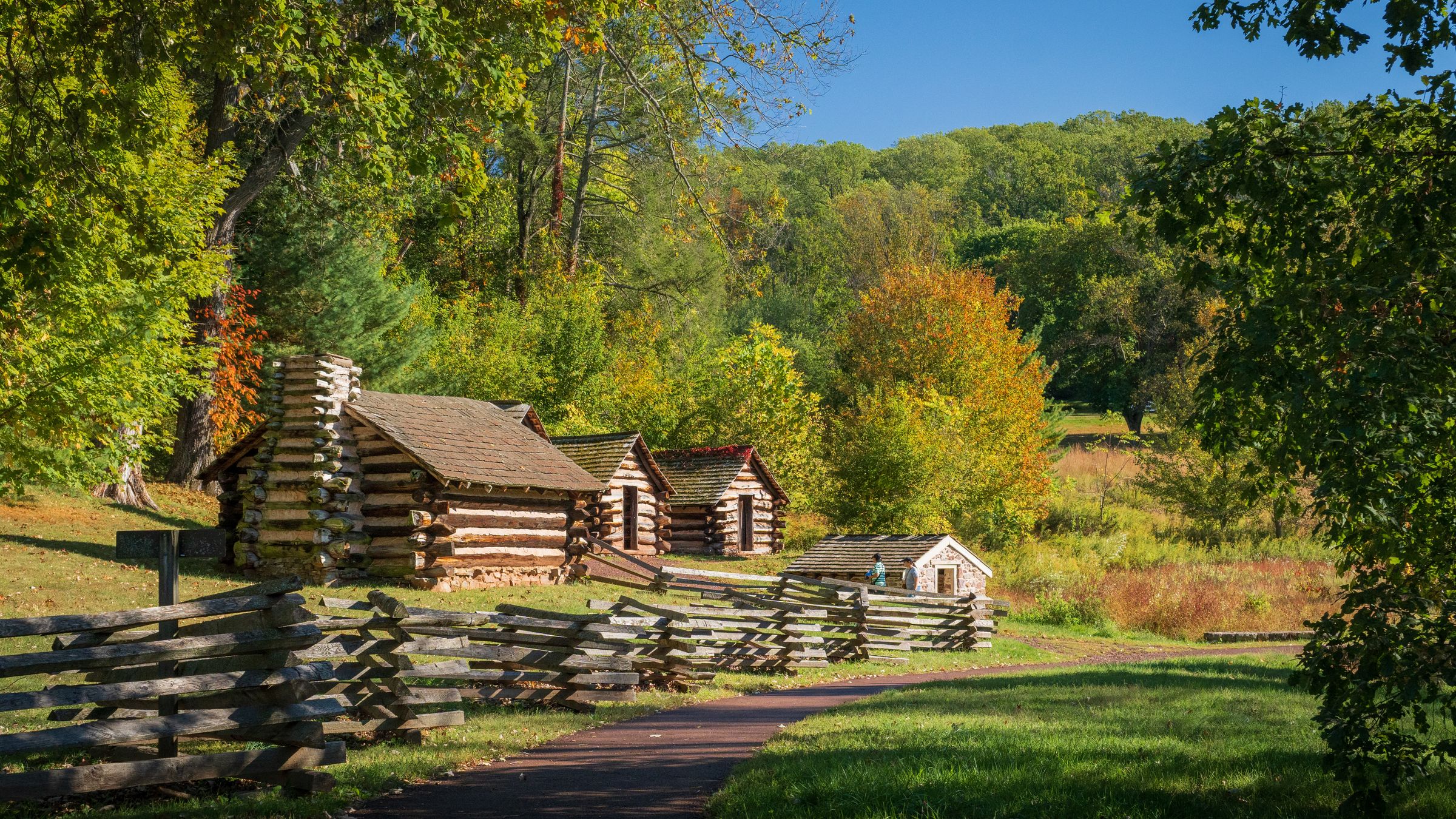
Reconstructed encampment huts at Valley Forge. — WanderingC.JWiki
Why Valley Forge Matters
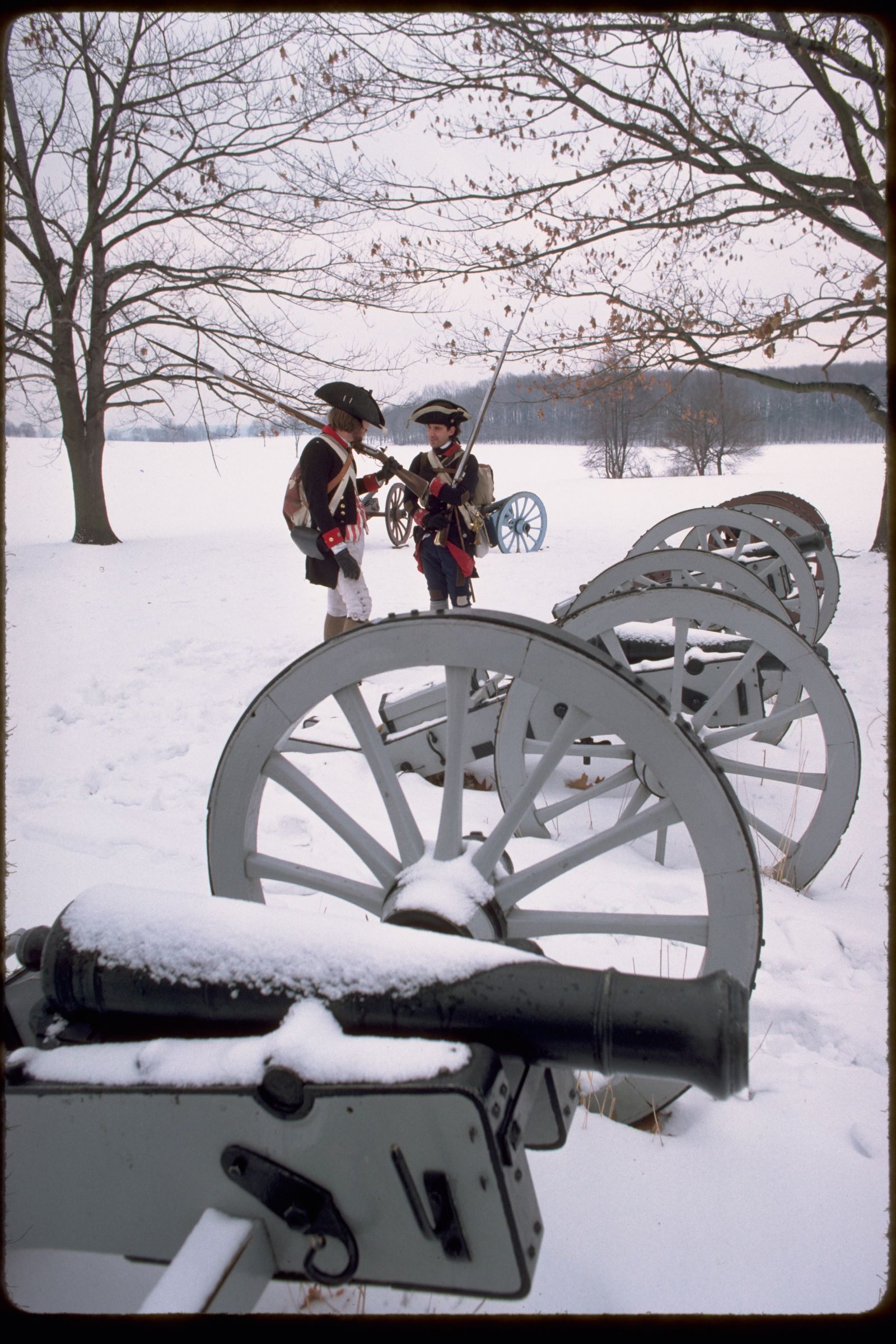
No shots were fired in anger at Valley Forge, yet it may be the most important place in the story of the Continental Army. Over the brutal winter of 1777–78, George Washington's cold, hungry, and dwindling force endured disease and privation — and, under the drillmaster Baron von Steuben, was forged into a professional army capable of standing toe to toe with the British. The camp that nearly destroyed the Revolution instead became the crucible that saved it.
By the Numbers
History
- Encampment
- December 1777 – June 1778
- Commander
- General George Washington
- Troops
- ~12,000 Continental soldiers
- Deaths
- ~1,700–2,000 (mostly disease)
People
- Drillmaster
- Baron von Steuben
Site
- Area
- ~3,500 acres
Designation
- National park
- Established 1976 (NPS)
Timeline
- 1777The Continental Army marches into Valley Forge on December 19
- 1777Soldiers build roughly 1,500 log huts amid severe supply shortages
- 1778Baron von Steuben arrives in February and begins drilling the army
- 1778News of the French alliance is celebrated with a grand review in May
- 1778The reinvigorated army marches out on June 19
- 1893Valley Forge becomes a Pennsylvania state park
- 1976Valley Forge National Historical Park is established under the NPS
Complete History
After losing Philadelphia to the British in the fall of 1777, Washington marched roughly 12,000 troops into winter quarters at Valley Forge on December 19, 1777. The position guarded the countryside while keeping the army a day's march from the occupied capital. The soldiers built some 1,500 log huts, but food, clothing, and shoes were desperately short, and supply failures left men barefoot in the snow.
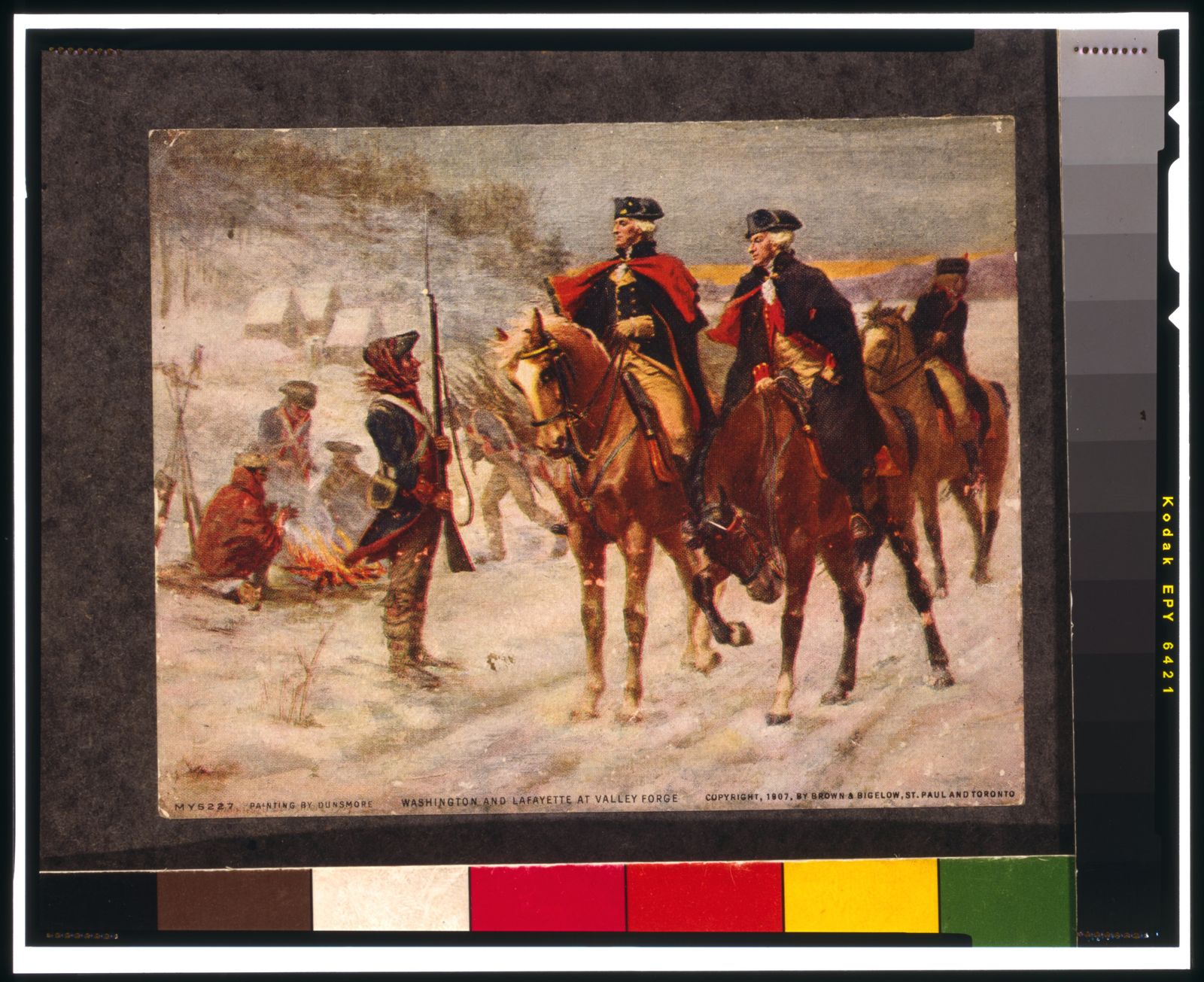
The true enemy was disease. Typhus, typhoid, dysentery, and pneumonia swept the crowded camp, and an estimated 1,700 to 2,000 soldiers died over the six-month encampment — far more than fell in most battles. Yet the army held together. In February 1778 the Prussian volunteer Baron von Steuben arrived and began drilling the troops relentlessly, standardizing maneuvers and discipline and writing the manual that would train American soldiers for decades.
In the spring, news arrived that France had entered the war as an American ally — a turning point celebrated with a grand review in May 1778. Reorganized, retrained, and reinforced, the Continental Army marched out of Valley Forge on June 19, 1778, and days later fought the British to a standstill at the Battle of Monmouth. The site became a Pennsylvania state park in 1893 and Valley Forge National Historical Park under the National Park Service in 1976.
Historic Images
Interesting Facts
- No battle was fought at Valley Forge — the enemies were cold, hunger, and disease, which killed roughly 1,700–2,000 soldiers.
- Baron von Steuben's relentless drilling through the winter turned the ragged army into a disciplined professional force.
- News of the French alliance reached the camp in spring 1778, transforming the war and lifting morale.
- Washington made his headquarters in the Isaac Potts House, still preserved in the park.
- The army marched out on June 19, 1778, and days later fought the British to a draw at Monmouth.
Visiting Today
- Hours
- The park grounds are open daily; the visitor center and Washington's Headquarters have set seasonal hours — check the NPS site.
- Admission
- Free. A fee applies only to the trolley tour and certain ranger programs.
- Best time to visit
- Spring for wildflowers and mild weather, or a cold clear winter day to feel the setting of 1777–78.
- Nearby
- Philadelphia and Independence Hall are about a 45-minute drive southeast.
Start at the visitor center film, then drive or bike the 10-mile Encampment Tour loop, stopping at the reconstructed huts, the National Memorial Arch, and Washington's Headquarters.
Frequently Asked Questions
Was there a battle at Valley Forge?
No. Valley Forge was a winter encampment, not a battlefield. The army's struggle there was against cold, hunger, and disease rather than the British.
How many soldiers died at Valley Forge?
An estimated 1,700 to 2,000 soldiers died during the six-month encampment, the great majority from diseases such as typhus, typhoid, and pneumonia.
Why is Valley Forge so important?
It was where the Continental Army survived its darkest winter and, through Baron von Steuben's training, emerged a disciplined professional fighting force — a turning point for the Revolution.
Can you visit Valley Forge today?
Yes. Valley Forge National Historical Park is free to enter and includes Washington's Headquarters, reconstructed huts, monuments, a visitor center, and miles of trails.