- Early Republic (1783–1815)
- 38.8899° N, 77.0091° W
United States Capitol
Washington, District of Columbia · Established 1800
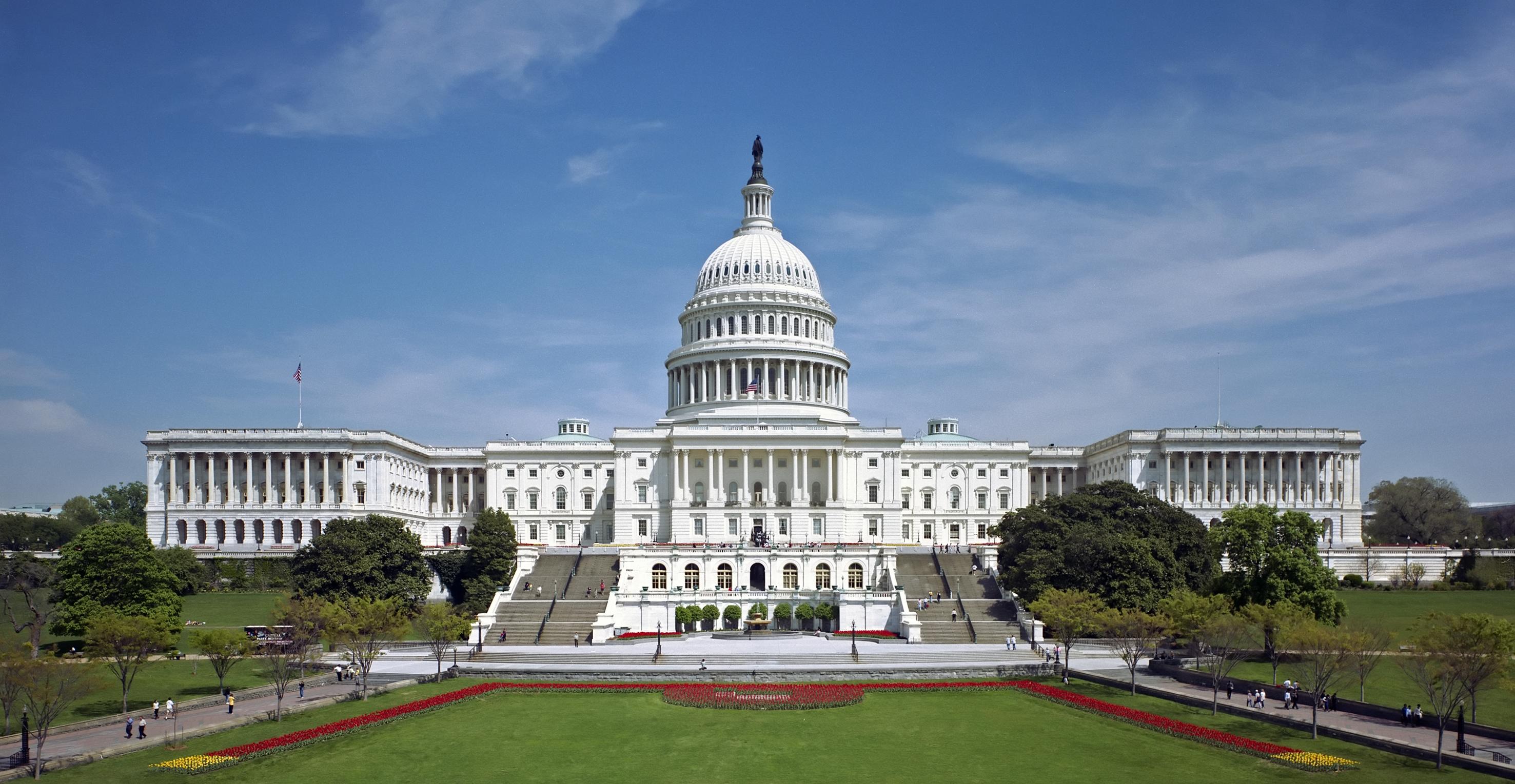
United_States_Capitol_-_west_front.jpg : Architect of the Capitol derivative work: O.J. · Public domain · via Wikimedia Commons
Why It Matters
The United States Capitol is the seat of the U.S. Congress and one of the most recognizable symbols of American democracy. Standing atop Capitol Hill in Washington, D.C., its great cast-iron dome — crowned by the Statue of Freedom and completed during the Civil War — presides over the National Mall. For more than two centuries the building has housed the Senate and House of Representatives, and its cornerstone was laid by George Washington himself in 1793.
The History
The Capitol's design emerged from a public competition won by physician and amateur architect William Thornton, whose neoclassical plan George Washington praised for its 'grandeur, simplicity, and convenience.' Washington laid the cornerstone on September 18, 1793. The north, or Senate, wing was completed first, and Congress occupied the still-unfinished building beginning in 1800.
During the War of 1812, British forces set fire to the Capitol on August 24, 1814, gutting the interior; a sudden thunderstorm is often credited with saving it from total destruction. Architect Benjamin Henry Latrobe led the reconstruction, and Charles Bulfinch completed the restored building, including its first low copper-clad dome, by 1826.
As new states swelled the ranks of Congress, architect Thomas U. Walter oversaw a dramatic expansion in the 1850s, adding the massive marble House and Senate wings. To keep the enlarged building in proportion, Walter replaced the old dome with the towering cast-iron dome that defines the Capitol today. President Lincoln insisted the work continue through the Civil War as a sign of the Union's endurance, and the bronze Statue of Freedom was raised atop the dome in December 1863.
Through the Years
- 1793
George Washington lays the cornerstone on September 18.
- 1800
Congress first occupies the unfinished Capitol.
- 1814
British troops burn the Capitol during the War of 1812.
- 1826
Charles Bulfinch completes the rebuilt Capitol and its first dome.
- 1850s
Thomas U. Walter begins the House and Senate wing expansion.
- 1863
The cast-iron dome is completed and the Statue of Freedom is raised.
- 2008
The underground Capitol Visitor Center opens to the public.
The Archive
 Plate 01
United States Capitol, Washington, D.C.
Carol M. Highsmith Archive, Library of Congress · No known restrictions · via Library of Congress
 Plate 02Historic · 1902
Old image of the United States Capitol from 1902, Washington, D.C.
Library of Congress · No known restrictions · via Library of Congress
 Plate 03Historic · 1859
United States Capitol construction, east front looking north, dome in progress
Miscellaneous Items in High Demand, PPOC, Library of Congress · Public domain · via Wikimedia Commons
 Plate 04Historic · 1900
Historic image of the United States Capitol, Washington, D.C.
Library of Congress · No known restrictions · via Library of Congress
Facts & Figures
Building
- Architect(s)
- William Thornton; later Latrobe, Bulfinch & Walter
- Style
- Neoclassical
- Rooms
- About 540
The Dome
- Material
- Cast iron (~8.9 million lbs)
- Completed
- 1863
Statue of Freedom
- Sculpture
- 19.5 ft bronze, by Thomas Crawford
Today
- Maintained by
- Architect of the Capitol
The Register
- Established
- 1800
- Builder
- William Thornton (architect); later Latrobe, Bulfinch & Walter
- Area of significance
- Politics & Government
Frequently Asked
What happens at the United States Capitol?
The Capitol is where the U.S. Congress meets. The Senate occupies the north wing and the House of Representatives the south wing, and the building also hosts presidential inaugurations and other national ceremonies.
Who built the United States Capitol?
Its original design was by William Thornton, with the cornerstone laid by George Washington in 1793. Later architects including Benjamin Latrobe, Charles Bulfinch, and Thomas U. Walter rebuilt and expanded it over the following decades.
When was the Capitol dome built?
The current cast-iron dome was built in the 1850s and 1860s, replacing an earlier, smaller dome. It was completed in 1863, during the Civil War, and topped with the Statue of Freedom.
Can you tour the U.S. Capitol?
Yes. Free guided tours start from the underground Capitol Visitor Center and are best reserved in advance through the Visitor Center or a member of Congress.