- The 19th Century (1800–1900)
- 38.8893° N, 77.0261° W
Smithsonian Institution Building
Washington, District of Columbia · Established 1846
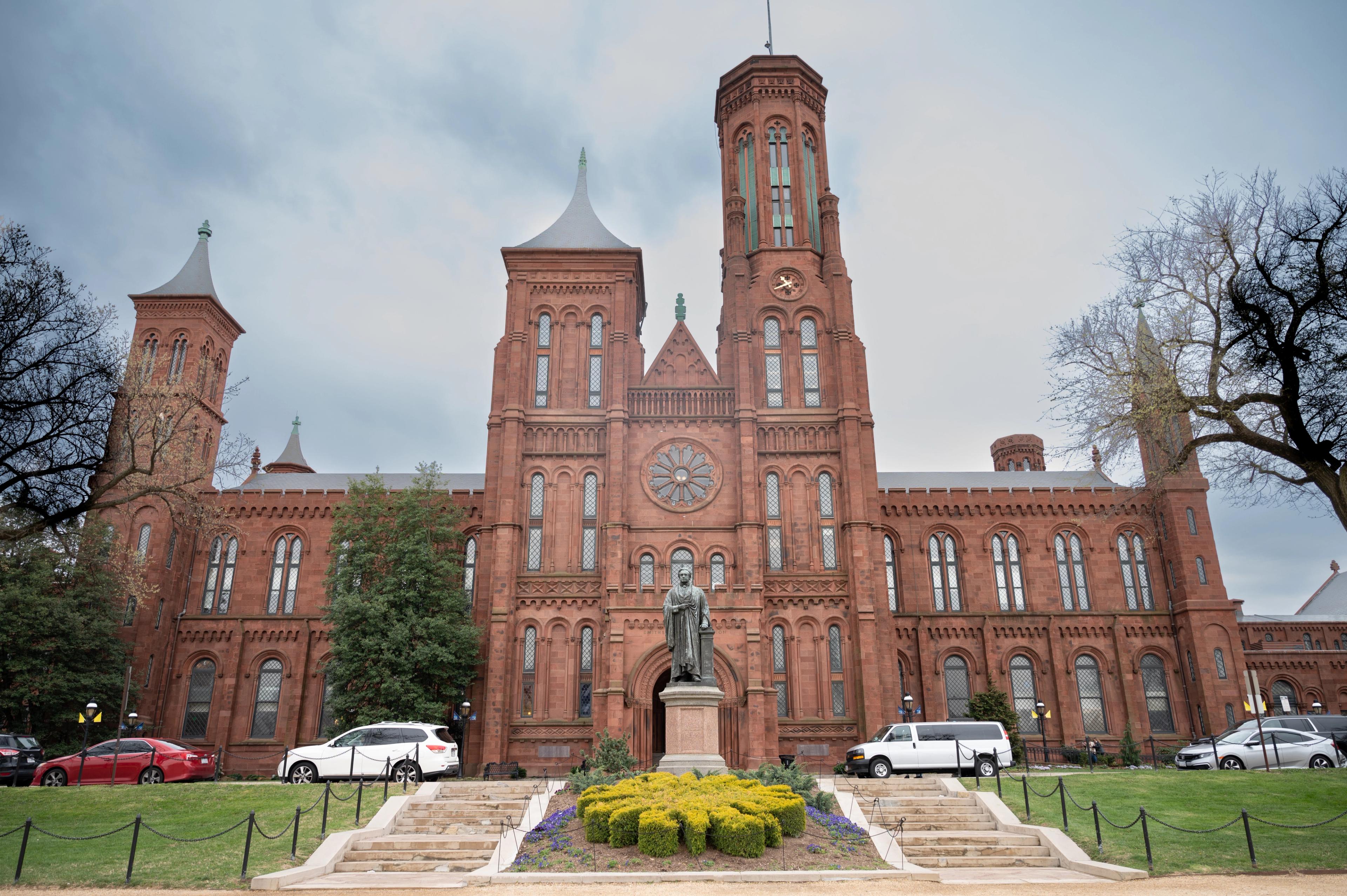
Mark Baylor · CC BY · via Wikimedia Commons
Why It Matters
The Smithsonian Institution Building, universally known as 'the Castle,' is the founding home of the world's largest museum, education, and research complex — built on the gift of a British scientist who never once set foot in the country he endowed.
The History
British chemist and mineralogist James Smithson died in 1829, leaving his estate to a nephew with the unusual provision that if the nephew died without heirs, the fortune should pass to the United States 'to found at Washington, under the name of the Smithsonian Institution, an establishment for the increase and diffusion of knowledge.' Smithson had never visited America, and his motives remain debated, but when his nephew died childless in 1835, more than 100,000 gold sovereigns crossed the Atlantic to Congress. After a decade of debate over how to spend the windfall, Congress chartered the Smithsonian Institution in 1846.
Architect James Renwick Jr., fresh off designing Grace Church in New York, won the competition to design the Institution's first building with a fortress-like design in the Norman Revival style, evoking a medieval castle in dark red Seneca sandstone. Built between 1847 and 1855, the building housed the Smithsonian's earliest laboratories, lecture halls, and natural history collections under its first Secretary, physicist Joseph Henry, who lived in the building's east wing with his family for two decades.
As the Smithsonian's collections and mission outgrew a single structure, later museums rose around the Castle across the National Mall, but it has remained the Institution's symbolic and administrative heart. An 1865 fire gutted its upper floor and destroyed Smithson's papers, and in 1904 his remains were brought from Italy and reinterred in a crypt just inside the Castle's north entrance, returning the Institution's unlikely benefactor to the building his gift created.
Through the Years
- 1829
James Smithson dies in Genoa, Italy, leaving a contingent bequest to the United States
- 1835
Smithson's nephew dies without heirs; the bequest passes to the U.S.
- 1846
Congress charters the Smithsonian Institution
- 1847
The cornerstone of the Smithsonian Institution Building is laid
- 1855
The Castle is completed
- 1865
Fire destroys the building's upper floor and Smithson's personal papers
- 1904
James Smithson's remains are reinterred in a crypt inside the Castle
The Archive
 Plate 01Historic · 1933
Historic photograph of south tower entrance to Smithsonian Institution Building.
Related names: Renwick, James Cluss, Adolph Cluss and Schulze Chatelain, Samperton and Nolan Cameron, G Phoenix Iron Company Smithson, James Henry, Joseph Jandoli, Liz, transmitter Price, Virginia B, transmitter · Public domain · via Wikimedia Commons
 Plate 02Historic · 1933
DETAIL, EAST ENTRANCE HARDWARE - Smithsonian Institution Building.
Related names: Renwick, James Cluss, Adolph Cluss and Schulze Chatelain, Samperton and Nolan Cameron, G Phoenix Iron Company Smithson, James Henry, Joseph Jandoli, Liz, transmitter Price, Virginia B, transmitter · Public domain · via Wikimedia Commons
 Plate 03Historic · 1932
Historic aerial view from the south showing the Smithsonian Institution Building.
Smithsonian Institution · Public domain · via Wikimedia Commons
 Plate 04Historic · 1933
Historic photograph showing Campanile with downing urn in foreground, looking southwest - Smithsonian Institution Building.
Related names: Renwick, James Cluss, Adolph Cluss and Schulze Chatelain, Samperton and Nolan Cameron, G Phoenix Iron Company Smithson, James Henry, Joseph Jandoli, Liz, transmitter Price, Virginia B, transmitter · Public domain · via Wikimedia Commons
Facts & Figures
Architecture
- Architect
- James Renwick Jr.
- Style
- Norman Revival ("castle" style)
- Material
- Red Seneca sandstone
Founding
- Bequest amount
- Roughly $500,000 in gold sovereigns (over 100,000 coins)
People
- First Secretary
- Joseph Henry, physicist, lived in the building's east wing
Legacy
- Smithsonian today
- 21 museums and the National Zoo grew from this building
Site
- Smithson's crypt
- Located inside the Castle's north entrance since 1904
The Register
- Established
- 1846
- Architectural style
- Norman Revival
- Builder
- James Renwick Jr. (architect)
- Area of significance
- Architecture, Science, Education
Frequently Asked
Why did the Smithsonian's founder leave his fortune to a country he never visited?
James Smithson's exact motives are unknown; his will simply directed that if his nephew died without heirs, his estate should found 'an establishment for the increase and diffusion of knowledge' in Washington.
What does the Castle house today?
It serves as the Smithsonian's visitor center and administrative headquarters, and contains James Smithson's crypt.
How many Smithsonian museums exist today?
The Institution has grown to 21 museums, several research centers, and the National Zoo, all with roots in this single building.
Is admission free?
Yes — like all Smithsonian museums, the Castle and the rest of the Institution's museums are free to enter.