- The 19th Century (1800–1900)
- 41.6194° N, 112.5497° W
Promontory Summit
Promontory, Utah · Established 1869
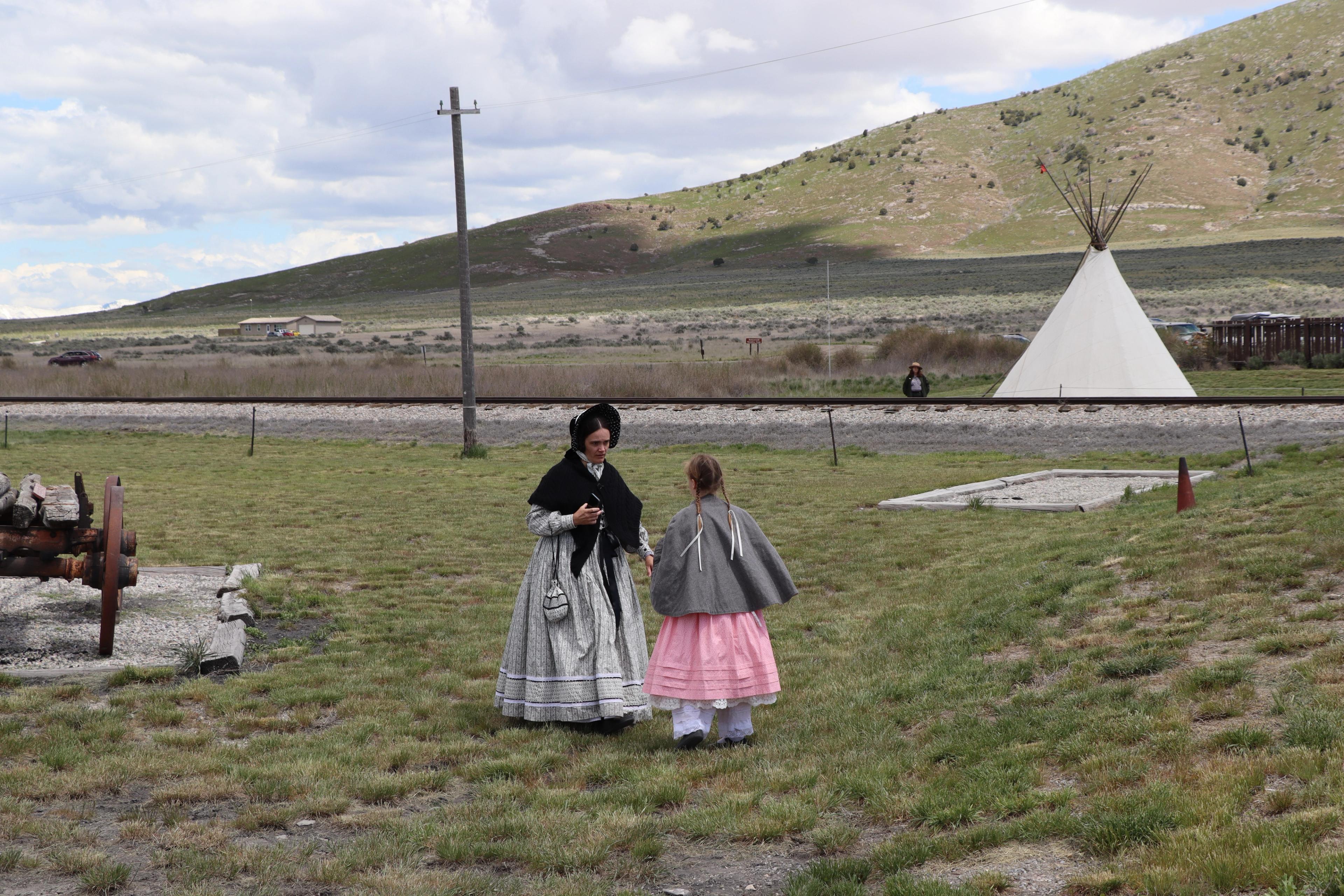
NPS Photo · Public domain · via Wikimedia Commons
Why It Matters
On a remote stretch of Utah desert, a single ceremonial spike closed the gap between the Atlantic and Pacific and remade the nation. When the Union Pacific and Central Pacific railroads met at Promontory Summit on May 10, 1869, a journey that once took months by wagon shrank to about a week by rail. The transcontinental railroad opened the West to settlement and commerce on an unprecedented scale, while accelerating the displacement of Native nations and the destruction of the bison herds that had sustained them.
The History
Authorized by the Pacific Railway Act of 1862, two companies raced to build a rail line spanning the continent: the Central Pacific building east from Sacramento, largely on the backs of Chinese immigrant laborers who blasted through the Sierra Nevada, and the Union Pacific building west from Omaha, relying heavily on Irish immigrant and Civil War veteran crews across the plains.
The two lines finally converged at Promontory Summit, Utah, and on May 10, 1869, dignitaries gathered for a ceremony marking the completion. Leland Stanford of the Central Pacific drove a ceremonial golden spike into a polished laurel tie, while a telegraph operator relayed the moment nationwide with a single word: 'Done.' Locomotives Jupiter and No. 119 touched pilot to pilot in the iconic photograph of the event.
The railroad transformed the American economy, opening western markets, resources, and land to settlement within days rather than months, but it also devastated Native American lands and ways of life and hastened the near-extinction of the bison. The original rail line through Promontory was bypassed in 1904 and later removed for scrap, but the National Park Service established Golden Spike National Historic Site in 1965 (redesignated a Historical Park in 2019), with operating replica locomotives reenacting the historic meeting.
Through the Years
- 1862
The Pacific Railway Act authorizes the transcontinental line
- 1863
Construction begins on both the Central Pacific and Union Pacific lines
- 1869
The golden spike ceremony completes the railroad on May 10
- 1904
A shorter route bypasses the original Promontory line
- 1965
Golden Spike National Historic Site is established
- 2019
The site is redesignated Golden Spike National Historical Park
The Archive
 Plate 01
Bicentennial monument of the 'Meeting of the Rails', Golden Spike National Historic Site. Promontory Summit.
Chris Light · CC BY-SA · via Wikimedia Commons
Facts & Figures
History
- Ceremony
- May 10, 1869
- Railroads joined
- Union Pacific & Central Pacific
People
- Spike driven by
- Leland Stanford
Labor
- Central Pacific crews
- Largely Chinese immigrant laborers
- Union Pacific crews
- Irish immigrants & Civil War veterans
Site
- Locomotives
- Operating replicas of Jupiter & No. 119
Designation
- National Historical Park
- Redesignated 2019
The Register
- Established
- 1869
- Area of significance
- Transportation; westward expansion; engineering
Frequently Asked
What happened at Promontory Summit in 1869?
On May 10, 1869, the Union Pacific and Central Pacific railroads met here, completing the first transcontinental railroad with a ceremonial golden spike.
Who built the transcontinental railroad?
Chinese immigrant laborers built most of the Central Pacific line through the Sierra Nevada, while Irish immigrants and Civil War veterans built much of the Union Pacific line across the plains.
Is the actual golden spike still at the site?
No. The ceremonial spike was removed after the event and is preserved at Stanford University's museum; a replica is displayed at the park.
Can you see the historic locomotives today?
Yes. Operating replicas of the Jupiter and No. 119 locomotives are on display and run seasonally at Golden Spike National Historical Park.