Spanish Colonial · New Mexico
Palace of the Governors
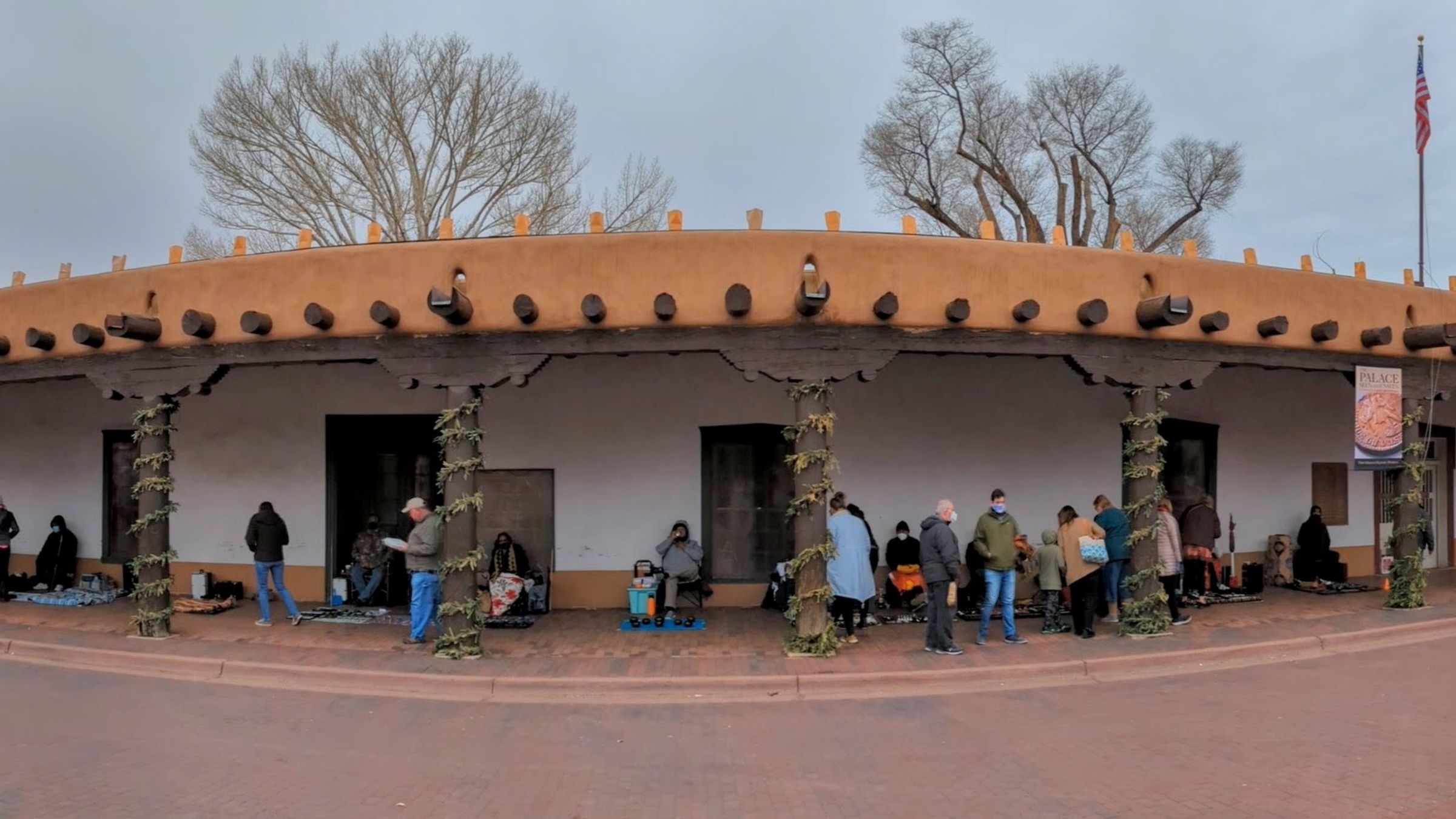
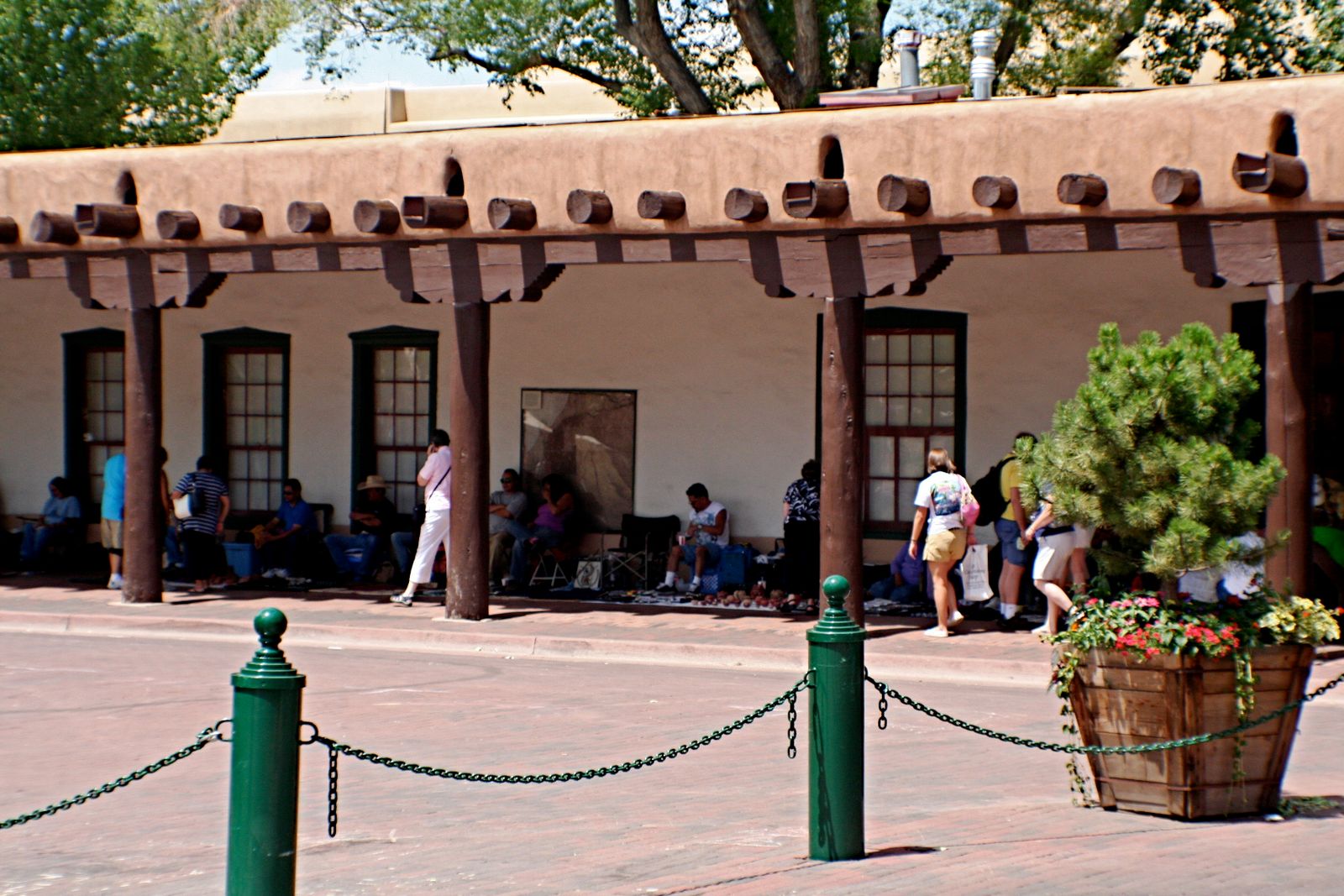
The Palace of the Governors on the Santa Fe Plaza. — Dicklyon
Why Palace of the Governors Matters
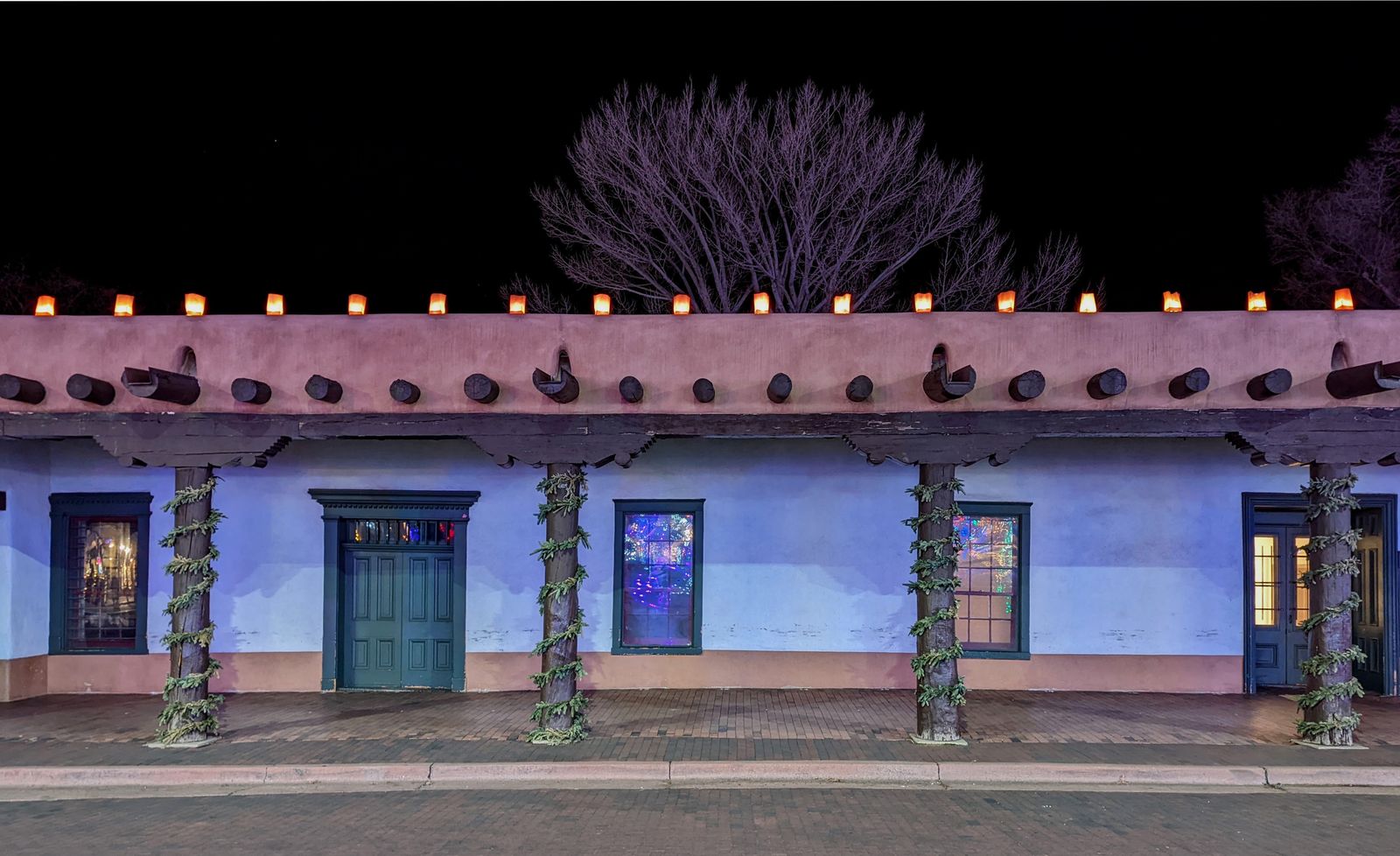
No public building in the United States has been in continuous use longer than the Palace of the Governors. Built as the seat of Spanish colonial government around 1610 — a decade before the Pilgrims landed at Plymouth — it has served as capitol for Spain, the Pueblo Revolt's Native government, Mexico, the Confederacy, and the United States. Its long adobe portal in the heart of Santa Fe's plaza has witnessed nearly the entire span of European and American governance in the Southwest.
By the Numbers
History
- Built
- c. 1610
- Pueblo Revolt
- 1680–1692 Pueblo occupation
Significance
- Distinction
- Oldest continuously used public building in the U.S.
Governments served
- Ruled under
- Spain, Pueblo nations, Mexico, Confederacy, U.S.
People
- Notable governor
- Lew Wallace, author of Ben-Hur
Culture
- Native arts program
- Portal artisans market, ongoing
Designation
- National Historic Landmark
- Designated 1960
Timeline
- 1610Governor Pedro de Peralta builds the palace as Santa Fe's capitol
- 1680The Pueblo Revolt expels the Spanish; Pueblo peoples occupy the palace
- 1692Spain reconquers Santa Fe and reoccupies the palace
- 1821Mexican independence transfers governance of the palace
- 1846The United States takes New Mexico as a territory
- 1862Confederate forces briefly occupy Santa Fe during the Civil War
- 1909The palace becomes a museum after ceasing to be the capitol
Complete History
Spanish governor Pedro de Peralta built the low adobe Palace of the Governors around 1610 as the seat of the new colonial capital, Santa Fe. For nearly seven decades it governed the province of New Mexico until 1680, when the Pueblo peoples united in a coordinated revolt, driving the Spanish out and occupying the palace themselves for twelve years — the only successful Native uprising to expel a colonial power from North American soil for an extended period.
Spain reconquered Santa Fe in 1692 and reoccupied the palace, which continued as the seat of government through Mexican independence in 1821 and the brief Confederate occupation of Santa Fe during the Civil War in 1862. When the United States took New Mexico as a territory after 1846, the palace remained the territorial and then state capitol building, hosting governors including Lew Wallace, who is said to have written part of his novel Ben-Hur there.
The palace ceased to be the seat of government in 1909 and became a museum, now part of the New Mexico History Museum. Beneath its portal, Native American artisans have sold jewelry and crafts for generations under a long-running arts program, continuing a tradition of exchange in the plaza that stretches back centuries. It was designated a National Historic Landmark in 1960.
Historic Images
Interesting Facts
- Built around 1610, it is the oldest continuously used public building in the United States.
- The Pueblo Revolt of 1680 drove the Spanish out, and Pueblo peoples occupied the palace themselves for twelve years.
- The palace has served as capitol under Spain, Pueblo governance, Mexico, the Confederacy, and the United States.
- Governor Lew Wallace is said to have written part of his novel Ben-Hur while living in the palace.
- Native American artisans have sold jewelry and crafts under the palace's portal for generations.
Visiting Today
- Hours
- Open Tuesday through Sunday; closed Mondays and major holidays. Check the museum site for seasonal hours.
- Admission
- A ticketed admission fee applies; free days are offered periodically for New Mexico residents.
- Best time to visit
- Any season; Santa Fe's plaza is especially lively during Indian Market in August and Fiestas de Santa Fe in September.
- Nearby
- Santa Fe Plaza, the Cathedral Basilica of St. Francis of Assisi, and the New Mexico Museum of Art are all steps away.
Browse the Native artisans' market under the portal before touring the museum exhibits inside, then walk the plaza to the nearby cathedral.
Frequently Asked Questions
Why is the Palace of the Governors historically significant?
Built around 1610, it is the oldest continuously used public building in the U.S. and has served as the seat of government under Spanish, Pueblo, Mexican, Confederate, and American rule.
What was the Pueblo Revolt?
In 1680, Pueblo peoples united to drive Spanish colonizers from New Mexico, occupying the Palace of the Governors themselves for twelve years before Spain reconquered the region in 1692.
Is the Palace of the Governors still a government building?
No. It ceased serving as the capitol in 1909 and now operates as a museum, part of the New Mexico History Museum.
What can you see there today?
The museum's exhibits cover four centuries of New Mexico history, and Native American artisans sell handmade jewelry and crafts daily under the palace's historic portal.