Spanish Colonial · Florida
Castillo de San Marcos
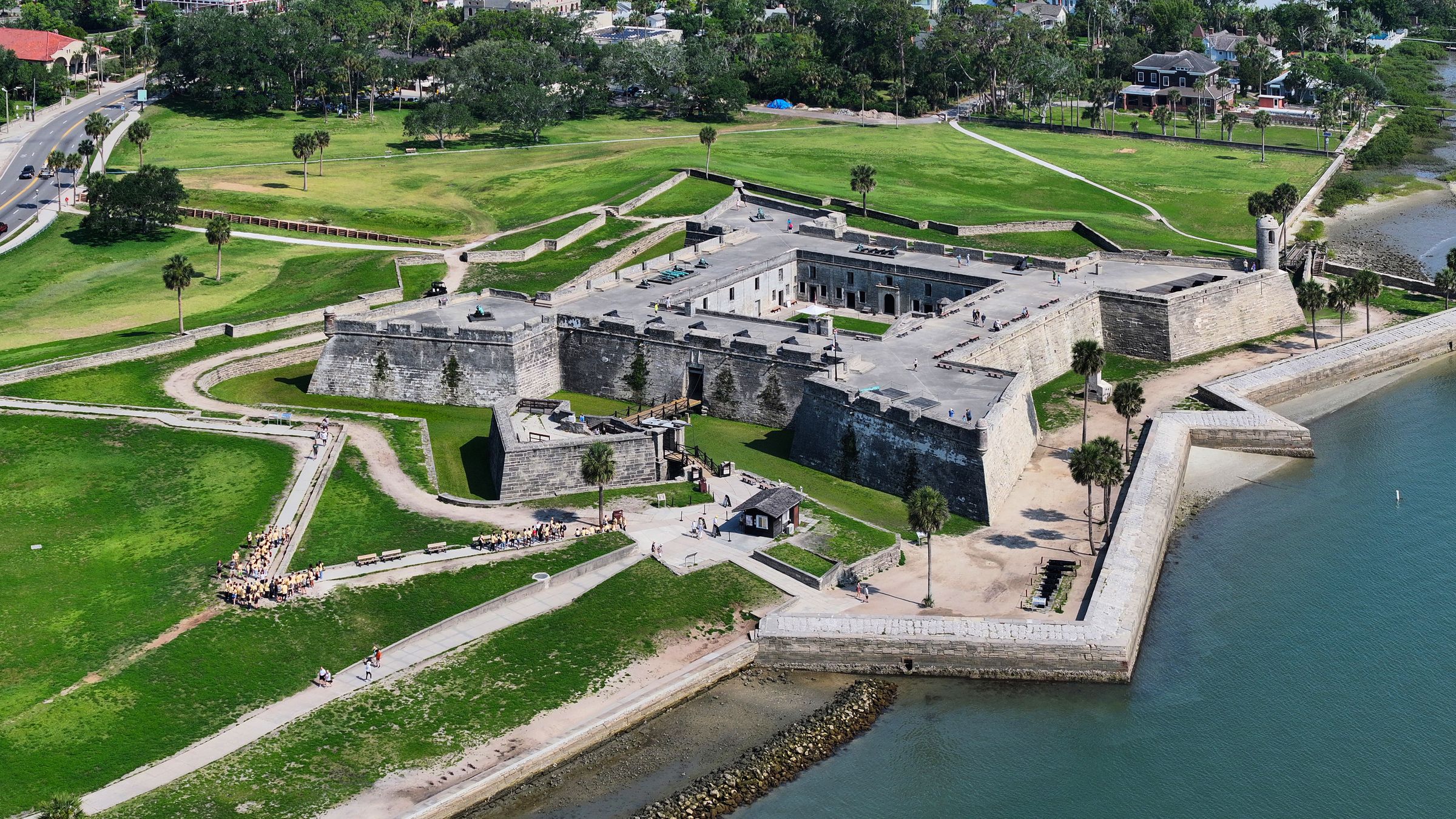
The four-bastion star fort from the air. — Schwerdf
Why Castillo de San Marcos Matters
Castillo de San Marcos is the oldest masonry fort in the continental United States, a Spanish stronghold that has guarded St. Augustine, Florida, since the 17th century. Built of coquina — a soft local shellstone that absorbed cannon fire rather than shattering — the star-shaped fortress was never taken by force in more than 250 years of sieges and changing flags. It stands today as the enduring symbol of Spain's long presence in early America.
By the Numbers
The Fort
- Built
- 1672-1695 by Spain
- Material
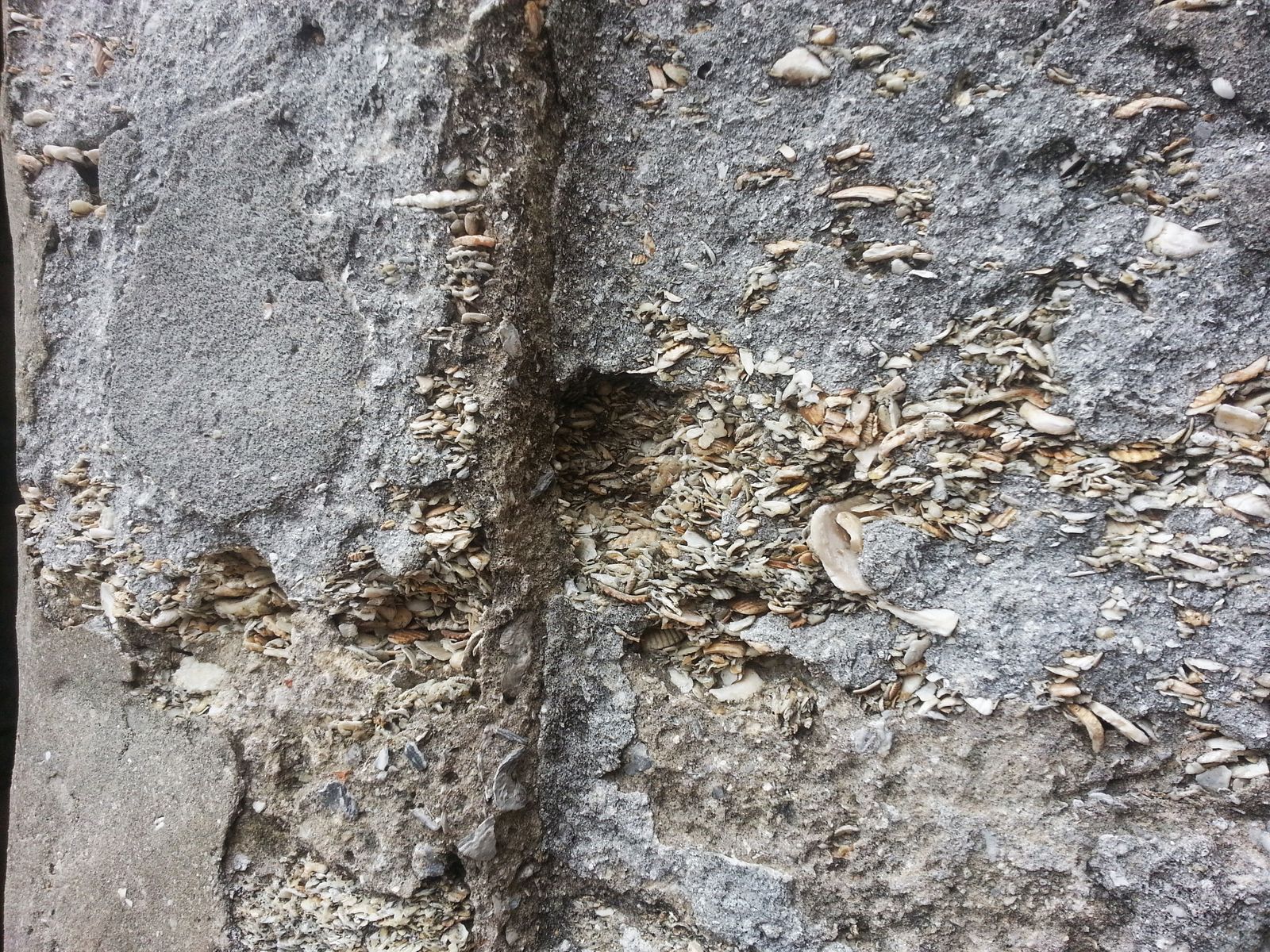
- Coquina (shellstone) from Anastasia Island
- Design
- Four-bastion star fort with a moat
- Distinction
- Oldest masonry fort in the continental U.S.
History
- Never
- Taken by force in 250+ years
Later use
- U.S. era
- Renamed Fort Marion; used as a military prison
Today
- Operator
- National Park Service
Timeline
- 1565Spain founds St. Augustine, the oldest continuous European settlement in the continental U.S.
- 1672Construction of the coquina Castillo de San Marcos begins.
- 1695The fort is completed.
- 1702 & 1740English sieges fail; the fort is never taken by force.
- 1763Britain gains Florida and the fort by treaty; Spain regains it in 1783.
- 1821The United States acquires Florida; the fort is renamed Fort Marion.
- 1924Declared a national monument; the Spanish name is restored in 1942.
Complete History
St. Augustine, founded by the Spanish in 1565, is the oldest continuously inhabited European settlement in the continental United States, but for a century it was defended only by a succession of wooden forts. After English raids exposed their weakness, Spain began building a permanent stone fortress in 1672. Completed in 1695, the Castillo de San Marcos was constructed from coquina, a soft limestone of compressed seashells quarried nearby on Anastasia Island.
That humble material proved remarkably effective: rather than shattering under bombardment, the porous coquina absorbed and trapped cannonballs. The fort withstood repeated attacks, including major English sieges led by James Moore in 1702 and Georgia's founder James Oglethorpe in 1740, and it was never taken by force. Control of the Castillo instead passed by treaty — to Britain in 1763, back to Spain in 1783, and finally to the United States in 1821.
Renamed Fort Marion by the Americans, the fortress later served as a military prison, holding Native American captives — among them Apache and Plains leaders — during the wars of the 1870s and 1880s. Its original Spanish name was restored in 1942. Designated a national monument in 1924 and administered by the National Park Service, the Castillo remains the oldest and best-preserved Spanish colonial fortification in the continental U.S.
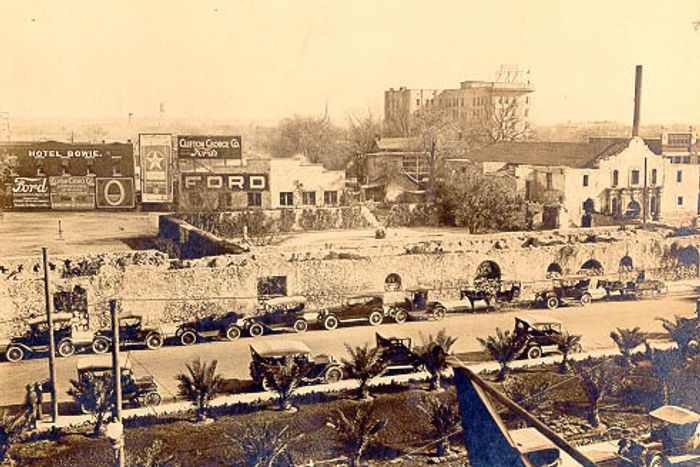
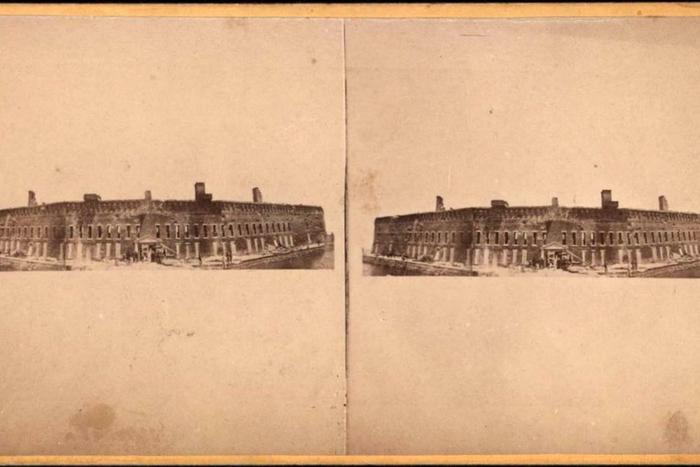
Historic Images
Interesting Facts
- Castillo de San Marcos is the oldest masonry fortification in the continental United States, completed by Spain in 1695.
- It is built of coquina, a soft stone of compressed shells that absorbed cannon fire instead of shattering, making the walls remarkably resilient.
- In more than two and a half centuries the fort was never captured in battle; it changed hands only through treaties.
- Under U.S. control it was renamed Fort Marion and used as a prison, holding Apache and Plains Indian captives in the 1870s and 1880s.
- The fort has flown the flags of Spain, Britain, the Confederacy, and the United States over its long history.
Visiting Today
- Hours
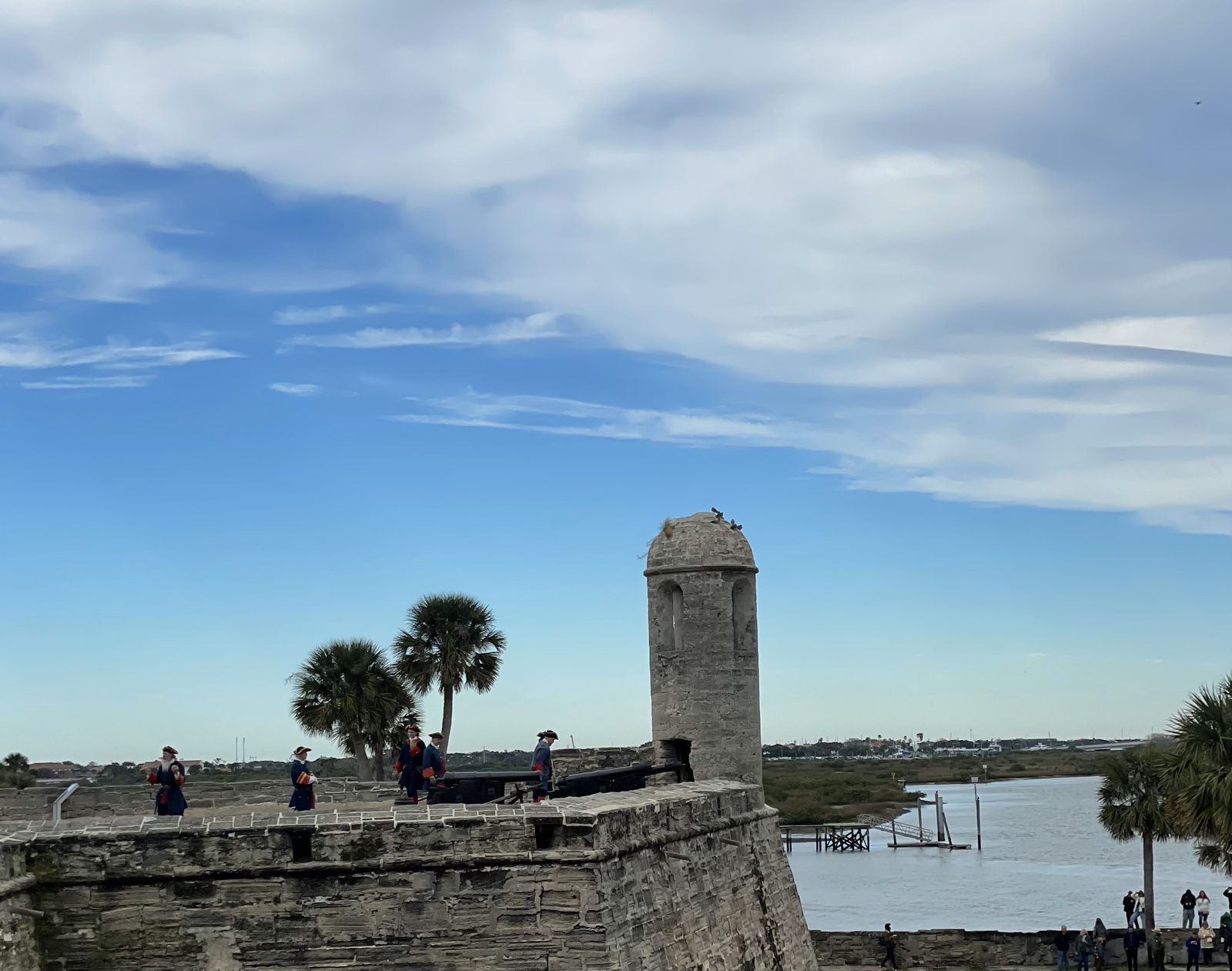
- The fort is open to visitors daily except Thanksgiving and Christmas, with hours set by the National Park Service. Cannon-firing demonstrations are held on select days.
- Admission
- An entrance fee is charged, valid for several consecutive days; young children enter free. National Park passes are accepted.
- Best time to visit
- The cooler months from late fall to spring are most comfortable; mornings are quietest, and weekend cannon demonstrations draw crowds.
- Nearby
- St. Augustine's historic district, the Colonial Quarter, Flagler College, and Anastasia State Park.
Time your visit around a weekend cannon-firing demonstration for the full experience, and explore the historic streets of St. Augustine just outside the fort's walls. Shade is limited on the gun deck, so bring sun protection.
Frequently Asked Questions
What is Castillo de San Marcos?
It is a 17th-century Spanish fort in St. Augustine, Florida, and the oldest masonry fortification in the continental United States. It was built to defend Spanish Florida and completed in 1695.
What is the fort made of?
It is built of coquina, a soft local limestone formed from compressed seashells. The porous stone absorbed cannonballs rather than shattering, which helped the fort survive repeated sieges.
Was Castillo de San Marcos ever captured?
Not by force. In more than 250 years the fort was never taken in battle; it changed hands only through treaties, passing between Spain, Britain, and finally the United States.
Can you visit Castillo de San Marcos?
Yes. It is a national monument in St. Augustine run by the National Park Service, with the gun deck, living quarters, and moat open to visitors, plus cannon-firing demonstrations.