Early Republic · Virginia
Montpelier
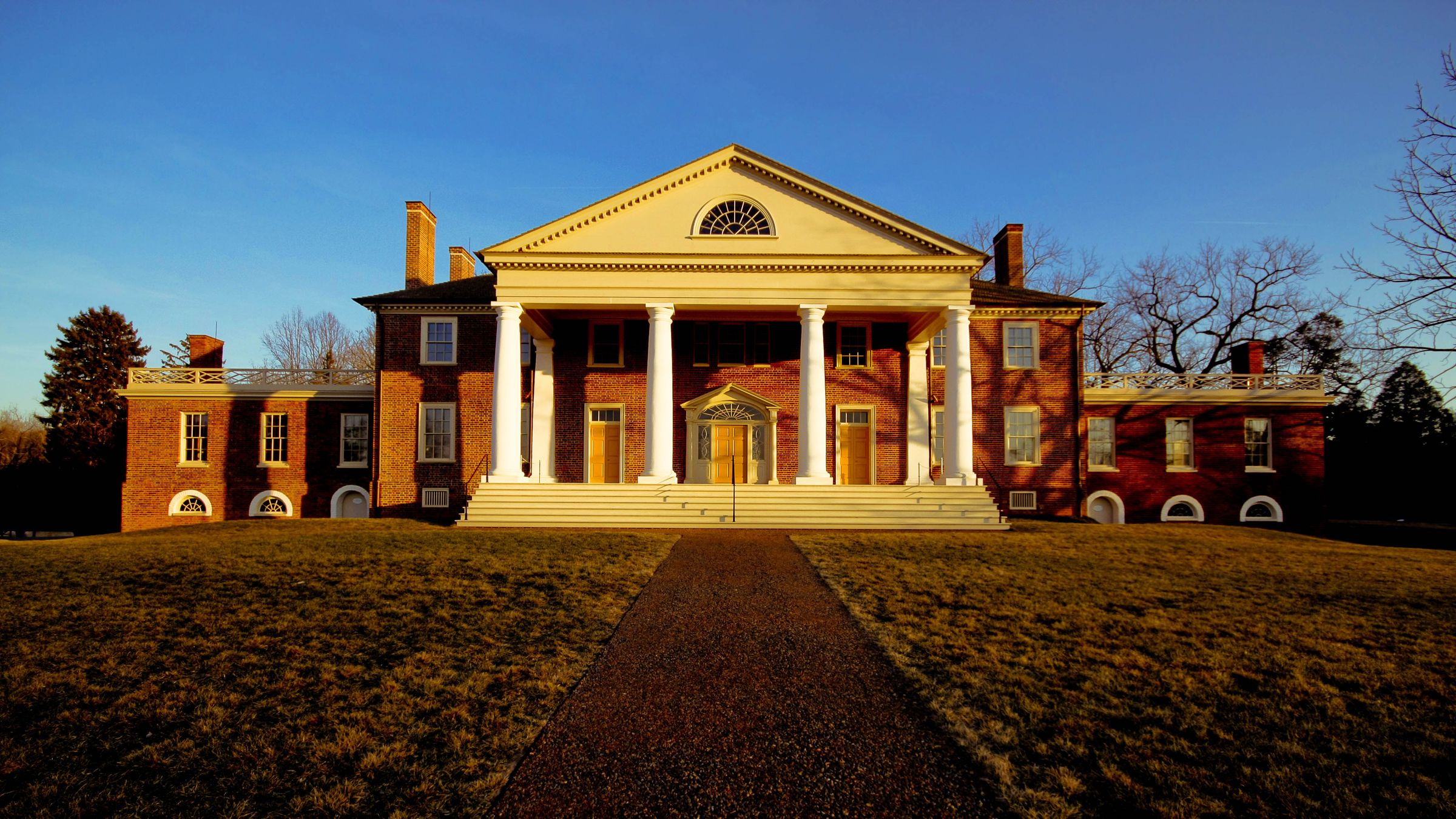
Montpelier, James Madison's Virginia home, at sunset. — Jennifer Glass
Why Montpelier Matters
Montpelier is where the Constitution was, in a sense, conceived. In this Virginia mansion James Madison — the 'Father of the Constitution' and fourth president — read deeply in history and political theory to prepare the plan of government he carried to Philadelphia in 1787. It is also the home of the more than three hundred enslaved men, women, and children whose labor sustained the estate, and today it tells both stories with unusual honesty. Few places hold the founding ideals and the founding contradictions of the republic so tightly together.
By the Numbers
History
- President
- James Madison (4th)
- Died here
- June 28, 1836
- Known as
- Home of the 'Father of the Constitution'
Community
- Enslaved people
- 300+ over the estate's history
Architecture
- Style
- Georgian
Ownership
- du Pont era
- 1901–1983
Designation
- Owner
- National Trust for Historic Preservation
Timeline
- c. 1764James Madison Sr. builds the Georgian brick mansion
- 1780sMadison studies government in his library, preparing the Virginia Plan
- 1797Madison enlarges the house after years in Congress
- 1817Madison retires to Montpelier after his presidency
- 1836James Madison dies at Montpelier on June 28
- 1901The du Pont family purchases the estate and expands the mansion
- 1984The National Trust for Historic Preservation acquires Montpelier
- 2008A five-year restoration returns the house to its Madison-era appearance
Complete History
James Madison Sr. built the brick Georgian mansion around 1764, and his son James grew up here on a large tobacco plantation worked by enslaved people. In the 1780s Madison retreated to his Montpelier library to study the histories of ancient and modern confederacies, distilling his reading into the Virginia Plan — the framework that shaped the United States Constitution — and into his defense of ratification in The Federalist.
Madison enlarged the house around 1797 and again during his presidency, giving it the form and Tuscan portico it wears today, and he shared it with his celebrated wife, Dolley. He retired to Montpelier in 1817 and died in his bedroom on June 28, 1836, the last surviving framer of the Constitution. He and Dolley are buried in the family cemetery on the grounds, near the burial ground of the people they enslaved.
After passing out of the family, Montpelier was bought in 1901 by the du Pont family, who nearly doubled the mansion to 55 rooms behind pink stucco. Marion duPont Scott left the estate to the National Trust for Historic Preservation, which took ownership in 1984. A meticulous five-year restoration completed in 2008 stripped away the du Pont additions to return the house to Madison's 22-room home, and the award-winning exhibition 'The Mere Distinction of Colour,' developed with descendants, now centers the lives of the enslaved community.
Historic Images


Interesting Facts
- At Montpelier, Madison studied history and political theory to prepare the Virginia Plan — the blueprint for the U.S. Constitution.
- Dolley Madison, the most celebrated first lady of the early republic, lived at Montpelier for decades.
- The du Pont family expanded the house to 55 rooms; a 2003–2008 restoration reversed the changes to reveal Madison's 22-room home.
- More than 300 enslaved people lived and worked at Montpelier; their story anchors the exhibit 'The Mere Distinction of Colour.'
- James and Dolley Madison are buried in the family cemetery on the grounds.
Visiting Today
- Hours
- Open most days for mansion tours and grounds access; hours vary seasonally — check montpelier.org.
- Admission
- Admission fee covers the mansion, the enslaved-community exhibits, and the grounds; discounts for children and members.
- Best time to visit
- Spring and fall, when the Piedmont landscape and mountain views are at their best.
- Nearby
- The town of Orange and, a short drive away, Thomas Jefferson's Monticello and the University of Virginia in Charlottesville.
Budget time for 'The Mere Distinction of Colour' exhibit and the walk to the Madison family cemetery and the Gilmore Cabin, the home of a freedman born into slavery on the estate.
Frequently Asked Questions
Why is Montpelier important to the Constitution?
It was here that James Madison studied government and drafted the ideas behind the Virginia Plan, which became the framework for the U.S. Constitution — earning him the title 'Father of the Constitution.'
Did James Madison die at Montpelier?
Yes. Madison died in his bedroom at Montpelier on June 28, 1836, the last surviving signer of the Constitution. He is buried in the family cemetery on the estate.
How does Montpelier tell the story of slavery?
Montpelier's award-winning exhibition 'The Mere Distinction of Colour,' created with descendants of the enslaved community, presents the lives of the more than 300 people enslaved on the plantation and slavery's ties to the Constitution.
Why does the house look different from the du Pont era?
The du Pont family had enlarged the mansion to 55 rooms. A restoration completed in 2008 removed those additions to return the house to the 22-room home the Madisons knew.