Westward Expansion · Montana
Little Bighorn Battlefield
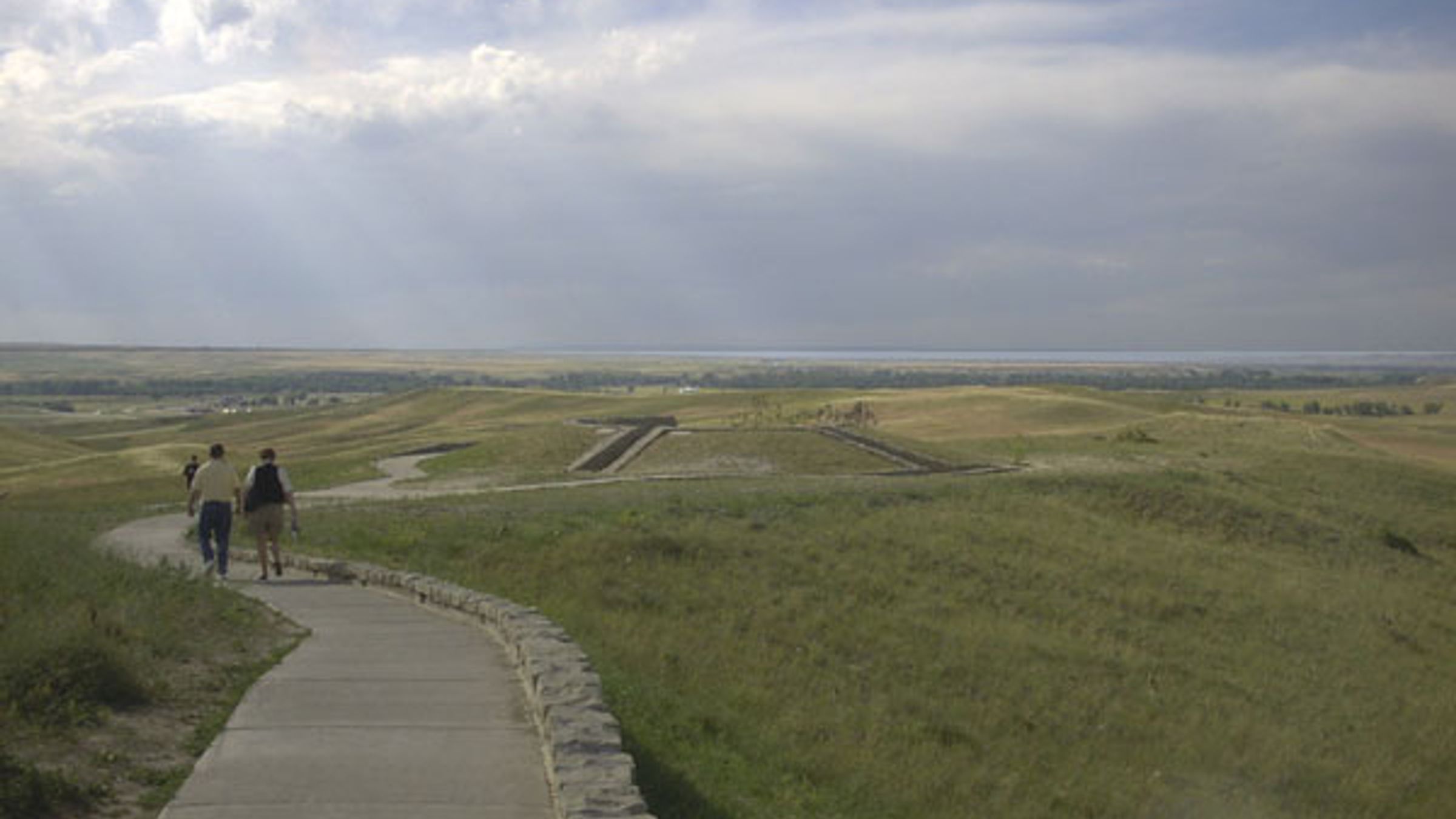
Little Bighorn Battlefield, looking across the rolling Montana terrain. — Jeremykemp
Why Little Bighorn Battlefield Matters
Little Bighorn Battlefield marks the site of the most famous Native American victory of the Plains Indian Wars. On June 25, 1876, Lieutenant Colonel George Armstrong Custer led the U.S. 7th Cavalry into a sprawling village of Lakota, Northern Cheyenne, and Arapaho along the Little Bighorn River — and he and every soldier under his immediate command were killed. Remembered by the tribes as the Battle of the Greasy Grass and by the nation as 'Custer's Last Stand,' the clash was a stunning triumph for the allied tribes, even as it hastened the end of their free life on the northern plains.
By the Numbers
The Battle
- Date
- June 25-26, 1876
- Also known as
- Custer's Last Stand; Battle of the Greasy Grass
- U.S. commander
- Lt. Col. George Armstrong Custer (killed)
- Tribal leaders
- Sitting Bull, Crazy Horse, Gall
- U.S. 7th Cavalry losses
- ~268 killed, incl. all of Custer's column
Memorials
- Markers
- White for soldiers; red granite for warriors
Today
- Operator
- National Park Service
Timeline
- 1868The Fort Laramie Treaty guarantees the Black Hills to the Lakota.
- 1874Gold is found in the Black Hills, drawing a rush of prospectors.
- 1876Custer's 7th Cavalry is defeated at the Little Bighorn on June 25-26.
- 1877Most allied bands surrender or flee; Crazy Horse gives up that spring.
- 1879The site is established as a national cemetery.
- 1991Renamed Little Bighorn Battlefield National Monument.
- 2003The Indian Memorial is dedicated.
Complete History
The battle grew out of the Great Sioux War of 1876. After gold was discovered in the Black Hills of Dakota Territory — land guaranteed to the Lakota by the 1868 Fort Laramie Treaty — prospectors poured in, and the U.S. government ordered the Lakota and their allies onto reservations. Bands led by figures such as Sitting Bull and Crazy Horse refused, gathering in a great encampment in the Montana country the Lakota called the Greasy Grass.
On June 25, 1876, Custer's 7th Cavalry located the village but badly underestimated its size — perhaps the largest gathering of Plains tribes ever assembled. Dividing his roughly 600 men, Custer sent battalions under Major Marcus Reno and Captain Frederick Benteen to attack while he led about 210 men toward the northern end of the camp. Warriors led by Gall, Crazy Horse, and others overwhelmed Custer's column on the ridges above the river; Custer and all the men with him were killed within about an hour.
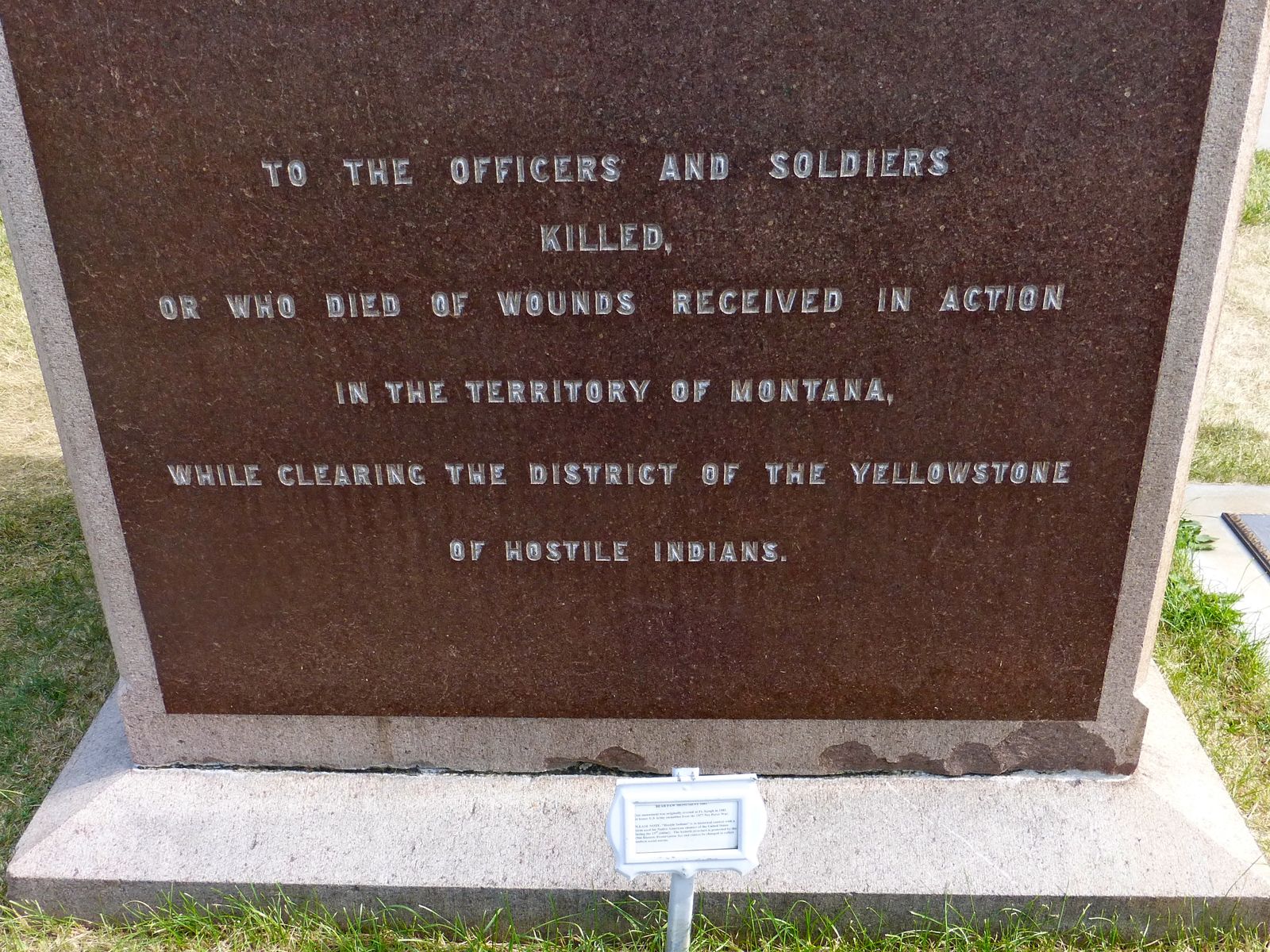
Reno and Benteen's commands survived a desperate two-day siege on a nearby bluff until the village withdrew. The victory was total but short-lived: outraged by the defeat, the Army intensified its campaign, and within a year most of the allied bands had surrendered or fled to Canada. The battlefield became a national cemetery in 1879 and a national monument; long known as Custer Battlefield, it was renamed Little Bighorn Battlefield National Monument in 1991, and an Indian Memorial honoring the tribes was dedicated in 2003.
Historic Images
Interesting Facts
- The Lakota and Cheyenne call the fight the Battle of the Greasy Grass, after their name for the Little Bighorn River valley.
- Custer divided his regiment before the attack and led roughly 210 men to their deaths; in all, some 268 U.S. soldiers and attached personnel were killed.
- The battle followed one of the largest gatherings of Plains tribes ever recorded, and became one of their greatest victories over the U.S. Army.
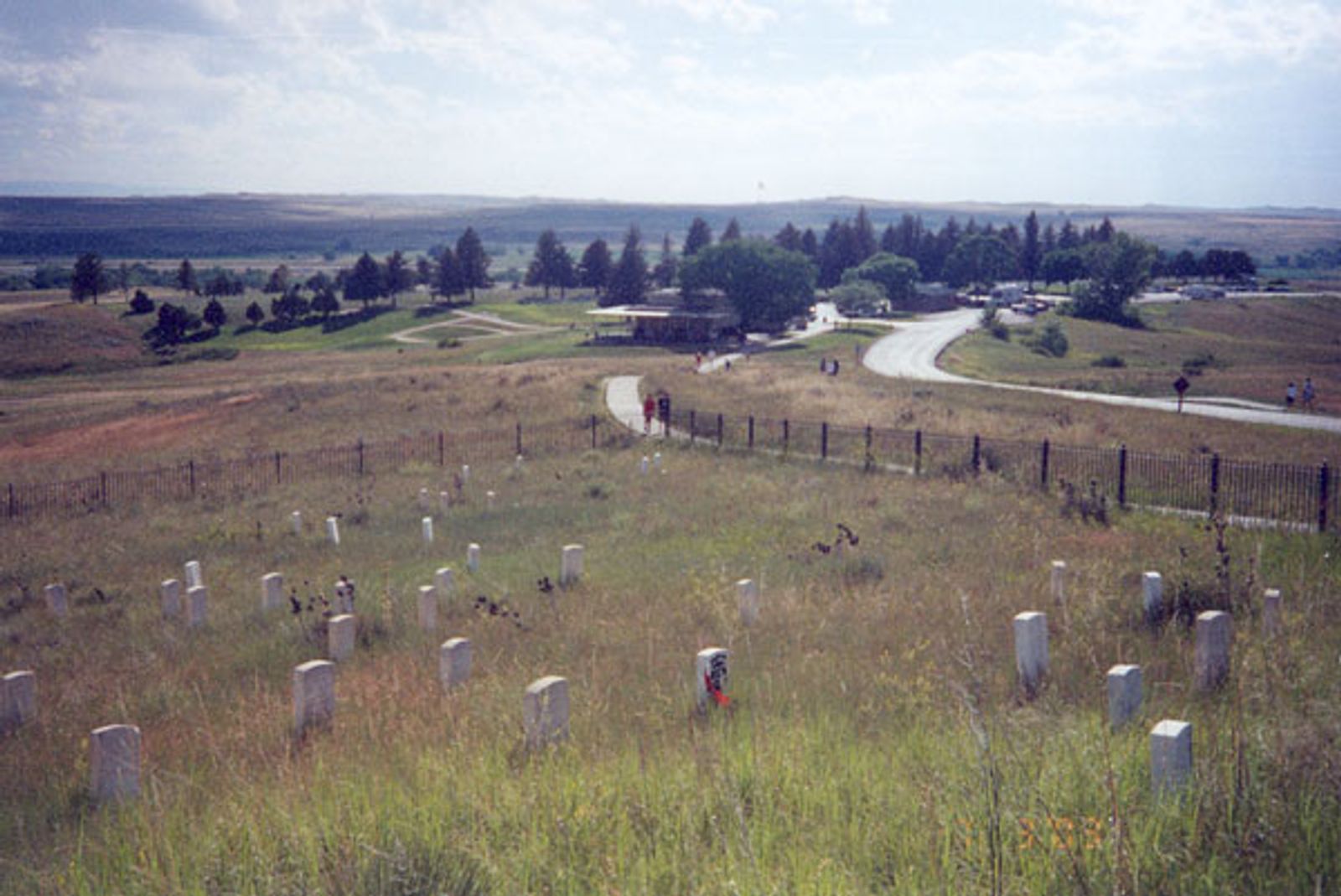
- White marble markers across the field show where soldiers fell; red granite markers, added beginning in 1999, mark where Native warriors died.
- Though a decisive Native victory, the battle triggered an aggressive Army response, and within a year most of the allied bands were forced onto reservations.
Visiting Today
- Hours
- The battlefield and visitor center are open daily except major winter holidays; hours vary by season. Check the National Park Service for current times.
- Admission
- A per-vehicle or per-person entrance fee is charged. National Park passes are accepted.
- Best time to visit
- Late spring through early fall offers the best weather; the battle's anniversary in late June brings special programs and larger crowds.
- Nearby
- The Crow (Apsáalooke) Reservation, the town of Hardin, and Bighorn Canyon National Recreation Area.
Summers are hot and largely shadeless — bring water and sun protection. A driving tour connects the main sites; ranger talks and the Indian Memorial add valuable context to the battlefield.
Frequently Asked Questions
What happened at Little Bighorn?
On June 25, 1876, Lieutenant Colonel George Custer led the U.S. 7th Cavalry against a large village of Lakota, Cheyenne, and Arapaho. Custer and about 210 men under his command were surrounded and killed, in a major victory for the allied tribes.
Why is it called Custer's Last Stand?
Custer and every soldier in the battalion he personally led were killed, making it his final battle. The tribes who won it know the fight as the Battle of the Greasy Grass.
Who won the Battle of the Little Bighorn?
The allied Lakota, Northern Cheyenne, and Arapaho won decisively. It was one of the worst U.S. Army defeats of the Plains Indian Wars, though the tribes were forced onto reservations within a year.
Can you visit Little Bighorn Battlefield?
Yes. It is a national monument in southeastern Montana, on the Crow Indian Reservation. Visitors can tour the battlefield, Last Stand Hill, the national cemetery, and the Indian Memorial.