20th Century · California
Hearst Castle
Also known as Hearst San Simeon Estate
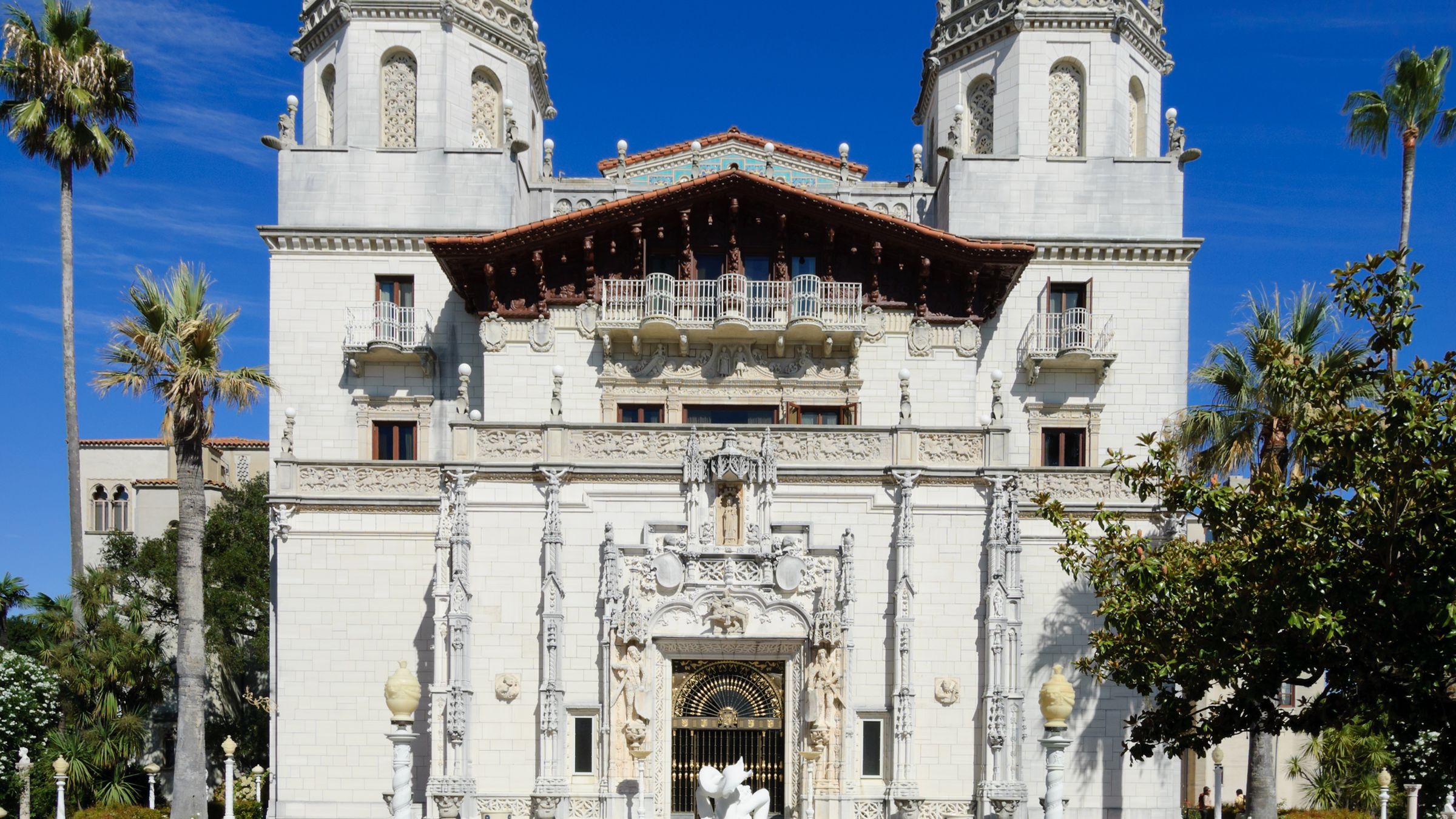
Casa Grande, the main house of Hearst Castle at San Simeon. — King of Hearts
Why Hearst Castle Matters
Hearst Castle is the grandest expression of Gilded Age ambition in the American West — a hilltop palace that newspaper magnate William Randolph Hearst built to house one of the largest private art collections in the country. Designed over nearly three decades by pioneering architect Julia Morgan, its 165 rooms, gilded pools, and imported European ceilings turned a remote California ranch into a stage for Hollywood stars and world leaders. Hearst called it "La Cuesta Encantada" — The Enchanted Hill.
By the Numbers
The Estate
- Architect
- Julia Morgan
- Style
- Mediterranean Revival
- Rooms
- 165
- Construction
- 1919–1947
Grounds
- Gardens & terraces
- 127 acres
- Pools
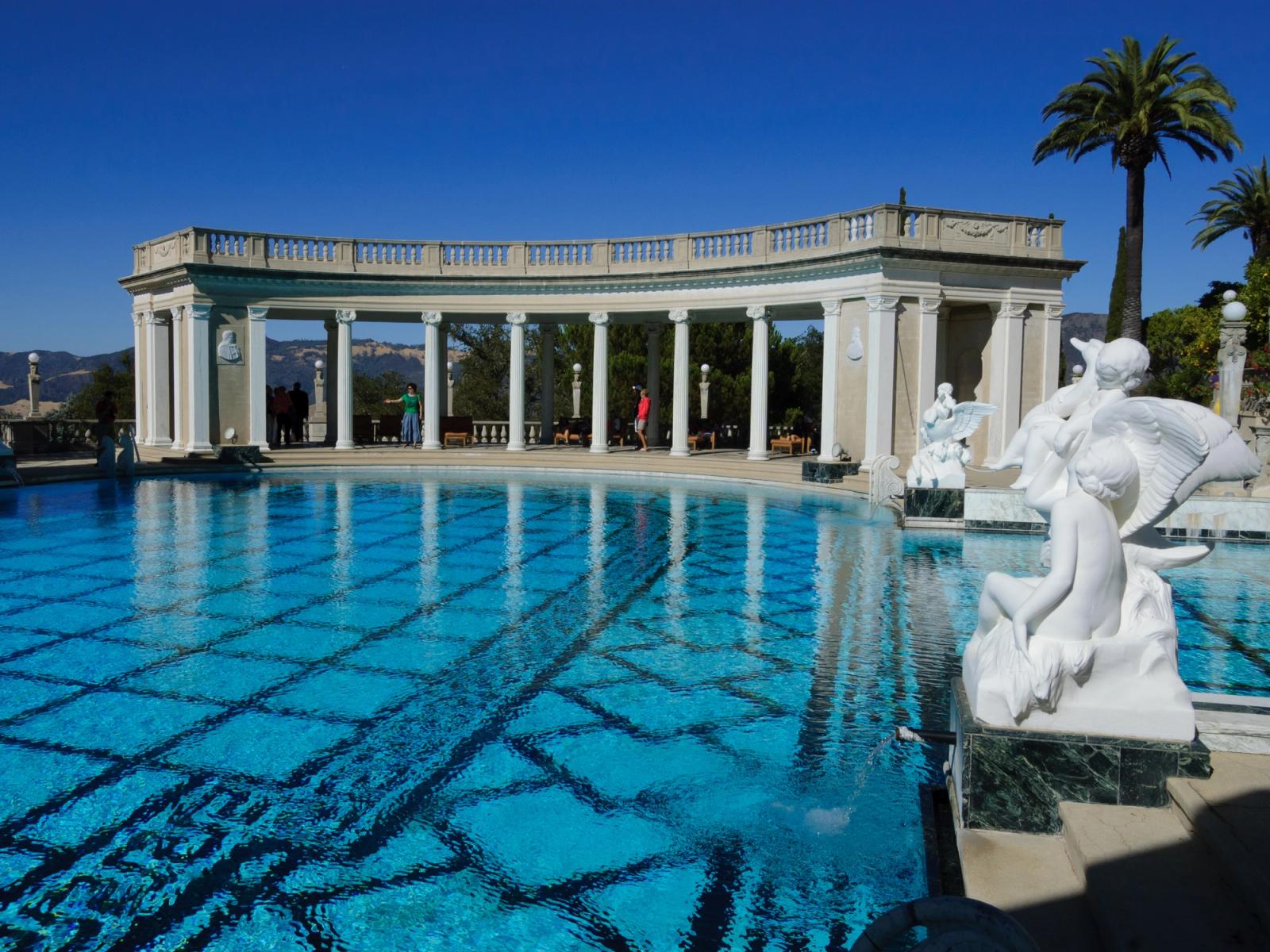
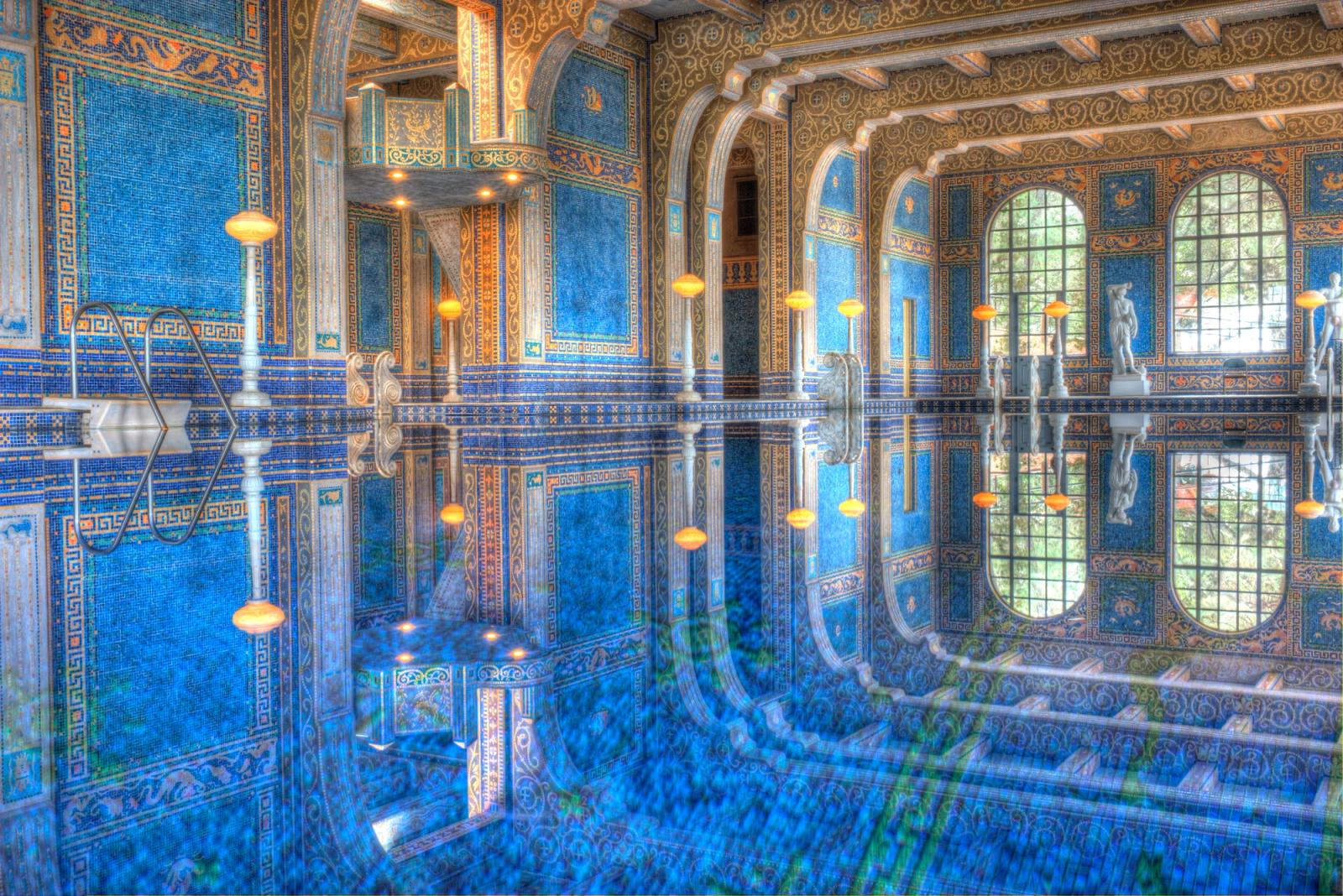
- The outdoor Neptune Pool and indoor Roman Pool
Today
- Operator
- California State Parks
Timeline
- 1865George Hearst acquires the San Simeon ranch on California's Central Coast.
- 1919William Randolph Hearst commissions architect Julia Morgan to build on the hill.
- 1919–1947Construction of the estate continues, largely under Morgan's direction.
- 1947Hearst leaves San Simeon for good due to failing health.
- 1957The Hearst Corporation donates the estate to the State of California.
- 1958Hearst Castle opens to the public as a state historical monument.
Complete History
The land had been in the Hearst family since 1865, when mining tycoon George Hearst bought a ranch around San Simeon on California's Central Coast; the family camped there in tents on a spot they called Camp Hill. In 1919, after inheriting the estate, publishing magnate William Randolph Hearst told architect Julia Morgan he was tired of camping in tents and wanted to build something on the hill. The project would occupy them both for the rest of Hearst's life.
Julia Morgan — the first woman to earn an architecture certificate from the École des Beaux-Arts in Paris and the first licensed female architect in California — designed the estate in a Mediterranean Revival style and oversaw construction from 1919 until 1947. Building was continuous and constantly revised: rooms were added, torn out, and rebuilt to accommodate the antique ceilings, choir stalls, tapestries, and Roman sarcophagi Hearst bought by the shipload. The centerpiece, the twin-towered Casa Grande, was surrounded by guesthouses, terraces, and the famous Neptune and Roman pools.
During the 1920s and 1930s Hearst entertained a steady stream of celebrities and dignitaries at San Simeon — among them Charlie Chaplin, Cary Grant, Winston Churchill, and Calvin Coolidge — often with his companion, actress Marion Davies, as hostess. Construction was never truly finished; work slowed as Hearst's fortunes declined, and he left the hill for good in 1947 due to ill health. In 1957 the Hearst Corporation donated the estate to the State of California, and it opened to the public the following year as a state historical monument.
Historic Images
Interesting Facts
- Architect Julia Morgan was the first woman admitted to study architecture at the École des Beaux-Arts in Paris and the first woman licensed as an architect in California.
- Hearst named the estate 'La Cuesta Encantada,' Spanish for 'The Enchanted Hill.'
- The outdoor Neptune Pool holds about 345,000 gallons of water and is fronted by the facade of an ancient Roman-style temple.
- Hearst kept one of the world's largest private zoos at San Simeon; zebras descended from the herd can still occasionally be seen grazing near the highway.
- The estate incorporates genuine antique ceilings, choir stalls, and mantelpieces that Hearst bought from European churches and castles and had reassembled on the hill.
Visiting Today
- Hours
- The estate is open for guided tours most days of the year, departing from the visitor center on Highway 1. Hours vary seasonally, so check California State Parks for the current schedule.
- Admission
- Access to the mansion is by paid guided tour only, with several tour options focusing on different parts of the estate. Reservations are strongly recommended.
- Best time to visit
- Spring and fall bring mild coastal weather and lighter crowds; the pools and gardens are most photogenic in clear afternoon light.
- Nearby
- The San Simeon elephant seal rookery, the town of Cambria, and the scenic Big Sur coast to the north.
A shuttle carries visitors up the five-mile road from the visitor center to the estate; wear comfortable shoes, as tours cover a lot of ground and many stairs, and bring a jacket for the hilltop breezes.
Frequently Asked Questions
Who built Hearst Castle?
Newspaper publisher William Randolph Hearst built the estate, working with architect Julia Morgan from 1919 until 1947. The two collaborated closely on nearly every detail over almost three decades.
Can you visit Hearst Castle?
Yes. Hearst Castle is a California State Park, and the mansion can be seen only on guided tours that depart from the visitor center at the base of the hill. Tickets are usually reserved in advance.
How many rooms does Hearst Castle have?
The estate has 165 rooms in total, spread across the main house, Casa Grande, and its three guesthouses, alongside 127 acres of gardens, terraces, and pools.
Is Hearst Castle finished?
No. Construction continued for nearly 30 years but was never fully completed; Hearst left the estate in 1947 due to ill health, and some planned wings and features were never built.