Westward Expansion · Wyoming
Fort Laramie
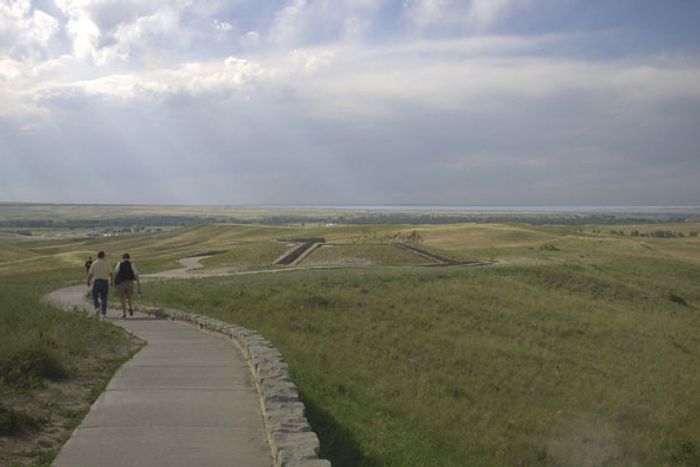
Fort Laramie National Historic Site. — Acroterion
Why Fort Laramie Matters
For half a century, nearly every wagon bound for Oregon, California, or Utah passed through Fort Laramie. Founded as a fur-trading post and later garrisoned by the U.S. Army, it sat at the crossroads of the great overland trails and the homelands of the Lakota, Cheyenne, and Arapaho. It hosted the largest gathering of Plains nations in history in 1851 and the treaty of 1868 that briefly promised the Black Hills to the Lakota — a promise the government would break within a decade, making Fort Laramie a hinge point in the story of the American West.
By the Numbers
History
- Founded
- 1834 (as a fur trading post)
- Army post since
- 1849
- 1851 council
- ~10,000 Plains people gathered
- Key treaty
- Treaty of Fort Laramie, 1868
Trails
- Trails served
- Oregon, California, Mormon, Bozeman
- Emigrants passing
- Est. 500,000 over decades
Designation
- National Historic Site
- Established 1938
Timeline
- 1834Fur traders establish Fort William on the site
- 1849The U.S. Army purchases the post and renames it Fort Laramie
- 1851The Horse Creek Treaty council draws ~10,000 Plains people
- 1868The Treaty of Fort Laramie recognizes the Black Hills as Sioux land
- 1874Gold is discovered in the Black Hills, breaking the treaty's promise
- 1890The U.S. Army abandons Fort Laramie
- 1938Fort Laramie National Historic Site is established
Complete History
Fur traders built Fort William near the confluence of the Laramie and North Platte rivers in 1834, and a successor adobe post, Fort John, followed in 1841. The U.S. Army purchased the post in 1849, renaming it Fort Laramie, to protect the flood of emigrants now moving west along the Oregon, California, Mormon, and later Bozeman trails — an estimated half a million travelers passed within sight of its walls.
In 1851 the fort hosted the Horse Creek Treaty council, drawing an estimated 10,000 Lakota, Cheyenne, Arapaho, and other Plains people in the largest gathering of Native nations recorded on the Plains, intended to guarantee safe passage for emigrants and define tribal territories. As conflict over land and resources escalated, the fort became a staging ground for the Army during Red Cloud's War, ending with the Treaty of Fort Laramie of 1868, which recognized the Black Hills as part of the Great Sioux Reservation.
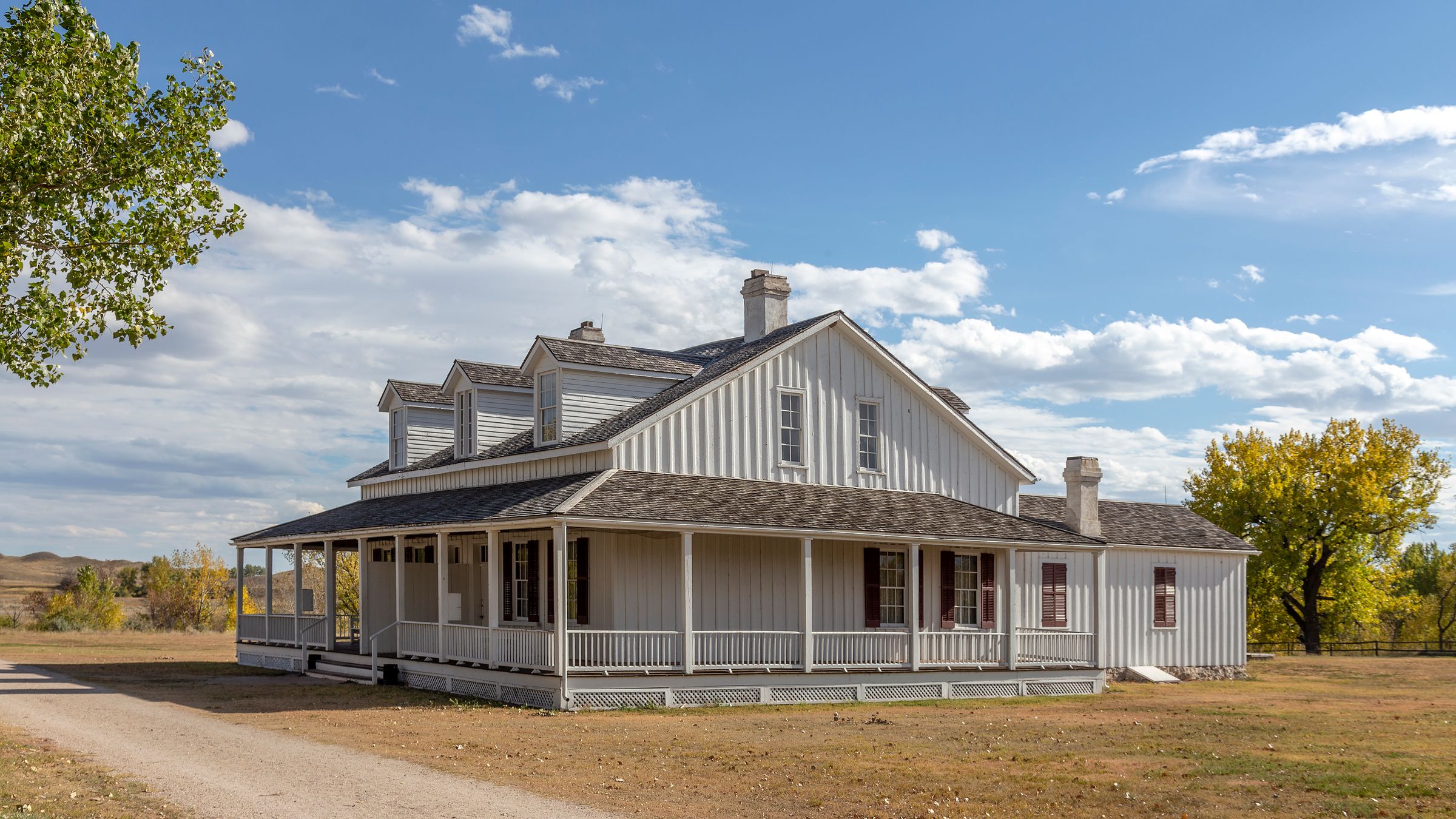
That guarantee collapsed after gold was discovered in the Black Hills in 1874, leading to war and the seizure of the land in violation of the treaty — a grievance still litigated today. The Army abandoned Fort Laramie in 1890 as the frontier it once guarded closed, and its buildings passed into private and state hands before the National Park Service established Fort Laramie National Historic Site in 1938, restoring many of its 19th-century structures.
Historic Images

Interesting Facts
- An estimated half a million emigrants passed by Fort Laramie on the overland trails to Oregon, California, and Utah.
- The 1851 Horse Creek Treaty council drew roughly 10,000 Lakota, Cheyenne, and Arapaho people, the largest Plains gathering on record.
- The 1868 Treaty of Fort Laramie recognized the Black Hills as part of the Great Sioux Reservation — a promise broken after gold was found there in 1874.
- The fort changed from a private fur-trading post to a U.S. Army garrison in 1849.
- The Army abandoned the fort in 1890 as the western frontier it once guarded came to a close.
Visiting Today
- Hours
- The grounds and visitor center are open daily; hours vary seasonally — check the NPS site.
- Admission
- Free.
- Best time to visit
- Late spring through early fall for the fullest schedule of ranger talks and open buildings.
- Nearby
- The town of Fort Laramie and the North Platte River valley surround the site; Scotts Bluff National Monument is a scenic drive east.
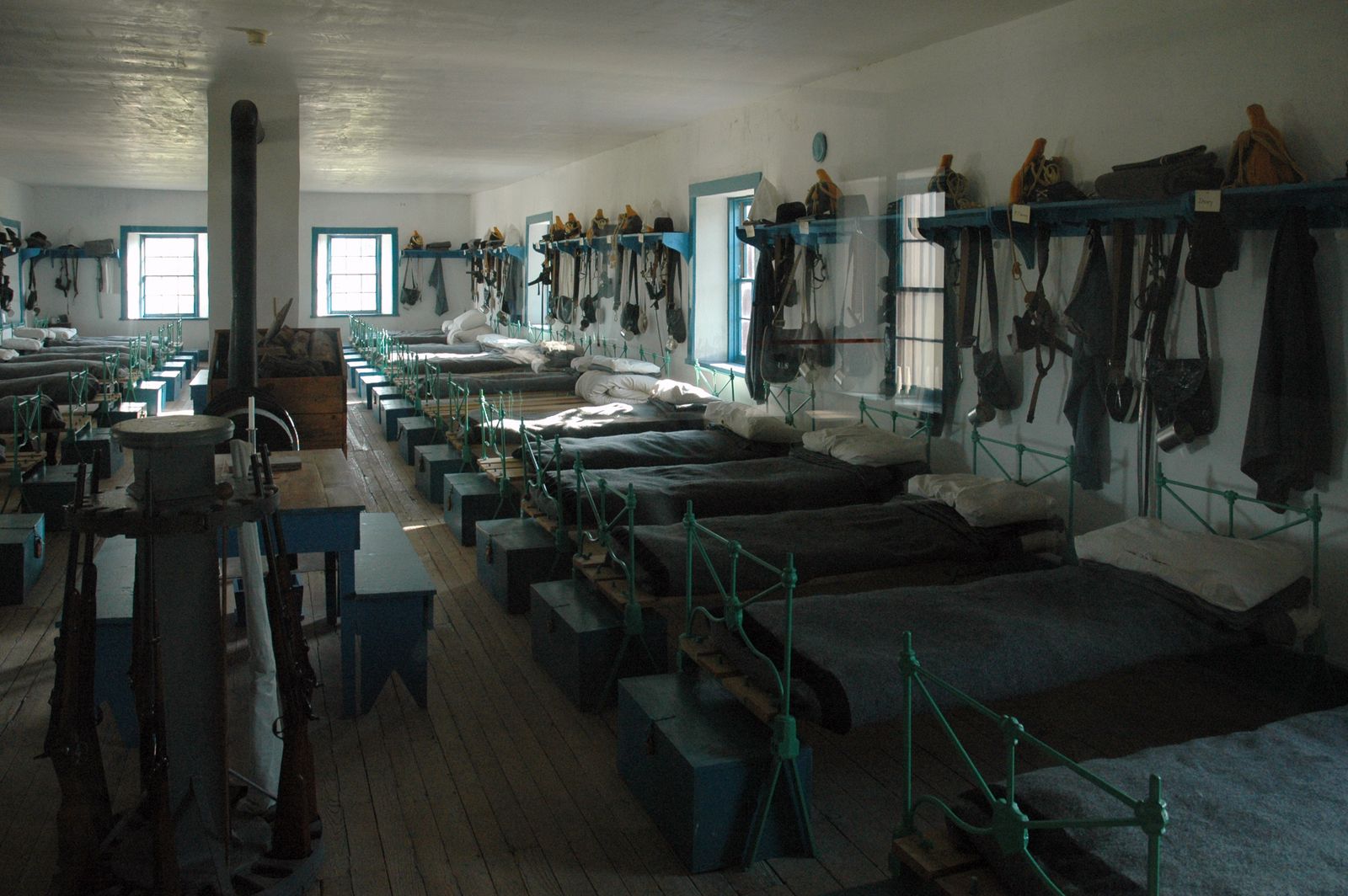
Walk the self-guided loop through the restored barracks, officers' quarters, and sutler's store, and check for ranger talks on the 1851 and 1868 treaty councils.
Frequently Asked Questions
Why was Fort Laramie important?
It sat at the crossroads of the Oregon, California, Mormon, and Bozeman trails, serving as a supply post and waypoint for hundreds of thousands of westbound emigrants, and as a key site of U.S.-Native treaty negotiations.
What was the Treaty of Fort Laramie?
Signed in 1868, it recognized the Black Hills as part of the Great Sioux Reservation. The U.S. broke the treaty after gold was discovered there in 1874, leading to war and the land's seizure.
When did Fort Laramie stop operating as a military post?
The U.S. Army abandoned the fort in 1890, after the transcontinental railroad and the closing frontier reduced its strategic importance.
Can you visit Fort Laramie today?
Yes. Fort Laramie National Historic Site preserves and has restored many of the fort's original 19th-century buildings, open to self-guided and ranger-led tours.