- Early Republic (1783–1815)
- 40.7075° N, 74.0104° W
Federal Hall
New York, New York · Established 1842
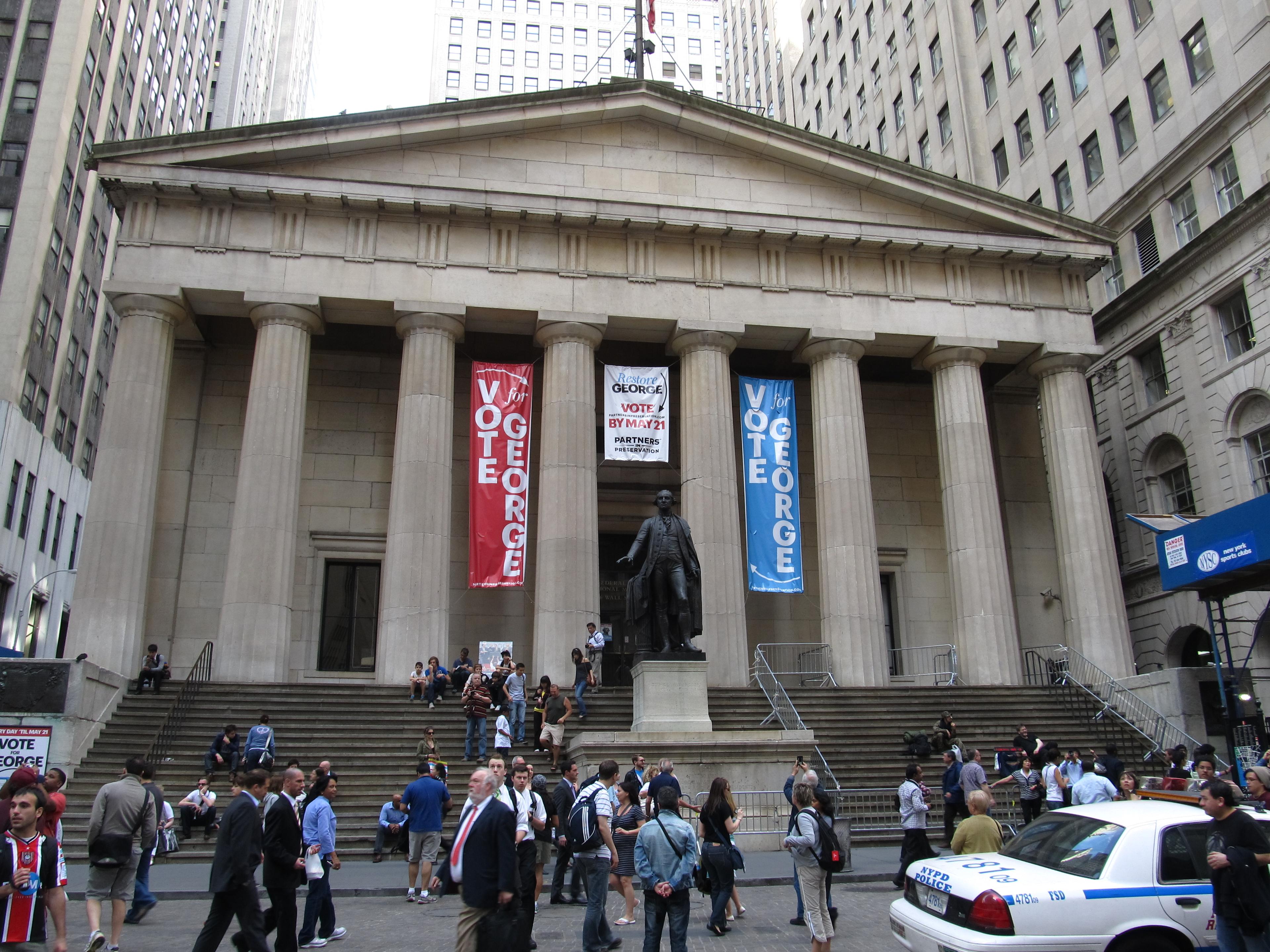
Ken Lund from Reno, Nevada, USA · CC BY-SA · via Wikimedia Commons
Why It Matters
On this spot on Wall Street, the American experiment in self-government began in earnest. George Washington took the first presidential oath of office here on April 30, 1789, the first Congress convened, and the Bill of Rights was drafted and debated within its walls. The original building was later demolished, but the Greek Revival structure that replaced it still stands as a monument to the moment the Constitution's abstract framework became a living government.
The History
New York's original City Hall stood on this site from 1700, serving briefly as the meeting place of the Continental Congress and, memorably, the site of John Peter Zenger's 1735 trial establishing a foundation for freedom of the press. When New York became the first capital of the United States under the Constitution, the building was remodeled by architect Pierre L'Enfant and renamed Federal Hall.
On April 30, 1789, George Washington stood on Federal Hall's balcony and took the first presidential oath of office, launching the executive branch under the new Constitution. The First Congress met inside, and it was here that James Madison introduced the amendments that became the Bill of Rights, ratified in 1791. New York's tenure as national capital was brief; the government moved to Philadelphia in 1790, and the original Federal Hall was demolished in 1812.
The Greek Revival building on the site today was constructed in 1834-1842 as a U.S. Custom House and later served as a federal subtreasury and part of the Federal Reserve system. A statue of Washington by John Quincy Adams Ward marks the spot on the steps where he is believed to have taken the oath. Congress designated the site Federal Hall National Memorial in 1955, and it is administered by the National Park Service.
Through the Years
- 1700
New York's City Hall is built on the site
- 1735
John Peter Zenger's trial establishes an early precedent for press freedom
- 1789
George Washington takes the first presidential oath on April 30
- 1789
James Madison introduces the amendments that become the Bill of Rights
- 1790
The national capital relocates to Philadelphia
- 1812
The original Federal Hall building is demolished
- 1955
Federal Hall National Memorial is designated
The Archive
 Plate 01
George Washington statue in front of Federal Hall.
Carol M. Highsmith Archive, Library of Congress · No known restrictions · via Library of Congress
 Plate 02
Tourists outside Federal Hall in Manhattan, Statue of George Washington.
Yair Haklai · CC BY-SA · via Wikimedia Commons
 Plate 03Historic · 1952
Historic photograph of Federal Hall.
Library of Congress · No known restrictions · via Library of Congress
Facts & Figures
History
- Washington's inauguration
- April 30, 1789
- Bill of Rights
- Drafted here, ratified 1791
- Original building
- Demolished 1812
- Current building
- Built 1834–1842 as a Custom House
Architecture
- Style
- Greek Revival
Monument
- Washington statue
- By John Quincy Adams Ward
Designation
- National Memorial
- Designated 1955
The Register
- Established
- 1842
- Area of significance
- Government; founding era
Frequently Asked
Is the building where Washington was inaugurated still standing?
No. The original Federal Hall was demolished in 1812. The Greek Revival building on the site today was built decades later, but it marks the same historic location.
What was drafted at Federal Hall?
The First Congress met at Federal Hall and drafted the amendments that became the Bill of Rights, ratified in 1791.
Was New York City really the U.S. capital?
Yes, briefly. New York served as the first capital of the United States under the Constitution from 1789 to 1790, before the government relocated to Philadelphia.
Can you visit Federal Hall today?
Yes. Federal Hall National Memorial is open to the public with free exhibits on the founding era, administered by the National Park Service.