20th Century · Pennsylvania
Fallingwater
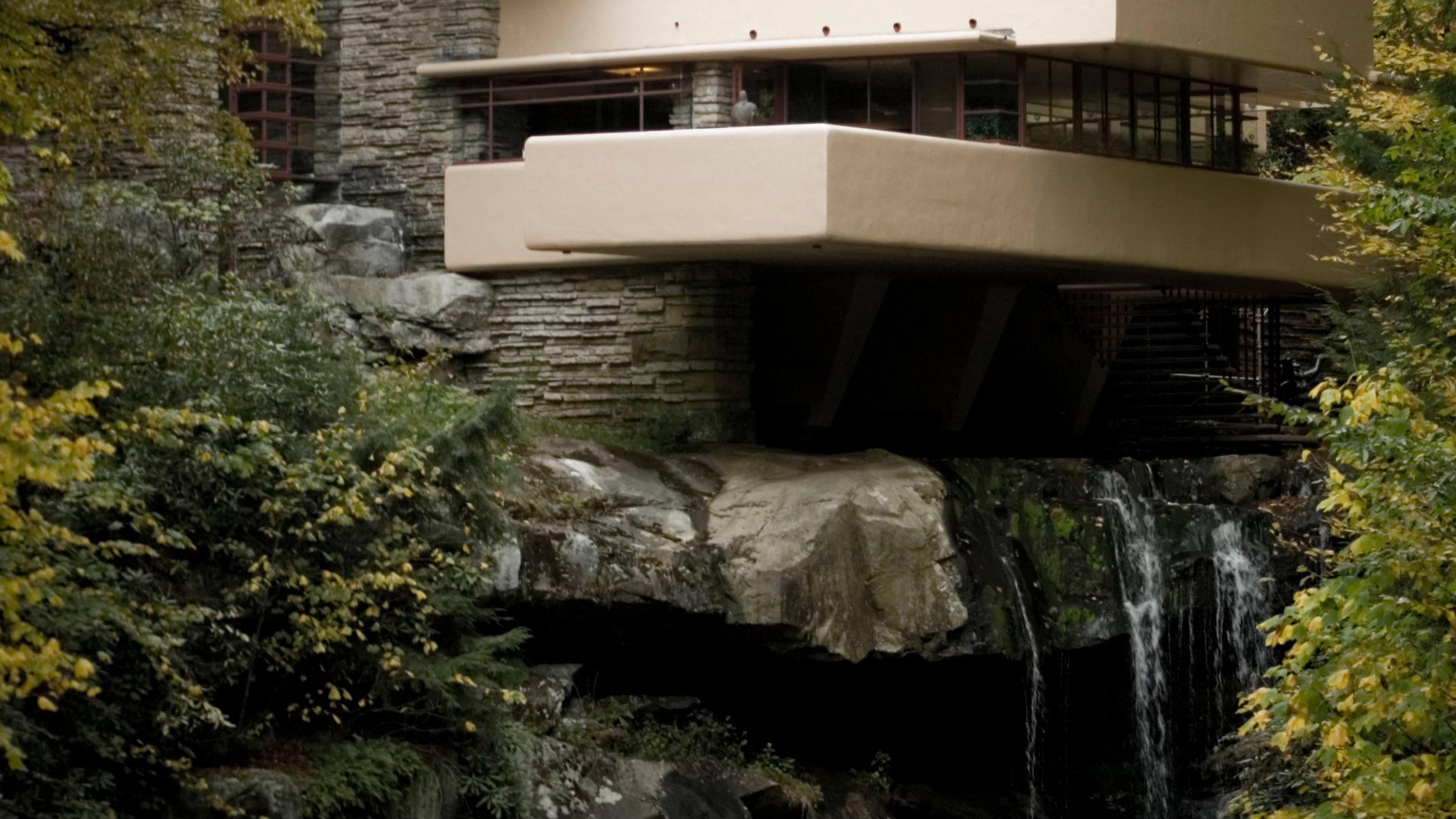
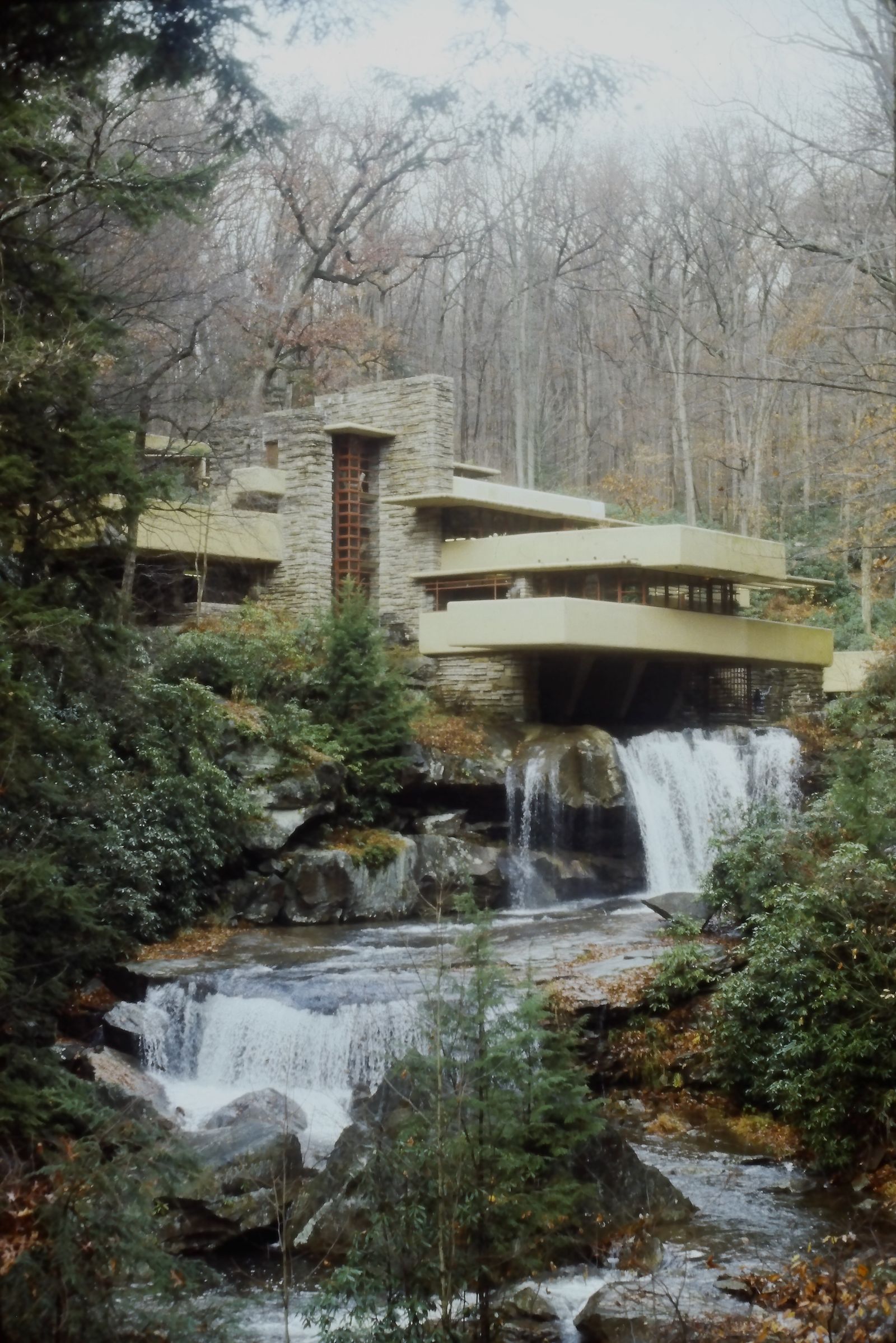
Fallingwater cantilevered over the falls at Bear Run. — Sxenko
Why Fallingwater Matters
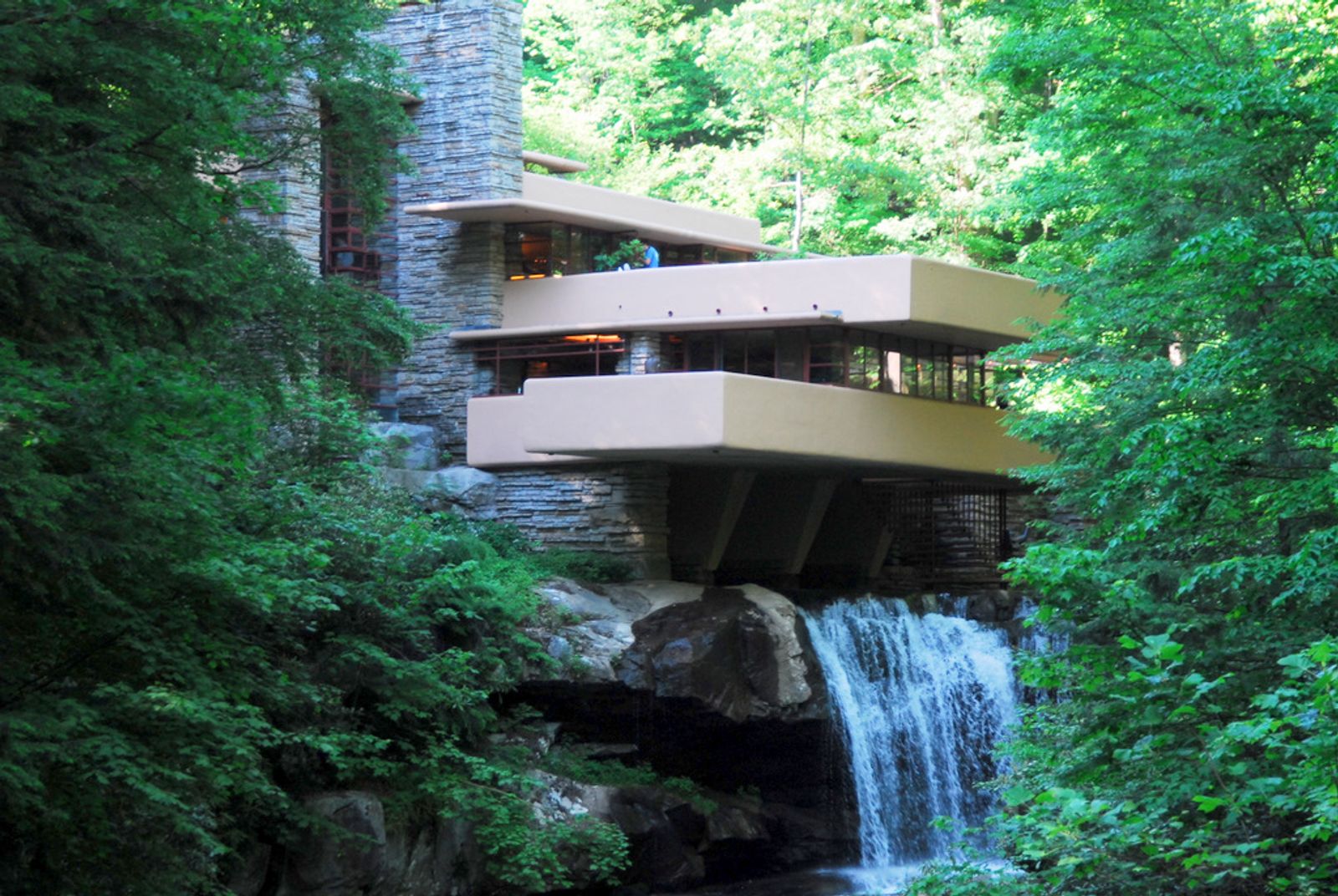
Fallingwater is Frank Lloyd Wright's masterpiece and perhaps the most famous house in American architecture. Designed in 1935 and built over a waterfall on Bear Run in the Pennsylvania mountains, its bold concrete terraces cantilever out above the cascading stream, dissolving the boundary between the house and the wild landscape around it. A definitive statement of Wright's 'organic architecture,' it has been celebrated ever since as one of the greatest buildings ever created in the United States.
By the Numbers
The House
- Architect
- Frank Lloyd Wright
- Built
- 1936-1938
- Built for
- The Kaufmann family of Pittsburgh
The Design
- Signature
- Cantilevered over a waterfall on Bear Run
- Style
- Organic architecture
Recognition
- UNESCO
- World Heritage Site (2019)
Today
- Operator
- Western Pennsylvania Conservancy
Timeline
- 1935Frank Lloyd Wright designs Fallingwater for the Kaufmann family.
- 1936-1938The house is built over the waterfall at Bear Run.
- 1938Wright appears on the cover of Time as Fallingwater draws acclaim.
- 1963The Kaufmanns entrust the house to the Western Pennsylvania Conservancy.
- 1964Fallingwater opens to the public as a museum.
- 2002The sagging cantilevers are reinforced by post-tensioning.
- 2019Designated a UNESCO World Heritage Site.
Complete History
In the mid-1930s the Pittsburgh department-store magnate Edgar J. Kaufmann commissioned Frank Lloyd Wright to design a weekend retreat on the family's wooded land at Bear Run. The Kaufmanns expected a house with a view of their favorite waterfall; Wright, then in his late sixties and staging a career comeback, instead placed the house directly atop it, in a design he is said to have drawn up in a burst of work as the client traveled to his studio.
Built between 1936 and 1938, Fallingwater is anchored to the rock beside the falls, with reinforced-concrete terraces that cantilever dramatically over the water. Inside, boulders of the site break through the living-room floor, and walls of glass and stone blur the line between indoors and out. It became an instant sensation, landing Wright on the cover of Time magazine and cementing his reputation as America's greatest architect.
The daring cantilevers, under-reinforced for their span, sagged over the decades and were finally stabilized with a post-tensioning system in 2002. The Kaufmanns' son, Edgar Kaufmann Jr., gave the house and its grounds to the Western Pennsylvania Conservancy in 1963, and it opened to the public as a museum. In 2019 Fallingwater was inscribed as a UNESCO World Heritage Site among a group of Wright's key works.
Historic Images
Interesting Facts
- Fallingwater is built directly over a waterfall, with concrete terraces cantilevered above the cascading stream.
- Frank Lloyd Wright designed it in 1935 for the Kaufmann family, owners of a Pittsburgh department store.
- The American Institute of Architects has named it the best all-time work of American architecture.
- Its bold cantilevers sagged over the years and had to be reinforced with a post-tensioning system in 2002.
- In 2019 Fallingwater became a UNESCO World Heritage Site as one of Frank Lloyd Wright's most important buildings.
Visiting Today
- Hours
- Fallingwater is open for tours most of the year, generally closed in late winter and on some holidays; hours vary by season. Check the official website for the current schedule.
- Admission
- Visits are by guided tour with timed, paid tickets, which frequently sell out; advance reservations are strongly recommended. Grounds passes are also available.
- Best time to visit
- Late spring through fall, when the surrounding forest is lush and the stream runs full, is especially beautiful; fall foliage is a popular draw.
- Nearby
- Kentuck Knob (another Wright house), Ohiopyle State Park, and the Laurel Highlands of southwestern Pennsylvania.
Tours sell out weeks ahead in peak season, so book early. Wear comfortable shoes for the wooded paths, and consider the in-depth tours if you want to see more of the house and its famous cantilevered terraces.
Frequently Asked Questions
Who designed Fallingwater?
The American architect Frank Lloyd Wright designed Fallingwater in 1935 for the Kaufmann family. It is widely regarded as his masterpiece.
Why is Fallingwater built over a waterfall?
Wright chose to place the house directly atop the falls rather than merely facing them, integrating the building with the landscape so its terraces cantilever out over the cascading water.
Can you visit Fallingwater?
Yes. Fallingwater is a museum run by the Western Pennsylvania Conservancy, open for guided tours of the house and grounds. Tickets are timed and usually reserved well in advance.
Do people still live in Fallingwater?
No. The Kaufmann family gave the house to the Western Pennsylvania Conservancy in 1963, and it has operated as a public museum ever since, preserved much as the family left it.